





LELE SADOUGHI

How LELE SADOUGHI Built a Global Fashion Accessories Brand

LELE SADOUGHI

How LELE SADOUGHI Built a Global Fashion Accessories Brand

Discover how LELE SADOUGHI transformed her creative vision into a globally recognized fashion accessories brand. This article explores her journey from working with major fashion houses to launching her own label, the rise of her iconic statement headbands, and the smart marketing strategies that helped build the LELE SADOUGHI brand into a global success story.

Table of Contents

The Story Behind the Lele Sadoughi Brand

Who Is Lele Sadoughi?

Lele Sadoughi is one of those designers who turned a simple fashion idea into a global accessories empire. Born Lisa Sadoughi in Dallas, Texas, she built her reputation as a creative force in the fashion world long before launching her own brand. Over the years, she has become widely recognized for bold accessories, especially her iconic jeweled headbands that have become staples among fashion lovers and celebrities alike. Today, her name is synonymous with statement accessories that combine color, texture, and personality.

Her journey into fashion wasn’t accidental. Sadoughi spent years building experience inside the industry before stepping into entrepreneurship. She studied advertising and fine art, later refining her design skills in Italy and London. These diverse experiences helped shape her creative vision and gave her a deeper understanding of aesthetics, storytelling, and branding. Instead of following the typical path of a fashion designer, she blended marketing insight with artistic design.

What truly sets Sadoughi apart is her philosophy that accessories should transform an outfit. She believes clothing may remain the same, but accessories allow individuals to express different moods and identities. This mindset became the foundation of her brand. According to Sadoughi, accessories are like “a new painting on the same canvas,” allowing people to reinvent their look repeatedly without changing their wardrobe. 

Over time, this perspective turned her label into more than just a jewelry company. It became a lifestyle brand built on creativity, individuality, and the power of bold fashion statements.

Early Career in the Fashion Industry

Before launching her own label, Lele Sadoughi spent years gaining hands-on experience in some of the most influential fashion companies. Early in her career, she worked with jewelry designer Ippolita, collaborating with major fashion retailers such as Banana Republic and Club Monaco. These early projects helped her understand how large fashion brands operate and how design interacts with mass retail.

One of the biggest milestones in her career came in 2005 when she joined J.Crew. At the time, the brand was looking to expand its product offerings, and Sadoughi was tasked with launching its first-ever costume jewelry line. The project turned into a massive success, eventually growing into a $40 million business within five years

This experience taught her valuable lessons about scaling a brand, designing for a large audience, and maintaining a unique aesthetic within a commercial environment. Working alongside influential fashion leaders helped her sharpen both her creative and strategic thinking.

Later, Sadoughi also served as the Jewelry Design Director at Tory Burch, another iconic fashion label known for luxury accessories and lifestyle products. These positions gave her a deep understanding of product development, sourcing, manufacturing, and retail distribution. More importantly, they provided insight into how powerful brand identity can drive consumer loyalty.

By the time she decided to launch her own company, Sadoughi already had more than a decade of experience in fashion design. That knowledge would become the backbone of her entrepreneurial success.

The Launch of the Lele Sadoughi Brand

Starting a Jewelry Line in 2012

In 2012, Lele Sadoughi made a bold decision: she launched her own namesake brand. Initially, the business began as a jewelry-focused collection, featuring statement necklaces, earrings, and bold costume jewelry pieces. 

Starting a fashion brand is rarely easy, especially in a competitive industry dominated by established designers and global luxury houses. Yet Sadoughi had something many new entrepreneurs lack—industry credibility. Her previous roles at J.Crew and Tory Burch had already built trust among retailers and buyers.

During the first year of her business, Sadoughi continued working as a design director for Tory Burch. This decision helped finance the early stages of her company, allowing her to build inventory and develop collections without excessive financial risk. 

The early collections reflected her signature aesthetic: bold colors, oversized gemstones, playful shapes, and statement pieces designed to stand out. Instead of chasing minimalism, she embraced maximalism—an approach that celebrates layered textures, decorative elements, and vibrant palettes.

Her strategy paid off. Retailers quickly noticed the brand’s distinct personality, and her designs began appearing in major department stores and fashion boutiques.

The Vision Behind the Brand

From the beginning, Sadoughi envisioned her company as more than a jewelry label. She wanted to create a destination for accessories of all kinds. The idea was simple yet powerful: build a brand where customers could find the perfect finishing touches for any outfit.

Her design philosophy revolves around one core idea—accessories transform identity. While clothing forms the base of a look, accessories define the character and emotion of that look. By focusing on this niche, Sadoughi positioned her brand in a space that many fashion companies overlook.

Instead of competing directly with apparel giants, she focused on items that elevate existing wardrobes. This strategic focus allowed the brand to grow steadily while maintaining a clear identity.

Over time, that vision proved to be incredibly powerful. Customers began associating the brand with joyful, expressive style. The products weren’t just accessories—they were conversation starters.

The Headband Revolution

How Signature Headbands Became a Global Trend

Every successful fashion brand has a defining product, and for Lele Sadoughi, that product became the knotted statement headband. While the brand originally launched with jewelry, its popularity exploded once these distinctive hair accessories gained attention.

The design was simple but bold: thick padded headbands featuring a knot at the top, often decorated with pearls, crystals, or intricate fabrics. These accessories stood out in a market filled with minimalist hairpieces. Suddenly, headbands were no longer basic—they were statement pieces.

Around 2018, the trend reached a tipping point. Fashion influencers began sharing photos of Sadoughi’s headbands on Instagram, and the style quickly went viral. 

The appeal was universal. The headbands added instant personality to outfits without requiring complex styling. They also appealed to a wide audience—from young fashion enthusiasts to celebrities and even members of royalty.

What began as a niche product became a cultural phenomenon. Many fashion experts even referred to Sadoughi as the “Headband Queen.”

Social Media and Influencer Impact

The rise of social media played a major role in the brand’s rapid growth. Platforms like Instagram created a new ecosystem where visually striking products could spread quickly through influencer marketing.

Sadoughi’s designs were perfect for this environment. Bright colors, pearl embellishments, and bold textures made her accessories highly photogenic. Influencers loved showcasing them in outfit photos, which naturally introduced the brand to millions of followers.

Unlike traditional advertising campaigns, this exposure happened organically. Instead of relying on expensive marketing budgets, the brand benefited from authentic endorsements by fashion bloggers and stylists.

As more influencers adopted the headbands, the trend snowballed. Soon, celebrities and public figures were wearing them at events and on social media.

This type of organic visibility proved far more powerful than traditional advertising. It helped transform the brand into a recognizable fashion name worldwide.

Product Expansion and Brand Growth

Expanding Beyond Jewelry

Once the brand gained momentum, Sadoughi expanded beyond jewelry and headbands into new categories. The company introduced handbags, belts, sunglasses, scarves, and other fashion accessories.

Today, the brand offers nearly 15 different product categories, making it a comprehensive accessories label. 

This diversification strategy helped the brand grow without losing its core identity. Every product still reflected the same design language—bold colors, decorative textures, and playful creativity.

Customers who loved the headbands often explored other items from the brand, creating strong cross-category demand.

Entering Multiple Fashion Categories

The expansion didn’t stop with traditional accessories. The brand also experimented with seasonal products and lifestyle items.

For example, during the COVID-19 pandemic, Sadoughi launched coordinated fashion masks that matched her accessories. The idea turned out to be hugely successful, with over 500,000 masks sold in a single year

This ability to adapt quickly demonstrated the brand’s agility. Instead of waiting for market conditions to improve, Sadoughi responded to changing consumer needs with creative solutions.

That mindset helped the company maintain strong growth even during uncertain times.

Marketing Strategies Behind the Success

Organic Marketing and Brand Identity

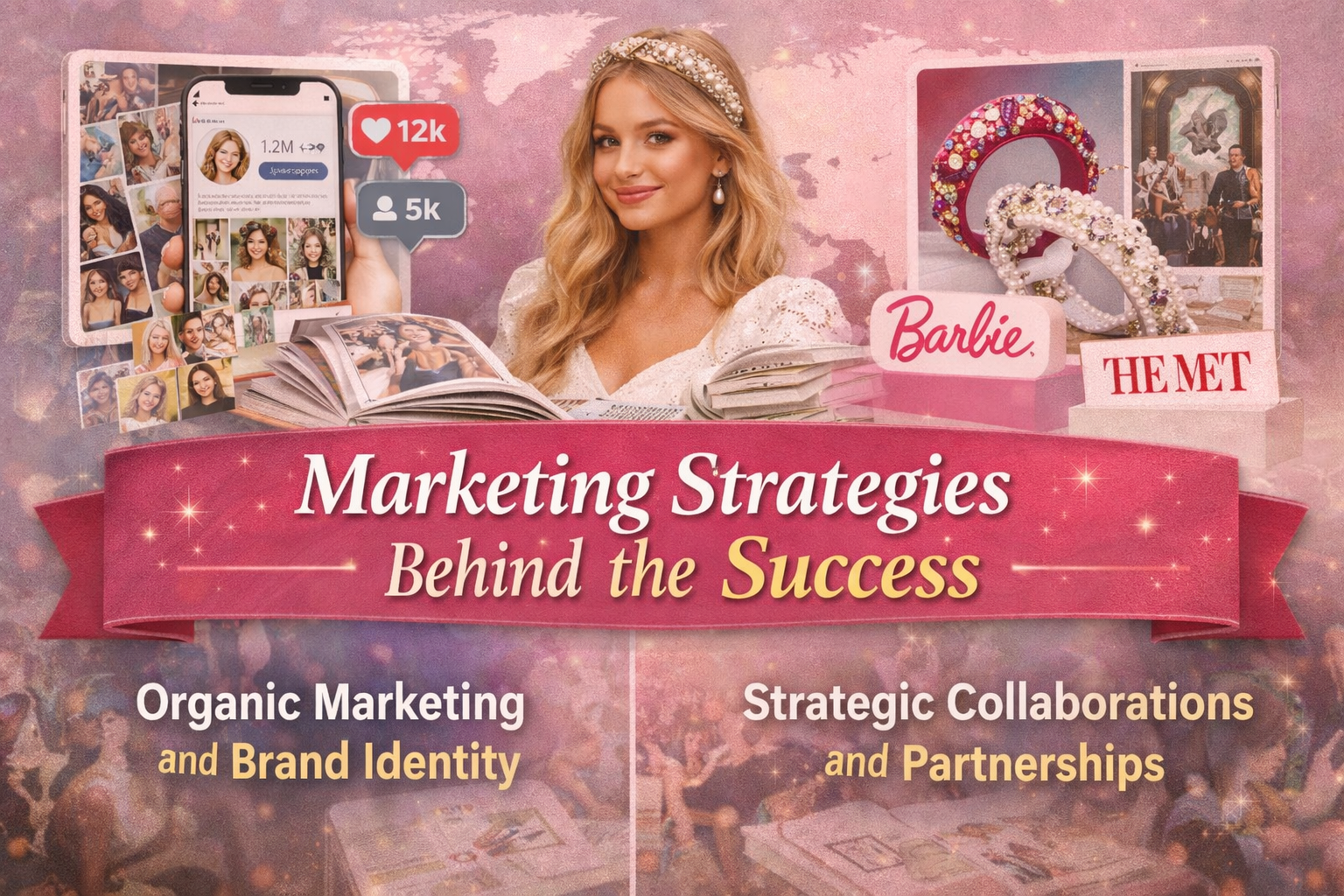
One of the most interesting aspects of the Lele Sadoughi brand is its marketing strategy. Instead of focusing heavily on traditional advertising, the company relies on storytelling, community, and visual identity.

The brand’s aesthetic is instantly recognizable. Bold pearls, colorful fabrics, and statement silhouettes create a signature look that customers can identify immediately.

This consistent branding helps build emotional connections with consumers. People don’t just buy the products—they buy into the brand’s joyful and expressive lifestyle.

Strategic Collaborations and Partnerships

Another major growth strategy involves collaborations. By partnering with other brands, artists, and institutions, Sadoughi introduces her designs to new audiences.

For instance, the brand released a special collection inspired by artworks from The Metropolitan Museum of Art, translating famous paintings into fashion accessories. 

Collaborations like this strengthen the brand’s cultural relevance while also keeping its product lineup fresh.
Retail Expansion and Global Reach

Opening Physical Stores

Although the brand initially focused on online sales and wholesale distribution, it eventually expanded into physical retail. Sadoughi’s hometown of Dallas is where the first store debuted.

Retail stores allow customers to experience the products in person, which is especially important for accessories that rely on texture, color, and craftsmanship.

These locations also serve as branding hubs where fans can immerse themselves in the brand’s aesthetic world.

Direct-to-Consumer Growth

The rise of direct-to-consumer (DTC) fashion brands has changed the industry, and Sadoughi embraced this model early.

Through its online store and social media channels, the brand can communicate directly with customers, gather feedback, and launch new collections quickly.

The strategy paid off. The company experienced two consecutive years of 100% revenue growth, demonstrating the effectiveness of its business model.

Leadership and Creative Vision

Design Philosophy and Style

Sadoughi’s design philosophy is rooted in boldness. She believes accessories should stand out and bring joy to the person wearing them.

Instead of following minimal trends, she embraces maximalism—layered textures, oversized shapes, and vibrant colors.

This approach creates emotional impact and helps her products stand out in a crowded fashion market.

Balancing Creativity and Business

It takes more than just creativity to run a fashion brand. It demands operational strategy, financial planning, and strong leadership.

Sadoughi balances these roles by combining artistic intuition with business discipline. Her years working in large fashion houses taught her how to manage both sides effectively.

Challenges and Lessons from the Fashion Industry

Overcoming Industry Competition

The fashion industry is notoriously competitive. Thousands of designers launch new labels every year, but only a small fraction achieve lasting success.

Sadoughi overcame this challenge by focusing on a unique niche—statement accessories.

Scaling While Staying Authentic

As the brand grows, maintaining authenticity becomes more difficult. Customers expect innovation while still recognizing the original style that made them fall in love with the brand.

Sadoughi addresses this challenge by staying true to her design philosophy.

The Future of the Lele Sadoughi Brand

Innovation and New Collections

The brand continues experimenting with new designs, materials, and collaborations.

Each season introduces fresh interpretations of the signature style.

Long-Term Vision for the Brand

Sadoughi’s ultimate goal is simple yet ambitious: to make her company the ultimate destination for fashion accessories worldwide.

If current growth trends continue, that vision may soon become reality.

Conclusion

Lele Sadoughi’s journey from jewelry designer to global accessories entrepreneur is a powerful example of creative vision combined with smart business strategy. By leveraging her industry experience, embracing bold design aesthetics, and capitalizing on social media trends, she transformed a small jewelry label into a multi-category fashion brand recognized around the world.

The success of her signature headbands demonstrates how a single iconic product can redefine a brand’s identity. At the same time, her willingness to expand into new categories and experiment with collaborations shows the importance of adaptability in the fashion industry.

What makes the Lele Sadoughi brand truly remarkable is its focus on self-expression. Instead of simply selling accessories, the company empowers customers to express their personality through bold and joyful fashion pieces.

Frequently Asked Questions

Lele Sadoughi is an American fashion designer and entrepreneur known for her accessories brand, particularly statement headbands and jewelry.

The brand was launched in 2012 as a jewelry collection before expanding into multiple accessory categories.

Their unique knotted design, bold embellishments, and strong presence on social media helped turn them into a global fashion trend.

The brand now sells headbands, jewelry, handbags, sunglasses, belts, scarves, and other accessories.

Its focus on bold, maximalist accessories and strong visual identity sets it apart in the fashion industry.

Table of Contents

MERSEA

MERSEA’s Customer Loyalty & Retention Playbook

MERSEA

MERSEA’s Customer Loyalty & Retention Playbook

Discover how MERSEA built a powerful customer loyalty and retention strategy to grow its ecommerce business. This blog post explores the marketing funnel, remarketing tactics, personalized communication, and data-driven strategies that help MERSEA turn first-time shoppers into long-term loyal customers. Perfect for businesses looking to learn practical retention techniques from the MERSEA playbook.

Table of Contents

Introduction to MERSEA and Its Customer-Centric Strategy

When people talk about successful ecommerce brands, the conversation often focuses on flashy marketing campaigns, viral social media posts, or influencer partnerships. Yet the real secret behind long-term growth often lies somewhere else: customer loyalty and retention. MERSEA, a lifestyle brand known for travel-inspired apparel and accessories, built its growth strategy around exactly that idea. Instead of chasing quick sales, the brand invested heavily in building meaningful relationships with customers.

Founded in 2013 by Lina Dickinson and Melanie Bolin, MERSEA started as a retail-focused brand that sold through partner stores across the United States. Over time, however, the founders realized that relying solely on retail distribution limited their ability to build a direct relationship with their customers. As ecommerce continued to dominate the retail landscape, MERSEA decided to shift its focus toward online sales and customer engagement. The challenge was simple but difficult: how do you attract online visitors and turn them into loyal repeat buyers?

The answer came through a carefully designed marketing funnel and retention strategy. By combining digital advertising, remarketing, email marketing, social media storytelling, and personalized customer communication, the brand created a system that nurtures customers throughout their journey. This strategy dramatically transformed the company’s performance, with ecommerce sales increasing from 10% to 45% of total revenue within two years

What makes MERSEA’s approach so interesting is its simplicity. There is no magic trick or secret algorithm behind the strategy. Instead, the company focused on understanding how customers behave online and designing a funnel that guides them naturally from discovery to long-term loyalty. Think of it like building a relationship rather than making a one-time sale.

And that philosophy is exactly what makes MERSEA’s customer loyalty playbook worth studying.

Understanding MERSEA’s Marketing Funnel

To understand MERSEA’s loyalty strategy, we first need to look at its marketing funnel structure. A marketing funnel is essentially the journey a customer takes from discovering a brand to becoming a repeat buyer and brand advocate. While different businesses use slightly different models, most funnels follow similar stages.

MERSEA built its strategy around four core stages: Awareness, Consideration, Conversion, and Loyalty. Each stage has its own marketing tactics, communication methods, and goals. Instead of pushing customers aggressively toward a purchase, the brand nurtures them step by step.

Funnel Stage

Goal

Strategy Used by MERSEA

Awareness

Introduce the brand to potential customers

Google Ads, Facebook Ads

Consideration

Build interest and trust

Social media storytelling, email marketing

Conversion

Encourage purchase

Cart abandonment emails, optimized checkout

Loyalty

Turn buyers into repeat customers

Personalized emails, SMS updates

This structured funnel approach allows MERSEA to guide customers naturally toward a purchase while simultaneously building a long-term relationship.

One interesting insight about ecommerce behavior is that most visitors don’t buy during their first visit. In fact, studies suggest that more than 97% of website visitors leave without making a purchase. That means brands must stay connected with customers even after they leave the site.

MERSEA addresses this challenge through remarketing campaigns, personalized communication, and content-driven engagement. Instead of assuming that a customer who leaves the site is lost forever, the brand treats that moment as just another step in the journey.

Think about it like meeting someone at a networking event. You probably wouldn’t ask them for a business partnership five seconds after introducing yourself. You would build trust first. MERSEA applies the same logic to ecommerce marketing.

This mindset is the foundation of its entire loyalty and retention playbook.

Awareness Stage – Getting the Right Customers’ Attention

The first step in MERSEA’s strategy is awareness. Before customers can become loyal fans, they need to discover the brand in the first place. This stage focuses on visibility, reach, and brand introduction.

MERSEA uses a combination of digital advertising channels to get in front of potential customers who are already searching for similar products. These include Google Ads, search ads, and Facebook ads targeted toward lifestyle interests

Google Ads help the brand appear in search results when users look for products like sweaters, accessories, or travel-inspired clothing. These ads are highly effective because they target people who are already showing purchase intent. If someone searches for a “kimono sweater” or “cozy travel clothing,” MERSEA’s products can appear directly in front of them.

Facebook and Instagram ads work slightly differently. Instead of targeting search intent, these platforms allow the brand to target people based on lifestyle interests, demographics, and behaviors. MERSEA uses this capability to reach audiences who resonate with its brand story of travel, relaxation, and coastal living.

But awareness is not just about advertising. MERSEA also focuses heavily on brand storytelling. Through social media posts, product imagery, and lifestyle content, the company introduces potential customers to the emotional side of the brand. Instead of simply promoting products, MERSEA paints a picture of a lifestyle.

Imagine scrolling through Instagram and seeing someone relaxing on a beach wearing a comfortable sweater while enjoying a sunset. That visual story creates a connection that goes beyond a simple product listing.

By combining targeted advertising with lifestyle storytelling, MERSEA ensures that its first interaction with customers feels authentic and inspiring rather than purely transactional.

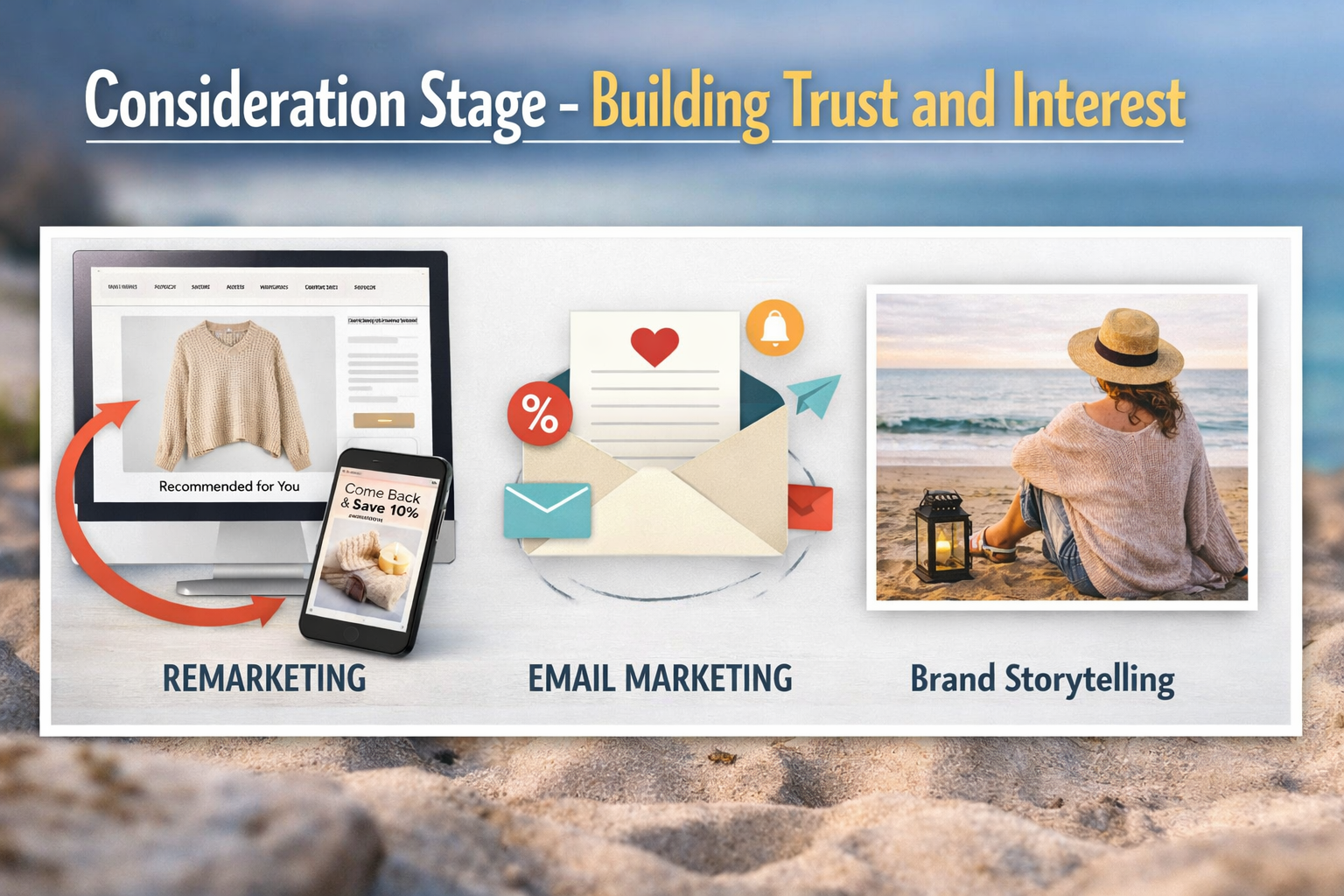
Consideration Stage – Building Trust and Interest

Once customers become aware of a brand, the next step is helping them evaluate whether it’s worth their attention and trust. This stage is known as consideration, and it’s where MERSEA excels.

One of the key strategies used here is remarketing. Remarketing allows the brand to display ads specifically to users who have already visited the website. For example, if someone browses a sweater on the site but leaves without purchasing, they may later see ads featuring that same product.

This strategy works because it keeps the brand top of mind. Instead of disappearing from the customer’s awareness, MERSEA continues the conversation. Remarketing ads act like gentle reminders rather than aggressive sales pitches.

Email marketing also plays a huge role in the consideration stage. When visitors subscribe to newsletters or create accounts, MERSEA begins sending story-driven email campaigns. These emails often introduce the inspiration behind products, highlight seasonal collections, or share travel-related themes that align with the brand identity. 

What makes these emails effective is that they are not purely promotional. Instead of flooding inboxes with discounts and product links, MERSEA uses storytelling to create an emotional connection with readers. Customers begin to see the brand as more than just a clothing retailer—it becomes part of their lifestyle.

This approach aligns with a broader trend in ecommerce marketing: content-driven engagement. Modern consumers want to feel connected to the brands they buy from. They want stories, authenticity, and values.

MERSEA understands that trust takes time to build. By nurturing customers during the consideration stage, the brand dramatically increases the chances that those visitors will eventually become buyers.

Conversion Stage – Turning Visitors into Buyers

At some point in the customer journey, interest needs to turn into action. That moment is the conversion stage, where visitors become paying customers.

One of the biggest challenges in ecommerce is cart abandonment. Many shoppers add products to their carts but leave before completing the purchase. This can happen for many reasons—distractions, uncertainty, price comparisons, or even a complicated checkout process.

MERSEA tackles this issue with automated cart abandonment emails. If a customer adds a product to their cart but does not complete the purchase, the system sends a follow-up email reminding them about the item. Sometimes these emails include product images, reviews, or limited-time offers to encourage the customer to return. 

These emails are surprisingly effective. Studies show that abandoned cart emails can recover a significant percentage of lost sales because they target customers who have already demonstrated strong purchase intent.

Another important aspect of the conversion stage is the shopping experience itself. MERSEA focuses on clear product descriptions, high-quality images, and a seamless checkout process. Small details—like fast-loading pages, simple payment options, and mobile optimization—can dramatically improve conversion rates.

Think of it like visiting a physical store. If the store is organized, welcoming, and easy to navigate, customers feel comfortable making a purchase. If it’s chaotic and confusing, they leave.

The same psychology applies online. By removing friction from the buying process, MERSEA increases the likelihood that visitors complete their purchases.

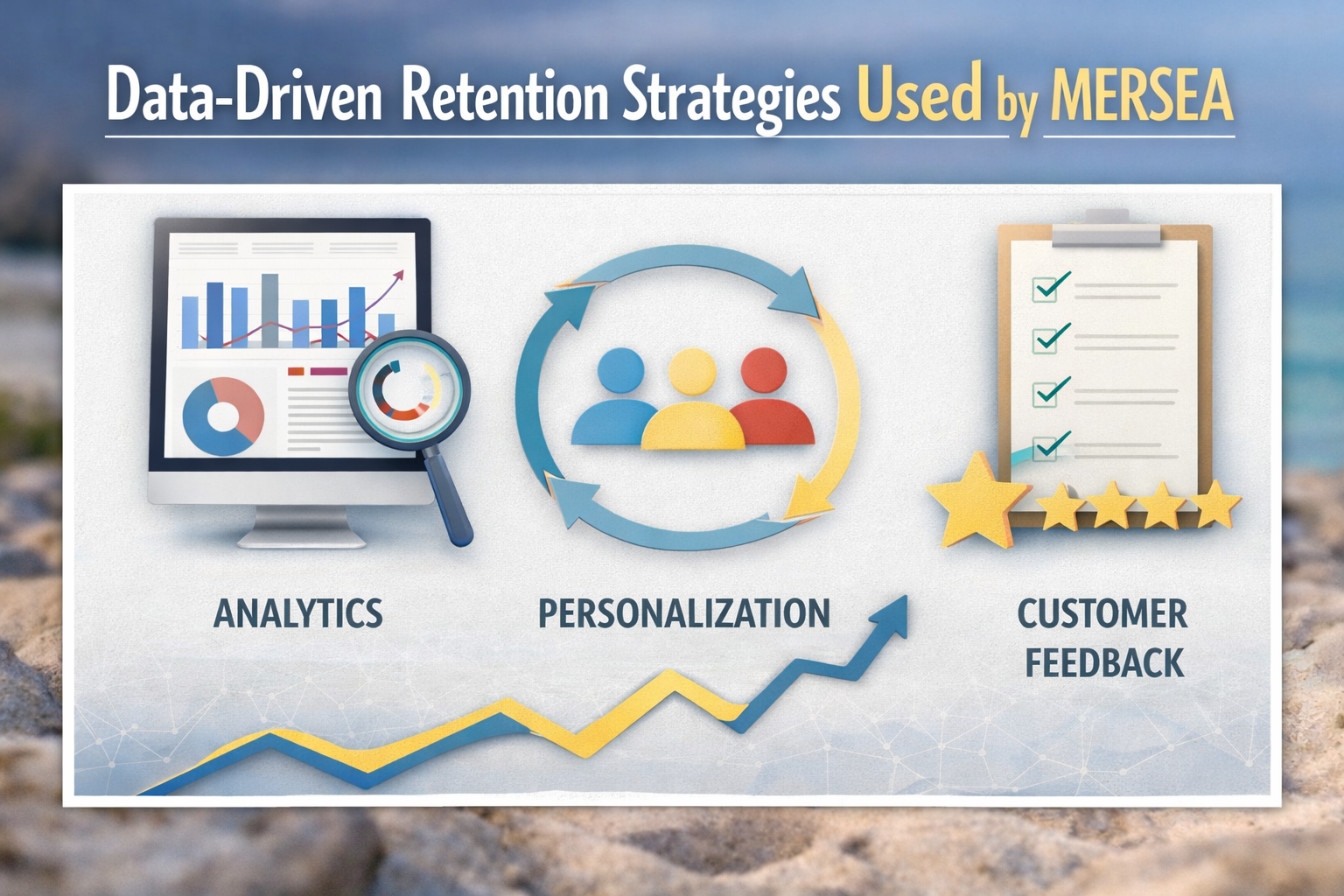
Data-Driven Retention Strategies Used by MERSEA

Another critical element of MERSEA’s playbook is data-driven decision making. The brand closely monitors customer behavior across its marketing channels to understand what works and what doesn’t.

For example, analytics tools track metrics like website traffic, conversion rates, email open rates, and repeat purchase frequency. By analyzing these numbers, the marketing team can identify opportunities for improvement.

If a particular email campaign generates high engagement, the brand can replicate that style of messaging in future campaigns. If a product page has a high bounce rate, it may indicate that the page needs better visuals or clearer information.

Data also helps with customer segmentation. Instead of sending the same marketing messages to everyone, MERSEA can tailor campaigns to specific groups. For example:

    1. New visitors may receive welcome emails introducing the brand
    2. Existing customers may receive loyalty rewards or early product access
    3. Inactive customers may receive re-engagement campaigns

This personalized approach ensures that each customer receives relevant communication rather than generic marketing messages.

Loyalty Stage – Creating Repeat Customers

For many businesses, the story ends once a purchase is made. But for MERSEA, that moment is only the beginning of the most important stage: customer loyalty.

The brand understands a fundamental business truth: acquiring new customers is far more expensive than retaining existing ones. That’s why MERSEA invests heavily in post-purchase communication and relationship building.

One of the simplest but most effective strategies is ongoing email communication. Customers receive updates about new collections, seasonal products, and lifestyle inspiration related to the brand. These emails keep the relationship alive even when customers are not actively shopping.

MERSEA also sends personalized text message updates, especially for order confirmations and shipping notifications. These small touches create a sense of personal attention and reliability. 

Over time, this consistent communication builds trust. Customers begin to feel familiar with the brand and comfortable returning for additional purchases. In fact, reports suggest that about 50% of MERSEA customers eventually become repeat buyers, highlighting the success of the loyalty strategy. 

Loyal customers also become brand advocates. They recommend products to friends, share experiences on social media, and help spread awareness organically.

When a brand reaches this stage, marketing becomes much easier. Instead of constantly chasing new customers, loyal fans help drive growth naturally.

Lessons Businesses Can Learn from MERSEA’s Playbook

MERSEA’s strategy offers valuable lessons for businesses in any industry. The biggest takeaway is that customer relationships matter more than short-term sales.

Companies that focus solely on acquisition often struggle with long-term growth. They spend heavily on advertising to bring in new customers but fail to build loyalty. MERSEA took a different approach by investing in a structured funnel and retention strategy.

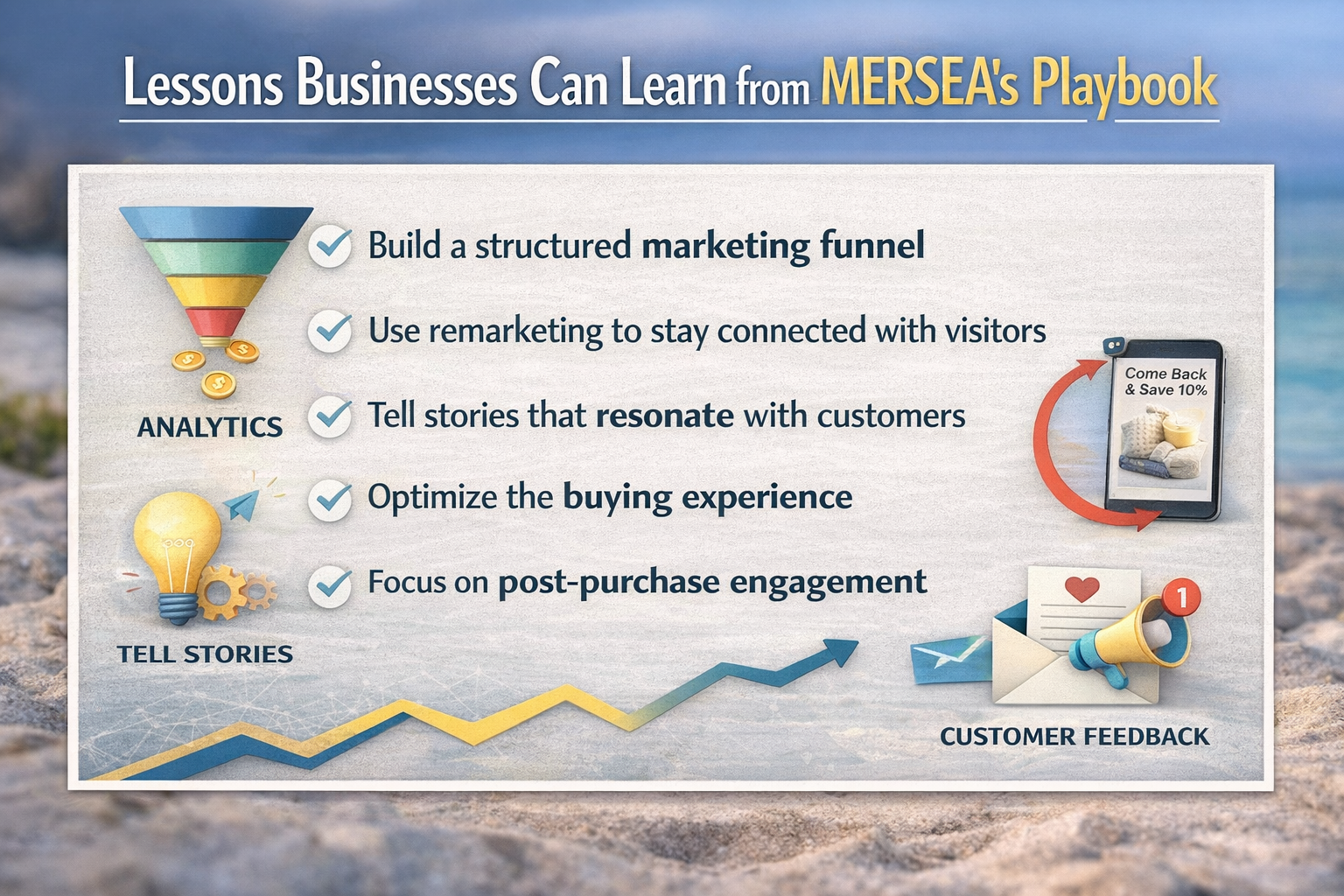
Several key principles stand out from this playbook:

    1. Build a structured marketing funnel
    2. Use remarketing to stay connected with visitors
    3. Tell stories that resonate with customers
    4. Optimize the buying experience
    5. Focus on post-purchase engagement

These strategies are not limited to fashion brands. Ecommerce stores, SaaS companies, and service providers can all apply similar principles to improve retention and customer lifetime value.

The Importance of Customer Loyalty in Ecommerce

Customer loyalty is one of the most valuable assets for any ecommerce brand. While acquiring new customers can be expensive, retaining existing customers often leads to higher profits and sustainable growth. For brands like MERSEA, focusing on loyalty means creating meaningful relationships with customers instead of simply pushing one-time purchases.

When customers trust a brand, they are more likely to buy repeatedly and recommend it to others. Loyal customers also tend to spend more over time, which increases the customer lifetime value (CLV). MERSEA understands that loyalty is built through consistent engagement, quality products, and personalized communication. By focusing on these elements, the brand ensures that customers feel valued and connected.

How MERSEA Builds Emotional Connections With Customers

One of the key elements of MERSEA’s customer retention strategy is emotional connection. Instead of focusing solely on selling products, the brand builds a lifestyle around travel, relaxation, and coastal inspiration. This storytelling approach makes customers feel part of something larger than a simple purchase.

Through social media posts, product photography, and storytelling campaigns, MERSEA communicates a consistent brand identity. Customers who resonate with this identity often develop a stronger attachment to the brand. Emotional branding helps create trust, and trust naturally leads to long-term loyalty.

Brands that focus on emotional connections often see higher engagement rates because customers feel personally connected to the brand’s story.

The Role of Email Marketing in MERSEA’s Retention Strategy

Email marketing plays a major role in MERSEA’s customer retention playbook. After a customer signs up for newsletters or makes a purchase, the brand begins sending personalized emails designed to nurture the relationship.

These emails include product recommendations, lifestyle content, and updates about new collections. Instead of overwhelming customers with promotional messages, MERSEA balances sales-focused emails with engaging content that keeps subscribers interested.

Email campaigns also help the brand stay visible in customers’ inboxes. Even when customers are not actively shopping, these emails remind them about the brand and encourage future purchases.

Social Media Engagement and Community Buildi

Social media platforms are powerful tools for customer engagement, and MERSEA uses them effectively to build a loyal community. Platforms like Instagram and Facebook allow the brand to share visually appealing content that reflects its lifestyle-focused identity.

By posting travel-inspired images, product highlights, and customer experiences, MERSEA encourages followers to interact with the brand. Comments, shares, and user-generated content create a sense of community around the brand.

When customers feel like they are part of a brand’s community, they are more likely to stay loyal and continue purchasing products.

Future Opportunities for MERSEA’s Loyalty Strategy

As ecommerce technology continues to evolve, MERSEA has many opportunities to strengthen its customer loyalty strategy. Emerging technologies like artificial intelligence, predictive analytics, and advanced personalization tools can further enhance the customer experience.

For example, AI-powered recommendations can help customers discover products that match their preferences. Loyalty programs and exclusive member benefits could also strengthen the relationship between the brand and its customers.

By continuing to innovate and adapt to changing consumer behavior, MERSEA can maintain strong customer relationships and ensure long-term growth.

Conclusion

MERSEA’s customer loyalty and retention playbook proves that sustainable business growth rarely comes from one-time purchases. Instead, it comes from building genuine relationships with customers over time.

By structuring its marketing funnel around awareness, consideration, conversion, and loyalty, the brand created a system that nurtures customers throughout their entire journey. The combination of targeted advertising, remarketing campaigns, storytelling emails, cart recovery strategies, and personalized communication transformed MERSEA’s ecommerce performance dramatically.

What makes this strategy particularly powerful is its simplicity. MERSEA did not rely on complicated growth hacks or expensive marketing experiments. Instead, it focused on understanding customer behavior and designing experiences that encourage trust, engagement, and repeat purchases.

In today’s competitive ecommerce environment, that kind of relationship-driven approach is not just beneficial—it’s essential

Frequently Asked Questions

MERSEA is a lifestyle brand that offers travel-inspired clothing, accessories, and home fragrances designed around comfort, relaxation, and coastal living.

Customer loyalty increases repeat purchases, reduces acquisition costs, and improves long-term profitability.

MERSEA uses a four-stage funnel: awareness, consideration, conversion, and loyalty.

The brand uses automated cart abandonment emails that remind customers about items left in their carts.

Its success comes from consistent communication, personalized messaging, and a strong focus on building long-term customer relationships.

Table of Contents

Zumub

How Zumub Built a Strong E-Commerce Presence in Supplements

Zumub

How Zumub Built a Strong E-Commerce Presence in Supplements

Discover how Zumub built a strong e-commerce presence in the competitive supplements industry. This article explores Zumub’s digital-first strategy, product variety, customer-focused approach, and smart partnerships that helped the brand grow into a leading online sports nutrition retailer in Europe.

Table of Contents

Introduction to Zumub and the Modern Supplement Market

The global sports nutrition and supplement industry has undergone a dramatic transformation over the past decade. Instead of relying solely on brick-and-mortar fitness stores, many brands now operate primarily online. Among these success stories is Zumub, a Portuguese supplement brand that built its reputation almost entirely through e-commerce.

Founded in 2010 and headquartered in Portugal, Zumub operates as a digital-first retailer selling sports nutrition, supplements, and wellness products to customers across Europe. The company’s mission is simple but powerful: make high-quality sports nutrition accessible to everyone at competitive prices. What began as a niche online store has evolved into one of Europe’s most recognized supplement marketplaces.

Today, Zumub offers more than 10,000 products and has delivered over 3 million orders, demonstrating the scale of its online operations. These numbers highlight how e-commerce can propel a brand from startup to international presence within a relatively short time.

What makes Zumub especially interesting is how it leveraged digital strategies to build trust, scale quickly, and compete with global supplement brands. Rather than relying on traditional retail expansion, the company focused on technology, logistics, and community partnerships to grow its market share.

This article explores how Zumub built its strong e-commerce presence, the strategies that fueled its growth, and the lessons other online brands can learn from its journey.

The Origins of Zumub

Founding Vision and Early Challenges

Every successful brand begins with a vision, and Zumub was no exception. The company was founded in 2010 by Urbano da Veiga in Portugal with the goal of providing reliable and affordable sports nutrition products online. At the time, the supplement industry was already growing rapidly, but the online market was still relatively fragmented.

Many customers struggled with two major issues when buying supplements online: trust and accessibility. Products were often expensive, information was unclear, and delivery options were limited. Zumub’s founder recognized an opportunity to solve these problems by building a digital platform focused on transparency and convenience.

The company started as a multi-brand supplement store, offering products from well-known manufacturers while also developing its own product line. This strategy allowed the brand to quickly attract customers who were already familiar with established supplement brands.

Like many startups, Zumub faced early challenges. Competing with global giants in the fitness industry required strong differentiation. Instead of trying to outspend competitors on advertising, the company focused on building a customer-centric e-commerce experience.

The approach worked. Over time, Zumub built a reputation for offering reliable supplements, competitive prices, and fast delivery. The brand gradually expanded across Europe, gaining recognition as a trusted source for sports nutrition.

The Role of E-Commerce in Zumub’s Business Model

Digital-First Distribution Strategy

Unlike traditional supplement brands that began with physical retail stores, Zumub adopted a digital-first strategy from day one. E-commerce wasn’t just one of its sales channels—it was the foundation of the entire business.

This decision allowed the company to operate with greater efficiency and scalability. By selling directly online, Zumub avoided many costs associated with physical retail locations, such as store rent and large sales teams. Instead, the company invested heavily in technology, logistics, and digital marketing.
The advantages of this strategy soon became clear. Customers could browse thousands of products, compare prices, and order supplements in just a few clicks. The company’s online platform also provided detailed product information, making it easier for buyers to make informed decisions.

Another advantage of the digital model was geographic reach. Instead of being limited to one city or country, Zumub could serve customers across Europe from its central operations in Portugal.

As the online store grew, it became the brand’s most valuable asset. In fact, the flagship domain zumub.com generated about $47 million in revenue in 2024, demonstrating the scale of its e-commerce success. 

This digital-first mindset helped Zumub grow faster than many traditional supplement companies that relied on offline retail expansion.

Building a Massive Online Product Catalog

Offering Thousands of Products

One of the key reasons customers keep returning to Zumub is the sheer variety of products available on its platform. Instead of focusing on a small niche, the company built an extensive catalog covering nearly every category of sports nutrition.

The online store features supplements such as protein powders, amino acids, creatine, vitamins, weight gainers, energy products, and functional foods. In addition, the platform also sells healthy snacks, beverages, sports accessories, and fitness gear.

According to company data, Zumub offers over 10,000 products and works with more than 300 supplement brands. This massive selection positions the website as a one-stop shop for fitness enthusiasts.

The advantage of such a broad catalog is simple: customers rarely need to shop elsewhere. Whether someone is a professional athlete or a beginner starting their fitness journey, they can find relevant products in one place.

This strategy also improves search visibility and SEO performance. A larger catalog means more product pages, which increases the likelihood of ranking in search engines for different supplement-related keywords.

The result is a marketplace that feels more like an ecosystem than a simple online store.

Customer Experience as a Competitive Advantage

Simplified Shopping and Fast Delivery

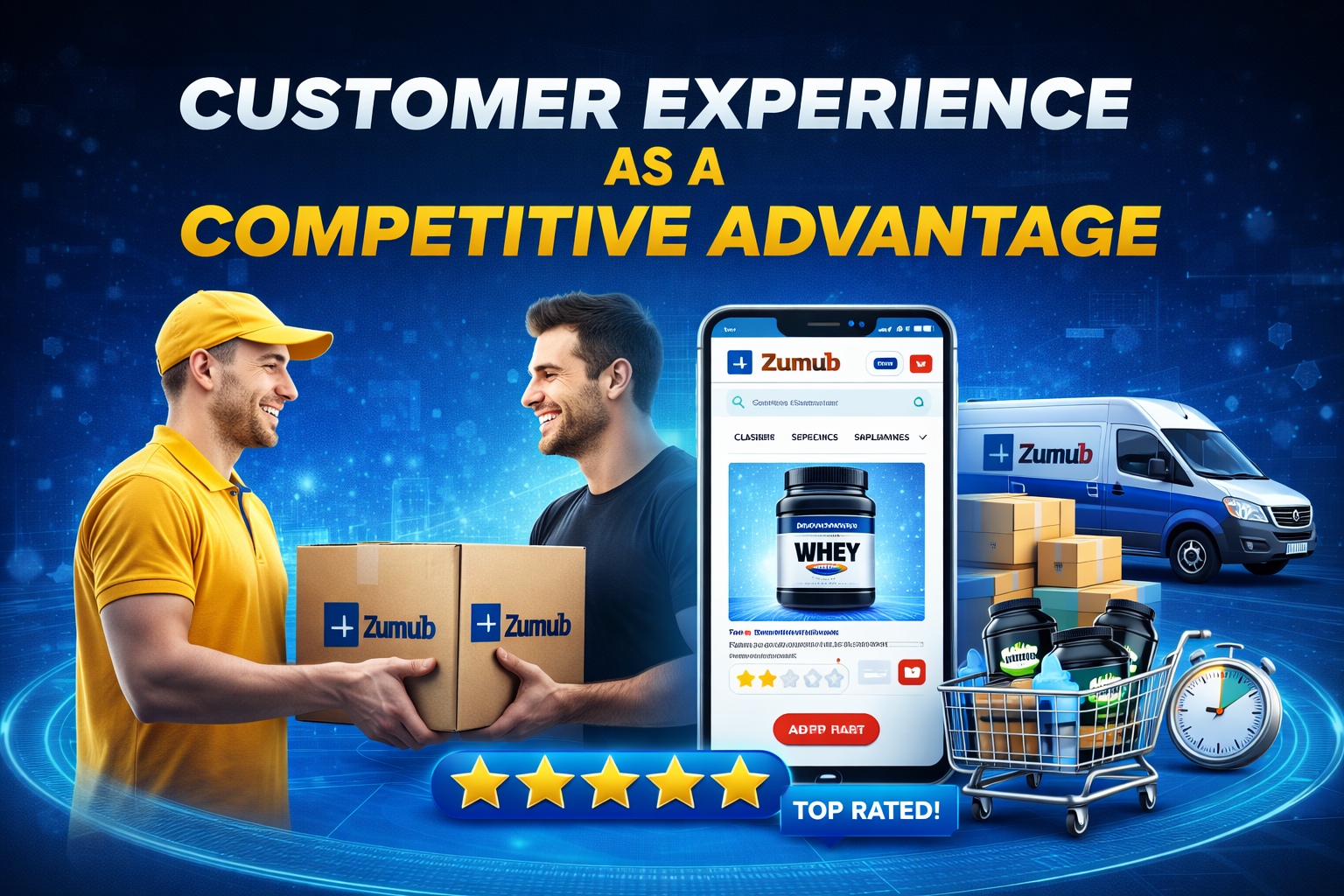
In the e-commerce world, customer experience often determines success. Even the best products can fail if the shopping process is frustrating or unreliable. Zumub recognized this early and designed its platform with simplicity and convenience in mind.

The website allows customers to navigate easily, search for products quickly, and complete purchases in just a few clicks. The ordering process is designed to be intuitive, which reduces friction during checkout.

Shipping is another critical factor. Zumub offers express and free delivery options depending on order size, ensuring customers receive their supplements quickly. Fast shipping is particularly important in the supplement market, where customers often reorder products frequently.

Customer satisfaction has become a key part of the brand’s reputation. Zumub maintains a strong rating of around 4.7 out of 5 based on thousands of reviews, highlighting the importance of service quality. 

These efforts create a shopping experience that feels reliable and professional—two qualities that are essential for building long-term customer relationships.

Pricing Strategy and Market Accessibility

Competitive Pricing and Discounts

Pricing plays a major role in the supplement industry. Many consumers compare multiple websites before purchasing products, looking for the best value.

Zumub addresses this behavior by offering competitive pricing and regular discounts. Customers frequently find promotions, cashback offers, and bundle deals on the platform.

The brand’s direct relationships with manufacturers and its own product development capabilities also allow it to maintain attractive price points.

By balancing affordability with quality, Zumub positions itself as a brand that delivers value without compromising on product standards.

Leveraging Partnerships with Sports Teams

Collaborations with Professional Clubs

Brand credibility in the fitness industry often comes from association with professional athletes and sports organizations.

Zumub strengthened its reputation by forming partnerships with several major European sports clubs. These collaborations include organizations such as AS Monaco and Benfica, where Zumub serves as an official nutrition partner. 

These partnerships provide multiple benefits:

    1. Increased brand visibility
    2. Association with elite performance
    3. Trust among fitness communities

When athletes and sports teams use a supplement brand, it signals quality and reliability. For many consumers, this endorsement can influence purchasing decisions.

Technology and Data-Driven Growth

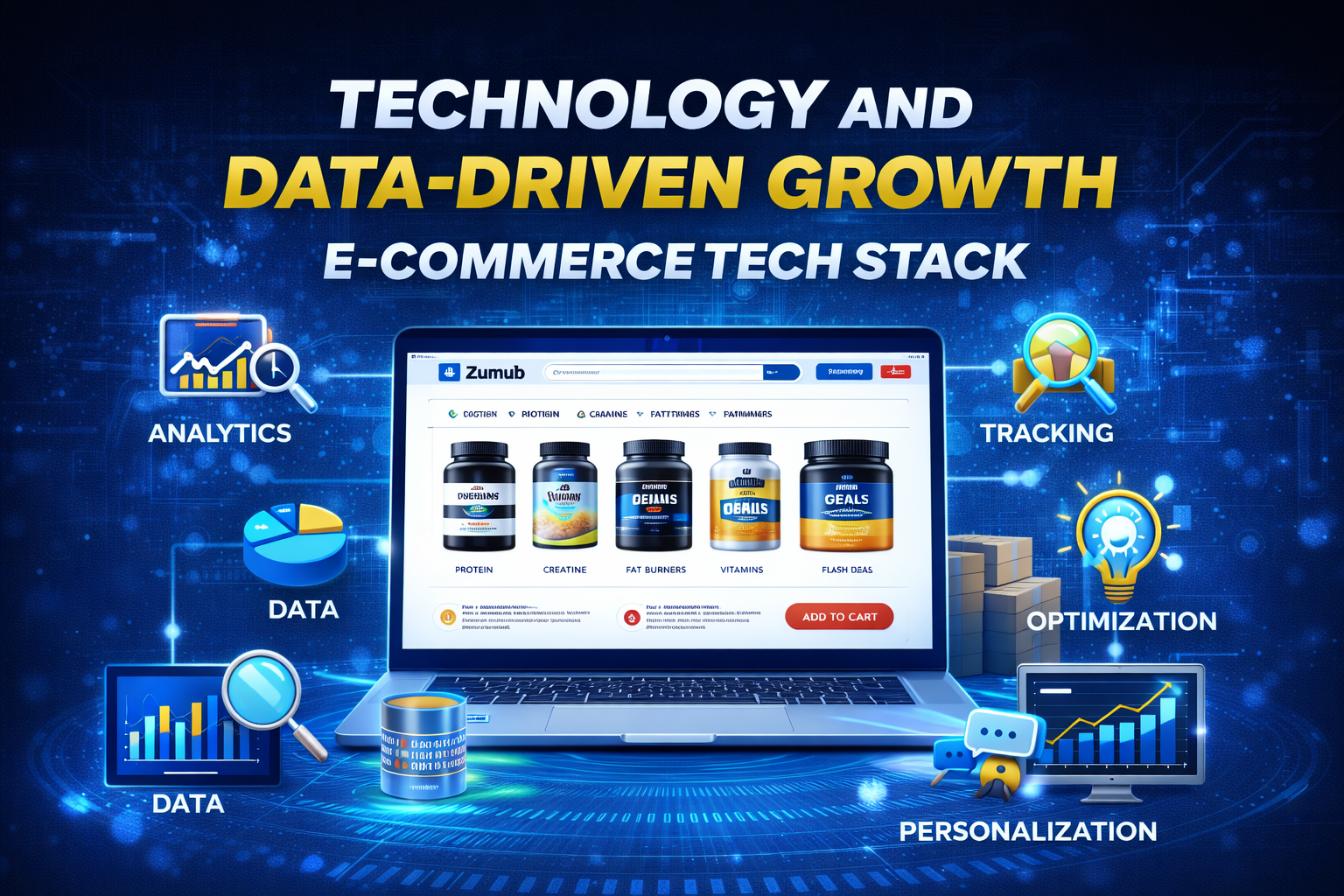
E-Commerce Tech Stack

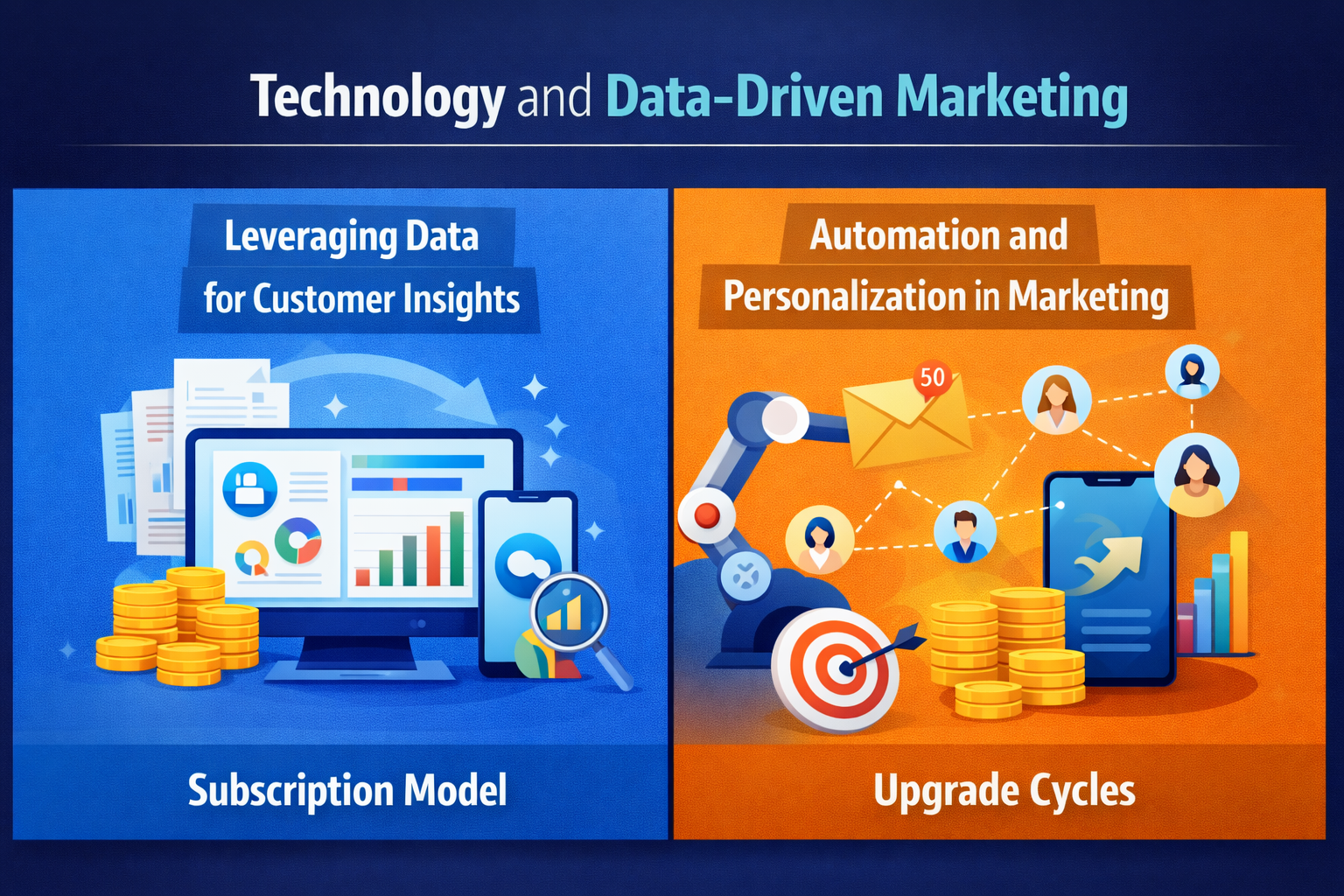
Behind every successful e-commerce platform lies a powerful technology infrastructure. Zumub relies on a range of digital tools to analyze customer behavior and improve marketing performance.

The company’s technology stack includes analytics platforms, tracking tools, and website optimization technologies that help monitor customer activity and sales performance.

These tools allow the business to:

    1. Track conversion rates
    2. Improve website usability
    3. Optimize digital advertising
    4. Personalize customer experiences

Data-driven decision-making enables Zumub to refine its strategies continuously.

Logistics and Operational Efficiency

Scaling Through Infrastructure Investments

As demand grew, Zumub invested heavily in logistics infrastructure to support its expanding operations.

Recent developments include the establishment of new logistics centers in Portugal, designed to improve operational efficiency and support international expansion. 

Efficient logistics are essential in e-commerce because they affect delivery speed, shipping costs, and customer satisfaction.

By strengthening its supply chain, Zumub ensured it could handle increasing order volumes without sacrificing service quality.

Product Development and Zumub Labs

Innovation in Supplement Manufacturing

Zumub is not only a retailer but also a manufacturer of supplements through Zumub Labs. The company has developed hundreds of products using modern production facilities that follow strict safety standards such as HACCP compliance. 

This manufacturing capability allows the brand to control product quality and experiment with new formulas.

Innovation plays a major role in the supplement market. Consumers are constantly searching for new ingredients, flavors, and performance-enhancing formulas.

By maintaining in-house product development, Zumub stays competitive and keeps its product lineup fresh.

Brand Trust and Customer Loyalty

Reviews and Customer Satisfaction

Trust is the foundation of any online brand. Without it, customers hesitate to buy.

Zumub addresses this challenge through transparent product information, clear ingredient lists, and responsive customer service.

Thousands of positive reviews highlight the brand’s reliability and commitment to quality. These reviews act as social proof, reassuring new customers that they are buying from a reputable company.

Satisfied customers often become repeat buyers, which helps sustain long-term growth.

Revenue Growth and Market Expansion

International Sales and Market Share

Zumub’s e-commerce strategy has translated into impressive financial performance.

The company generated approximately $52 million in revenue in 2024, with Portugal accounting for around 42% of total sales. 

Expansion into other European markets continues to drive growth.

This demonstrates the scalability of online supplement businesses. With the right digital infrastructure, a brand can serve customers across multiple countries without opening physical stores in each location.

Content Marketing and Fitness Community Engagement

Educating Customers Through Digital Content

Beyond selling supplements, Zumub invests in educating its audience about fitness and nutrition.


Content marketing helps the brand build authority in the health and wellness space. Articles, product guides, and training tips encourage customers to learn more about supplements and their benefits.

When customers understand how products work, they are more likely to trust the brand and make informed purchases.

The Competitive Landscape

Competing With Global Supplement Brands

The supplement market includes major players such as Optimum Nutrition, MuscleTech, and other global brands.

Instead of trying to outcompete them directly, Zumub integrates many of these brands into its marketplace while promoting its own products.

This hybrid strategy turns competitors into partners while expanding the store’s catalog.

Lessons From Zumub’s E-Commerce Strategy

What Entrepreneurs Can Learn

Entrepreneurs can learn several valuable lessons from Zumub’s growth story:

    1. Focus on customer experience
    2. Build a strong digital infrastructure
    3. Offer a wide product selection
    4. Invest in logistics and delivery speed
    5. Use partnerships to build credibility

These principles apply to many industries, not just supplements.

Future Outlook for Zumub

Continued Growth and Innovation

Looking ahead, Zumub is expected to continue expanding internationally and investing in product innovation.

The company has already secured investment funding to support growth and production capacity improvements. 

As the global fitness industry grows, online supplement retailers like Zumub are well positioned to capture increasing demand.

Conclusion

Zumub’s rise in the supplement industry demonstrates the power of a well-executed e-commerce strategy. By focusing on digital infrastructure, customer experience, and product variety, the company transformed from a small Portuguese startup into a recognized European brand.

Its ability to combine online retail, manufacturing, sports partnerships, and logistics efficiency has created a scalable business model. The brand’s success proves that in today’s digital economy, a strong online presence can be just as powerful—if not more powerful—than traditional retail expansion.

For entrepreneurs and marketers studying e-commerce success stories, Zumub provides a valuable example of how strategic thinking, innovation, and customer focus can drive remarkable growth.

Frequently Asked Questions

Zumub is a Portuguese e-commerce company that sells sports nutrition, dietary supplements, and wellness products across Europe.

Zumub was founded in 2010 by Urbano da Veiga.

The platform offers over 10,000 products across supplements, healthy foods, and sports accessories.

Zumub generated approximately $52 million in revenue in 2024 through its e-commerce operations.

Zumub combines a massive product catalog, strong logistics network, competitive pricing, and partnerships with professional sports teams to build trust and scale its online business.

Table of Contents

Uniplaces

How Uniplaces Became a Leader in Student Housing Platforms

Uniplaces

How Uniplaces Became a Leader in Student Housing Platforms

Discover how Uniplaces became a leading platform in the student housing market by simplifying the process of finding accommodation for international students. This article explores the company’s origin, innovative business model, global expansion, and the key features that helped Uniplaces build trust and scale into one of the most recognized student housing platforms.

Table of Contents

Understanding the Global Student Housing Market

Rising Demand for International Student Accommodation

The global student housing market has transformed dramatically over the past decade. With millions of students choosing to study abroad every year, the demand for safe, affordable, and reliable accommodation has skyrocketed. Universities attract students from all corners of the world, but housing infrastructure often struggles to keep up with this surge. For many students, especially those moving to a new country for the first time, finding accommodation can be confusing and stressful.

International students face several challenges when searching for housing abroad. They often lack local knowledge, have limited time before classes start, and must make decisions from thousands of miles away. Traditional rental markets were never designed to handle these unique needs. Students frequently rely on classified ads, local agencies, or social media groups, which can sometimes lead to scams or unsuitable housing conditions.

This gap in the market created an opportunity for digital platforms to step in and simplify the process. A dedicated online marketplace that specifically caters to student housing can reduce uncertainty and create trust between landlords and tenants. As the number of international students continues to grow every year, platforms that solve this housing problem are positioned for massive growth. This is exactly the environment in which Uniplaces emerged and began to reshape how students find accommodation.

Challenges Students Face When Searching for Housing

Imagine landing in a new city where you barely know the language, culture, or neighborhoods. Now imagine trying to sign a rental contract in that same environment. That’s the reality many international students face. Renting a room or apartment in a foreign country can feel like navigating a maze without a map.

Students often encounter issues such as hidden fees, misleading property listings, and landlords who require in-person visits before signing contracts. For international students, physically visiting a property before arrival is usually impossible. This creates a major barrier because traditional rental systems depend heavily on face-to-face interactions.

Security is another concern. Online classifieds and rental marketplaces sometimes include fraudulent listings designed to scam students out of deposits or rent payments. Without reliable verification systems, students risk losing money before even arriving in their destination country.

Language barriers also make the process complicated. Rental agreements, communication with landlords, and legal documentation may all be in a foreign language. Even simple tasks like understanding rental terms or deposit policies can become difficult. Platforms that simplify this process, provide verified listings, and enable secure online booking become incredibly valuable. Recognizing these challenges was a crucial step in Uniplaces’ journey toward becoming a leader in the student housing platform industry.

The Birth of Uniplaces

Founders and the Original Idea

Every profitable startup starts with a straightforward issue. In the case of Uniplaces, the founders personally experienced the difficulty of finding accommodation as international students. The company was founded in 2012 by Miguel Santo Amaro, Mariano Kostelec, and Ben Grech after they met while studying in the UK. 

Like many students studying abroad, they struggled to secure housing before arriving in a new city. The rental process was inefficient, unreliable, and often risky. They realized there was no dedicated digital platform that allowed students to safely book accommodation online before traveling to their study destination.

This realization sparked the idea behind Uniplaces. The founders envisioned a global marketplace where students could easily search for rooms, apartments, or student residences in cities across Europe. More importantly, the platform would provide verified listings and a secure booking system, removing the uncertainty from international housing searches.

The name itself reflects the company’s mission. “Uniplaces” combines the words “university” and “places,”symbolizing its focus on helping students find accommodation near their academic institutions. 

What started as a simple concept soon evolved into a startup with global ambitions. The founders didn’t just want to create a property listing site—they wanted to build the Airbnb for student accommodation, a trusted marketplace connecting students and landlords worldwide.

Early Development and Startup Journey

The first version of the Uniplaces platform was created during a Startup Weekend event in Lisbon in 2011, where the founders developed a prototype to test their idea. The response was overwhelmingly positive, proving that the market truly needed a specialized student housing platform.

By early 2012, the founders launched a fully functional website and began forming partnerships with universities in Portugal. These partnerships helped them attract their first users and property listings. Universities played a key role because they could recommend the platform to incoming international students.

At first, growth was slow but steady. Building trust between students and landlords required time and effort. The team focused on improving property listings by providing professional photos, accurate descriptions, and verified information. These small but important details helped establish credibility.

Within a few years, the platform expanded rapidly. By 2015, Uniplaces offered over 40,000 rooms across 38 cities, serving students from more than 140 countries. The company had already facilitated hundreds of thousands of nights of accommodation bookings.

This early growth validated the founders’ vision. They had identified a massive problem and created a scalable solution. From a small startup idea, Uniplaces began transforming into one of Europe’s leading student housing marketplaces.

Business Model Behind Uniplaces’ Success

Marketplace Model for Students and Landlords

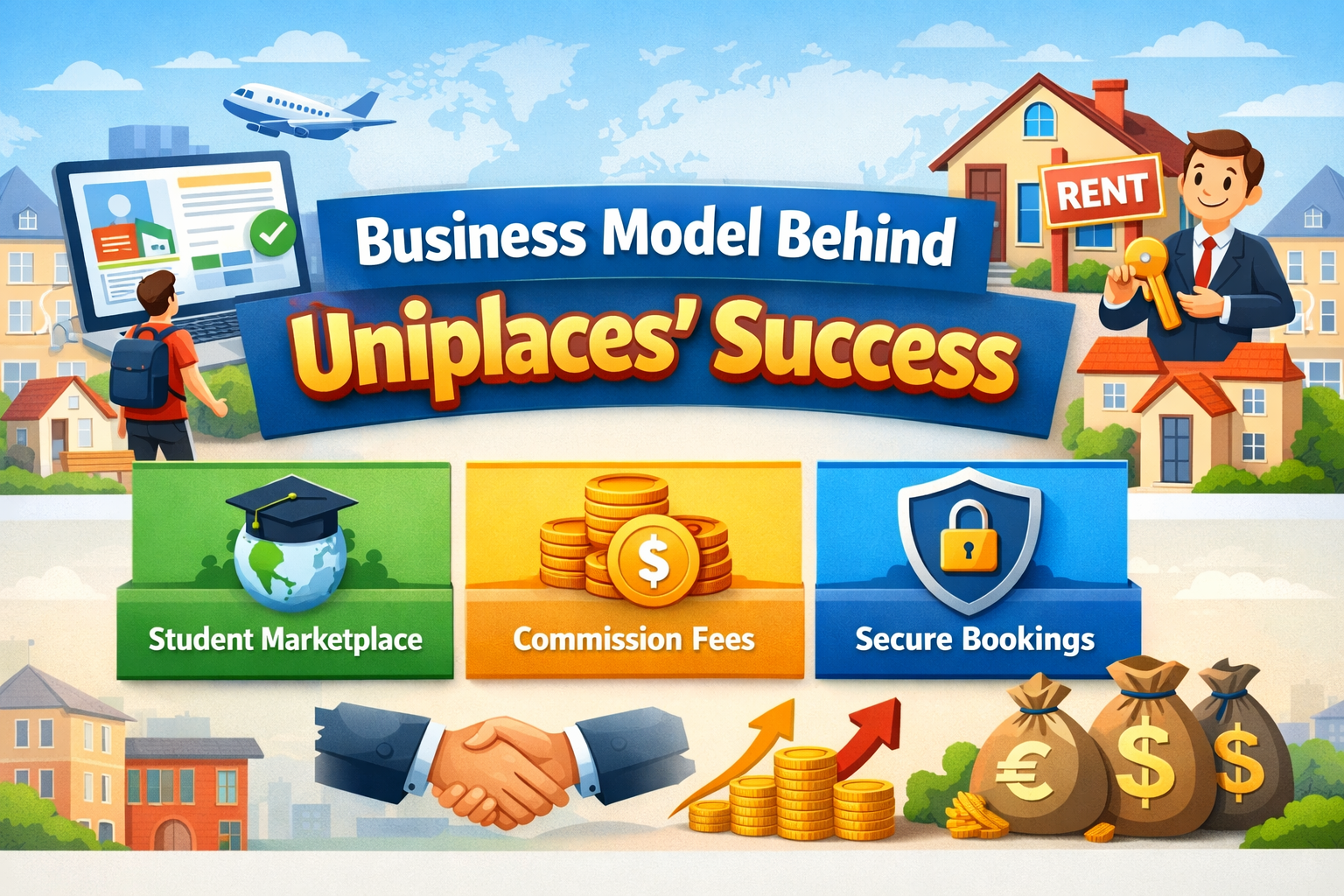
Uniplaces operates on a classic marketplace model that connects two groups: students searching for accommodation and landlords who want to rent their properties. The platform acts as a trusted intermediary that simplifies transactions between these two parties.

Students can browse listings, compare prices, and book accommodation directly through the platform. Each property includes detailed descriptions, professional photos, and verified information to ensure transparency. This removes much of the uncertainty associated with renting from abroad.

Landlords, on the other hand, gain access to a global audience of students. Instead of relying on local rental agencies or classified ads, property owners can list their rooms or apartments on Uniplaces and attract international tenants.

The beauty of this marketplace model lies in scalability. As more landlords join the platform, the number of listings increases. This attracts more students, which in turn encourages more landlords to participate. It creates a powerful network effect that drives growth.

Unlike traditional rental agencies that operate locally, digital marketplaces can expand globally without the same operational constraints. By leveraging technology, Uniplaces has been able to connect thousands of students with accommodation providers across multiple cities.

Revenue Streams and Platform Monetization

A successful marketplace also needs a sustainable business model, and Uniplaces developed a smart monetization strategy. Instead of charging students simply to browse listings, the platform earns revenue when a booking is successfully completed.

The company typically charges a commission to property managers based on the total contract value and also collects a service fee from students when the booking is confirmed. This model ensures that revenue is generated only when value is created for both parties.

This approach aligns incentives perfectly. Landlords only pay commissions when they secure tenants, while students only pay fees when they successfully book accommodation. It creates a win-win system that encourages participation from both sides.

Another advantage of this model is scalability. As the number of bookings increases, the company’s revenue grows without requiring significant additional infrastructure. This makes marketplace platforms highly attractive to investors and venture capital firms.

Uniplaces also invests heavily in improving its platform technology, customer support, and property verification systems. These investments strengthen user trust, which is essential for maintaining growth in the competitive online housing market.

Key Features That Made Uniplaces Popular

Verified Listings and Digital Booking

One of the biggest reasons for Uniplaces’ success is its focus on verified listings. Many rental websites simply allow landlords to post properties without verification, which can lead to scams or misleading advertisements. Uniplaces tackled this problem by introducing a verification process that ensures properties meet certain standards.

Each listing typically includes high-quality photos, accurate property descriptions, and information about the surrounding area. This level of detail helps students make informed decisions even if they have never visited the city before.

Another major innovation was the ability to book accommodation entirely online. Students can browse listings, choose a property, sign agreements, and make payments without needing to physically visit the property. This feature is especially valuable for international students who must secure housing before arriving in a new country.

Digital booking also speeds up the rental process. Traditional rental agreements can take weeks to finalize, while online platforms can complete the process in minutes. For students preparing for a new semester, this convenience can make a huge difference.

Secure Payments and User Protection

Security is one of the most important factors in online marketplaces, especially when financial transactions are involved. Uniplaces addresses this concern by offering secure payment systems that protect both students and landlords.

Payments are processed through the platform rather than being transferred directly to landlords. This adds an extra layer of protection, ensuring that transactions are legitimate and transparent. If issues arise, the platform can intervene to resolve disputes.

The company also introduced initiatives such as Uniplaces Guarantee, which provides additional security for users booking accommodation online. These protections help build trust and encourage students to use the platform with confidence.

Trust is the foundation of any successful marketplace. By prioritizing security and transparency, Uniplaces created a reputation as a reliable housing platform for students worldwide.

Expansion Across International Cities

Growth Across Europe and Beyond

Uniplaces began its journey focusing primarily on European cities, where international student mobility is particularly high. Cities such as Lisbon, Barcelona, Milan, and Berlin became key markets for the platform. These destinations attract thousands of exchange students every year, making them ideal locations for a student housing marketplace.

Within a few years, the platform expanded to dozens of cities and offered tens of thousands of accommodation listings. Rapid expansion was supported by technology that allowed landlords to easily upload property listings and manage bookings online.

As the platform grew, its user base also became increasingly international. Students from over 140 countries have used Uniplaces to book accommodation, highlighting its global reach. 

This international diversity strengthened the platform’s network effects. More students meant higher demand for housing, which encouraged more landlords to list their properties. The result was a self-reinforcing growth cycle that accelerated the company’s expansion.

Partnerships With Universities

Universities play a critical role in student housing. Many institutions struggle to provide enough dormitory space for incoming students, especially international ones. Recognizing this challenge, Uniplaces began forming partnerships with universities to help students find off-campus accommodation.

These partnerships benefit everyone involved. Universities can recommend reliable housing options to their students, students gain access to verified accommodation listings, and Uniplaces receives a steady stream of new users each academic year.

By integrating its platform with university networks, the company positioned itself as an essential part of the student relocation process. This strategy helped Uniplaces build strong brand recognition among students and educational institutions alike.

Funding and Investor Support

Major Funding Rounds

Like many successful tech startups, Uniplaces relied on venture capital funding to scale its operations. Investors recognized the enormous potential of the student housing market and the platform’s ability to disrupt traditional rental systems.

Over the years, the company raised more than $40 million across multiple funding rounds. One of the most significant milestones came in 2015 when Uniplaces secured a $24 million Series A investment led by Atomico, with participation from other investors. 

This funding allowed the company to expand into new cities, improve its technology infrastructure, and strengthen its marketing efforts. Venture capital support also provided the resources needed to compete with other global housing platforms.

Below is a simplified overview of key funding milestones.

Year

Funding Round

Amount Raised

Key Investors

2013

Seed Funding

£700K+

Octopus Investments

2014

Series A

~$3.5M

Shilling Capital, Angel Investors

2015

Series A Expansion

$24M

Atomico, Caixa Capital

2019

Growth Equity

~$0.5M

Harbert European Growth Capital

Investment capital allowed Uniplaces to transform from a startup into a major player in the student housing marketplace industry.

Strategic Investors and Advisors

Funding alone does not guarantee success, but the right investors can make a huge difference. Many of Uniplaces’ investors brought valuable industry experience and strategic guidance.

For example, several angel investors involved with the company had backgrounds in real estate, technology, and online marketplaces. Their expertise helped the startup refine its business model and expand internationally.

Experienced advisors also played a role in shaping the company’s long-term strategy. By leveraging this network of mentors and investors, Uniplaces gained access to knowledge that helped accelerate its growth.

Competitive Advantage in the Student Housing Market

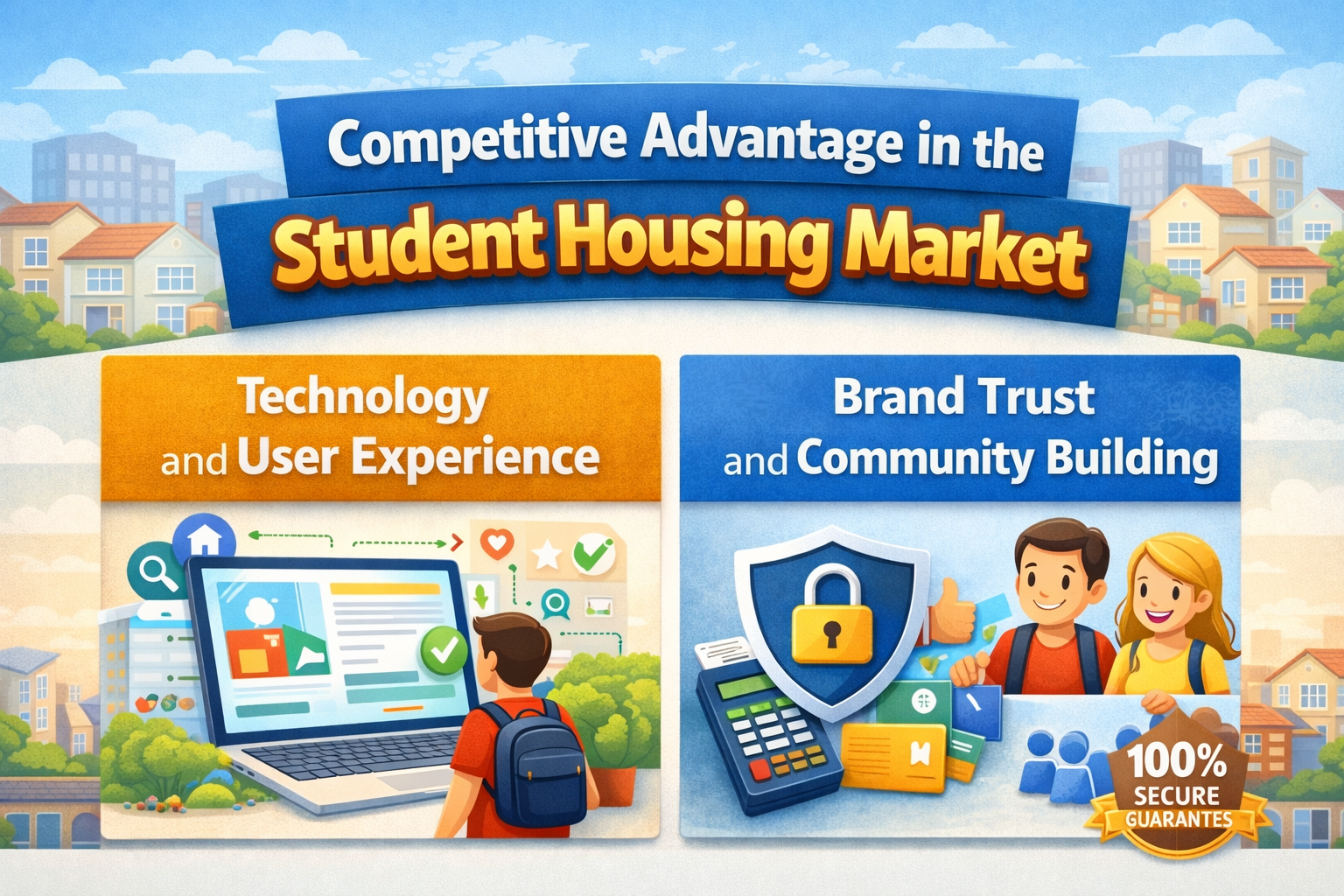
Technology and User Experience

Technology sits at the heart of Uniplaces’ competitive advantage. The platform is designed to make housing searches simple, intuitive, and secure. Students can filter listings by price, location, room type, and amenities, allowing them to quickly find accommodation that meets their needs.

A well-designed user interface also plays a crucial role. When students visit the platform, they are greeted with a clean and easy-to-navigate website that guides them through the booking process step by step. This reduces friction and increases conversion rates.

Advanced search algorithms and recommendation systems also improve the user experience. Instead of browsing hundreds of irrelevant listings, students receive personalized suggestions based on their preferences and budget.

Technology enables the platform to operate efficiently across multiple countries and languages. This scalability is essential for a marketplace serving international students from diverse backgrounds.

Brand Trust and Community Building

Trust is perhaps the most valuable asset in the student housing industry. Students and their families want assurance that the accommodation they book online will match what they see on the website.

Uniplaces built trust by focusing on transparency, security, and customer support. Verified listings, secure payment systems, and responsive customer service all contribute to a positive user experience.

Community building also plays an important role. The platform is not just a marketplace—it is a resource hub for students relocating to new cities. By providing helpful information about neighborhoods, universities, and housing options, Uniplaces strengthens its relationship with users.

Challenges and Competition in the Industry

Competition From Other Housing Platforms

The student housing platform market is competitive, with several companies offering similar services. Platforms like Student.com and HousingAnywhere also connect students with accommodation providers. 

These competitors operate globally and target many of the same student markets. As a result, companies must continuously innovate to maintain their competitive edge.

Competition encourages platforms to improve their technology, expand their listings, and enhance user experience. For students, this competition is beneficial because it leads to better services and more housing options.

Market and Regulatory Challenges

Operating in the housing market also involves navigating complex regulations. Rental laws vary significantly between countries, cities, and even neighborhoods. Platforms must ensure that property listings comply with local regulations and rental standards.

Economic conditions can also influence the housing market. Changes in international student mobility, housing supply, or rental prices can affect demand for student accommodation platforms.

Despite these challenges, the long-term outlook for digital housing marketplaces remains strong as international education continues to grow.

Future of Uniplaces and Student Housing Platforms

Technology Trends in Student Housing

The future of student housing platforms will likely be shaped by technology innovations such as artificial intelligence, virtual tours, and smart property management systems. These tools can make the housing search process even more efficient and transparent.

Virtual tours, for example, allow students to explore properties remotely using 360-degree images or videos. This eliminates uncertainty and helps students make confident decisions before arriving in a new city.

Artificial intelligence can also improve property recommendations by analyzing user preferences and behavior. This enables platforms to match students with the most suitable housing options more accurately.

As these technologies continue to evolve, platforms like Uniplaces will have new opportunities to enhance their services and maintain their leadership in the student housing market.

Conclusion

Uniplaces transformed a frustrating student housing process into a streamlined digital experience. By recognizing the challenges international students face when searching for accommodation, the founders built a platform that addresses those problems directly.

Through verified listings, secure online booking, and strong partnerships with universities, the company created a trusted marketplace that connects students with landlords across multiple cities. Strategic funding, innovative technology, and a clear understanding of the student market helped accelerate its growth.

The student housing market continues to expand as more students pursue education abroad. Platforms that simplify housing searches and provide reliable services will remain essential. Uniplaces’ journey demonstrates how a simple idea—making student housing easier to find—can evolve into a global technology platform serving thousands of students worldwide.

Frequently Asked Questions

Uniplaces is an online marketplace that helps students find and book accommodation in cities around the world. The platform connects students with landlords offering rooms, apartments, and student residences.

Uniplaces was founded in 2012 by Miguel Santo Amaro, Mariano Kostelec, and Ben Grech after they experienced the challenges of finding housing as international students.

The platform earns revenue through commissions from landlords and service fees paid by students when bookings are confirmed.

Yes. The platform provides verified listings, secure payment systems, and user protection programs designed to reduce the risk of scams or fraudulent listings.

Uniplaces focuses specifically on student accommodation and offers features such as verified listings, online booking, and partnerships with universities to simplify housing searches for international students.


Table of Contents

ROCKET LAWYER

Why ROCKET LAWYER’s SEO Strategy Drives Consistent Leads

ROCKET LAWYER

Why ROCKET LAWYER’s SEO Strategy Drives Consistent Leads

Discover how ROCKET LAWYER uses a powerful SEO strategy to generate consistent leads. This article explains the key techniques behind ROCKET LAWYER’s content marketing, keyword targeting, and search optimization that help the platform attract high-intent users and convert organic traffic into reliable business growth.

Table of Contents

Understanding Rocket Lawyer’s Digital Growth Engine

What Rocket Lawyer Does and Why SEO Matters

When people face legal problems, the first place they turn is usually Google. Whether someone needs help drafting a contract, creating an LLC, or understanding employment laws, they often start with a simple search like “how to write a legal agreement” or “start a business legally.” This is exactly where Rocket Lawyer has built its competitive advantage. Instead of relying solely on paid ads or referrals, the company built a powerful SEO-driven content ecosystem that attracts millions of potential clients every month.

Rocket Lawyer operates as an online legal service platform that helps individuals and businesses access legal documents, attorney consultations, and compliance tools. Their services cover areas such as business formation, employment contracts, wills, and intellectual property documentation. Because these topics are widely searched online, they naturally align with search engine optimization strategies. This alignment allows Rocket Lawyer to capture traffic from people actively looking for solutions.

Statistics show why SEO is so important in the legal industry. Organic search and local search together drive about 69% of digital traffic, and up to 66% of legal service call conversions come from organic search results. That means when someone types a legal question into Google, the firms or platforms ranking at the top have a massive opportunity to convert that visitor into a paying client. Rocket Lawyer understands this reality extremely well.

The company’s strategy revolves around answering legal questions before users even know they need a lawyer. By ranking for thousands of legal search queries, they meet users at the earliest stage of the decision journey. This approach turns search traffic into predictable lead generation, which is the real reason their SEO strategy works so effectively.

The Role of Organic Traffic in Legal Platforms

Organic traffic is the backbone of sustainable digital growth for legal platforms like Rocket Lawyer. Unlike paid ads, which stop producing results the moment a company stops spending money, SEO generates ongoing visibility once a page ranks well. For businesses offering legal services, this advantage is even more powerful because legal queries tend to remain stable over time. People will always search for things like “how to create a contract” or “steps to start a company.”

Rocket Lawyer’s website attracts millions of visitors every month. At one point, the platform was estimated to receive more than 2.27 million monthly visits, with users spending nearly four minutes per session and viewing around seven pages per visit. Those engagement metrics reveal something important: people don’t just land on the site and leave. They explore multiple resources, tools, and documents before taking action.

This type of behavior is exactly what search engines love to see. When users spend more time on a website and visit multiple pages, it signals that the content is helpful and relevant. Google’s algorithms interpret this engagement as a sign of quality, which can improve rankings even further.

Organic traffic also creates a compound growth effect. Every blog article, guide, or legal resource becomes a new entry point into the website. Over time, thousands of these pages create a massive web of searchable content. That means Rocket Lawyer doesn’t rely on just one keyword or topic—it ranks for thousands of related searches. The result is a steady stream of visitors entering the platform from different directions.

This strategy turns SEO into something far more powerful than just marketing. It becomes a scalable lead-generation system that works around the clock.

The Foundation of Rocket Lawyer’s SEO Success

Technical SEO Infrastructure

Before content or keywords even come into play, successful SEO begins with a strong technical foundation. Rocket Lawyer’s website is built in a way that search engines can easily crawl, understand, and index its pages. Without this foundation, even the best content would struggle to rank in search results.

Technical SEO involves optimizing elements such as page speed, mobile responsiveness, secure connections, structured data, and proper indexing. Search engines prioritize websites that load quickly and function smoothly across devices. If a page takes too long to load or is difficult to navigate on a smartphone, users leave—and Google notices.

Legal platforms face an additional challenge because they often contain thousands of pages of documents, templates, and educational resources. Managing such a large content library requires well-organized architecture. Rocket Lawyer uses structured navigation and clear page hierarchies to help search engines understand how different pieces of content relate to each other.

Schema markup is another crucial component of technical SEO. Schema helps search engines interpret specific types of content, such as legal documents, FAQs, and professional services. When implemented correctly, schema can enable rich search results that display additional information directly on Google’s results page.

Technical optimization also includes maintaining clean URLs, avoiding duplicate pages, and ensuring proper internal linking. These details might sound small, but together they make a huge difference in search visibility. When search engines can crawl a website efficiently, they are more likely to index its pages quickly and rank them higher.

Rocket Lawyer’s investment in technical SEO ensures that every new piece of content has the best possible chance of performing well in search results.

Optimized Site Architecture and User Experience

SEO success is not just about ranking on Google—it’s about what happens after someone clicks a search result. If users land on a website that feels confusing or cluttered, they leave within seconds. Rocket Lawyer avoids this problem by focusing heavily on user experience and intuitive site architecture.

Think of the website like a well-organized library. Instead of random shelves filled with unrelated books, everything is categorized clearly. Visitors can easily navigate between topics like business formation, employment law, intellectual property, and estate planning. This organization helps users find answers quickly and encourages them to explore additional resources.

Internal linking plays a major role in this process. When someone reads a guide about starting a business, they might see links to related topics such as registering an LLC, drafting operating agreements, or hiring employees legally. These connections keep users engaged while simultaneously helping search engines understand the relationships between pages.

Another advantage of strong site architecture is improved topical authority. When multiple pages focus on related legal subjects, search engines recognize that the website has deep expertise in those areas. Over time, this strengthens the site’s credibility and increases the likelihood of ranking for competitive keywords.

The end result is a seamless experience where visitors move naturally from information to action. Instead of leaving the site to search elsewhere, they remain within the Rocket Lawyer ecosystem—reading guides, exploring tools, and eventually signing up for services.

Content Marketing as the Core of Rocket Lawyer’s SEO

Building Authority Through Educational Legal Content

Content marketing is arguably the most powerful part of Rocket Lawyer’s SEO strategy. Rather than simply advertising legal services, the company provides a massive library of educational resources that answer real questions people search online.

This approach is incredibly effective because most legal queries start with curiosity rather than urgency. Someone might not immediately need a lawyer, but they want to understand their options. When Rocket Lawyer provides helpful explanations and step-by-step guides, it builds trust with that user.

For example, articles might explain topics like forming a business, writing contracts, protecting intellectual property, or managing employment disputes. These resources are written in accessible language so that non-lawyers can understand complex legal concepts.

By publishing helpful information, Rocket Lawyer positions itself as a trusted authority rather than just another service provider. When readers eventually need legal assistance, the platform that helped them earlier naturally becomes the first option they consider.

Search engines reward this type of content because it provides genuine value to users. Informational articles often rank well for long-tail keywords, which can collectively drive enormous amounts of traffic.

Topic Clusters and Content Depth

Rocket Lawyer’s content strategy doesn’t rely on random blog posts. Instead, it follows a topic cluster model. In this structure, a central page covers a broad subject while supporting articles explore related subtopics in detail.

For example, a main page about starting a business might link to separate guides covering:

    1. LLC formation
    2. Business licenses
    3. Operating agreements
    4. Employer tax obligations
    5. Legal compliance for startups

This cluster structure helps search engines understand that the website has deep expertise in a particular area. When multiple pages support each other around the same topic, they collectively strengthen the site’s authority.

This is a significant ranking criterion that SEO specialists frequently refer to as topical authority. Pages that align closely with a site’s core expertise tend to perform better in search results. 

Rocket Lawyer’s extensive content ecosystem ensures that nearly every legal question has a corresponding answer somewhere on the site. This breadth allows the platform to capture a massive range of search queries, from simple definitions to complex legal scenarios.

Keyword Strategy That Captures High-Intent Searches

Long-Tail Keywords for Legal Queries

Keyword strategy plays a critical role in attracting the right audience. Rocket Lawyer targets not only broad keywords like “legal documents” but also highly specific phrases known as long-tail keywords. These longer queries often reflect clear intent and are more likely to convert into leads.

Examples might include:

    1. “How to create a non-disclosure agreement”
    2. “Steps to form an LLC in California”
    3. “What should an employment contract contain?”

These queries may have lower search volume individually, but collectively they represent millions of searches each month. Because they are highly specific, the competition is often lower, making it easier to rank for them.

Long-tail keywords also attract visitors who are further along in the decision process. Someone searching for “business contract template” likely needs a solution immediately. When Rocket Lawyer provides that template along with helpful guidance, the path from search to conversion becomes extremely short.

Search Intent Mapping

Understanding search intent is just as important as choosing keywords. Every search query reflects a specific purpose—information, comparison, or purchase. Rocket Lawyer structures its content to match each stage of the user journey.

Informational searches are answered through blog articles and legal guides. Comparison searches might lead to pages explaining the benefits of different legal document types. Transactional searches connect users directly with document builders or attorney consultations.

This layered strategy ensures that the website captures visitors at every stage of the decision process. Whether someone is simply researching a topic or ready to create a legal document, Rocket Lawyer has content designed for that exact moment.

Strong Content Marketing Strategy

One of the biggest reasons behind ROCKET LAWYER’s SEO success is its focus on creating informative and helpful content. The platform publishes articles, guides, and resources that explain complex legal topics in simple language. Many users search online for answers to legal questions before contacting a lawyer, and ROCKET LAWYER positions itself as a trusted source of information during that research phase.

For example, the website offers detailed explanations about topics like starting a business, drafting contracts, intellectual property rights, and employment laws. By answering these questions clearly, the platform attracts readers who are looking for reliable information. Over time, this content builds authority and trust, which helps improve search engine rankings and encourages users to explore more services on the site.

Smart Keyword Targeting

Another important element of ROCKET LAWYER’s SEO strategy is its focus on targeting the right keywords. Instead of relying only on broad and highly competitive keywords, the platform also focuses on long-tail keywords that reflect specific user intent. These keywords include phrases such as “how to write a legal agreement,” “steps to register an LLC,” or “employment contract template.”

These specific searches often come from users who are closer to making a decision. Because of this, the traffic generated from long-tail keywords tends to have higher conversion potential. By targeting hundreds or even thousands of these search phrases, ROCKET LAWYER captures a wide range of users looking for legal assistance.

Well-Structured Website Architecture

A well-organized website structure is another reason why ROCKET LAWYER performs well in search engines. The platform categorizes its content into clear sections such as business formation, legal documents, employment law, and estate planning. This organized structure helps visitors easily navigate through the site and find the information they need.

Internal linking also plays a major role in this strategy. When users read one article, they are often directed to related topics, tools, or document templates. This not only improves user engagement but also helps search engines understand the relationships between pages. As a result, the website strengthens its authority across multiple legal topics.

Technical SEO and Website Performance

Technical optimization is another factor that supports ROCKET LAWYER’s SEO strategy. The website is designed to load quickly, work smoothly on mobile devices, and provide a secure browsing experience. These elements are important ranking factors for search engines.

Fast page speed improves user experience and reduces bounce rates, while mobile optimization ensures that users can easily access the platform from smartphones or tablets. Search engines prefer websites that offer a smooth and user-friendly experience, and ROCKET LAWYER takes advantage of these technical improvements to maintain strong visibility in search results.

Conversion-Focused SEO Strategy

Generating traffic alone is not enough—converting that traffic into leads is equally important. ROCKET LAWYER focuses on turning visitors into customers by offering helpful tools such as legal document builders, free templates, and access to professional attorneys. These tools act as lead magnets that encourage users to sign up or explore additional services.

By providing solutions directly within the website, the platform reduces the need for users to search elsewhere. This increases the chances that visitors will take action, whether that means creating a legal document, subscribing to services, or contacting a legal expert.

Continuous SEO Growth and Authority

SEO is not a one-time effort, and ROCKET LAWYER continuously updates its content and strategy to maintain its search rankings. By regularly publishing new resources and improving existing pages, the platform stays relevant in search results. This ongoing effort helps the website maintain strong authority within the legal services industry.

Over time, this consistent approach has allowed ROCKET LAWYER to build a large digital footprint. With thousands of indexed pages targeting different legal topics, the platform captures traffic from a wide variety of search queries. This large network of content ensures a steady flow of organic visitors and potential leads.

Final Thoughts

The success of ROCKET LAWYER’s SEO strategy shows how powerful search engine optimization can be when combined with valuable content and a strong website structure. By focusing on user needs, targeting relevant keywords, and maintaining high technical standards, the platform consistently attracts people searching for legal help online.

This strategy not only improves visibility in search engines but also builds long-term trust with users. As a result, ROCKET LAWYER continues to generate reliable organic leads and strengthen its position as a leading online legal services provider.

Conclusion

Rocket Lawyer’s SEO strategy works because it focuses on solving real problems rather than simply chasing rankings. By combining technical optimization, authoritative content, strategic keyword targeting, and strong user experience, the platform has built a digital ecosystem that attracts millions of visitors consistently.

Instead of relying on short-term marketing tactics, Rocket Lawyer invests in assets that grow over time. Each article, guide, and document template becomes another entry point for potential customers. As the content library expands, so does the platform’s visibility in search results.

The most important takeaway is that SEO success rarely happens by accident. It requires deliberate planning, continuous optimization, and a deep understanding of user intent. Rocket Lawyer demonstrates how powerful that combination can be when executed correctly.

Businesses in any industry can learn from this approach. By focusing on helpful content, clear site architecture, and search-driven strategy, companies can transform their websites into reliable lead-generation machines—just like Rocket Lawyer has done.

Frequently Asked Questions

SEO helps legal platforms appear in search results when people look for legal advice or documents online. Because many users start their legal research on Google, ranking well can generate a steady stream of potential clients.

The platform publishes thousands of educational legal resources and optimized landing pages. These pages target a wide range of legal search queries, allowing Rocket Lawyer to capture traffic from many different keywords.

Content marketing is central to the strategy. Informational guides, FAQs, and legal explanations help users understand complex topics while improving the website’s authority in search engines.

Long-tail keywords are specific search phrases with lower competition but high intent. Targeting these queries helps websites attract visitors who are closer to making a decision.

Yes. Any business can adopt similar principles by focusing on helpful content, technical optimization, keyword research, and strong user experience.

Table of Contents

Maxiscoot

How Maxiscoot Dominates the European Scooter Parts Market

Maxiscoot

How Maxiscoot Dominates the European Scooter Parts Market

Maxiscoot has become a leading force in the European scooter parts market by offering a vast product catalog, fast shipping, and strong connections with the scooter enthusiast community. This article explores how Maxiscoot built its reputation through performance parts, e-commerce innovation, and strategic partnerships with top scooter brands across Europe.

Table of Contents

Understanding the European Scooter Industry

The Rise of Scooter Culture in Europe

Scooters have been an essential part of transportation across Europe for decades. In many cities such as Rome, Paris, Barcelona, and Milan, scooters are widely used because they are affordable, fuel-efficient, and ideal for navigating narrow streets and heavy traffic. Over time, scooters have evolved from simple commuting vehicles into a strong cultural symbol. Riders today not only use scooters for daily transport but also customize and modify them to improve performance and style.

The popularity of scooter culture has created a massive aftermarket industry. Owners regularly upgrade their scooters with performance exhaust systems, stylish accessories, and tuning components. This demand has created opportunities for specialized retailers that focus entirely on scooter parts. Companies like Maxiscoot recognized this opportunity early and built a business model around providing high-quality parts, fast delivery, and expert support to scooter enthusiasts.

Growing Demand for Scooter Parts and Accessories

The European scooter market continues to grow as urban mobility becomes more important. Many people rely on scooters for daily commuting because they are easy to park and cost less to maintain compared to cars. However, scooters require regular maintenance and replacement of parts such as drive belts, brake pads, filters, and suspension components.

In addition to maintenance, many riders enjoy upgrading their scooters for better speed and acceleration. Performance tuning has become a major part of the scooter community. Riders invest in high-performance cylinders, racing exhausts, and upgraded transmissions to improve their scooters. This consistent demand for upgrades and maintenance components ensures a stable market for aftermarket suppliers.

Maxiscoot has successfully positioned itself in this growing industry by offering a wide range of products for different scooter models. By meeting both maintenance and performance needs, the company has gained a strong reputation among riders across Europe.

The Story Behind Maxiscoot

Origins and Early Development

Maxiscoot started as a specialized retailer focusing on scooter enthusiasts and performance parts. Unlike traditional motorcycle shops that only sell standard replacement parts, Maxiscoot aimed to provide a complete ecosystem for scooter tuning and customization. This unique focus helped the brand attract a dedicated community of riders looking for specialized products.

From the beginning, Maxiscoot emphasized quality and variety. The company partnered with well-known manufacturers and tuning brands to supply high-performance components. Riders quickly recognized that the platform offered parts that were difficult to find elsewhere. This reputation helped the company grow rapidly within the scooter community.

Expansion Through Digital Commerce

One of the key reasons behind Maxiscoot’s growth is its strong online presence. The company embraced e-commerce early, allowing customers across Europe to order parts easily through its website. Online retail gave Maxiscoot a huge advantage because it could offer a much larger inventory compared to traditional physical stores.

Through its digital platform, riders can search for compatible parts, compare products, and read technical information before purchasing. This convenient experience has helped the brand build trust among customers. Fast shipping and reliable logistics further strengthen the company’s position as a leading supplier of scooter parts.

Product Ecosystem That Drives Market Leadership

Extensive Product Catalog for Multiple Scooter Brands

One of Maxiscoot’s biggest strengths is its enormous product catalog. The platform offers thousands of scooter parts and accessories covering a wide variety of brands and models. Whether riders own classic scooters or modern machines, they can easily find compatible components.

The catalog includes both original replacement parts and high-performance upgrades. This allows customers to choose whether they want factory-level reliability or enhanced performance. By offering such a wide range of options, Maxiscoot becomes a one-stop destination for scooter owners.

Performance and Tuning Parts

Performance tuning is a major segment of the scooter aftermarket industry. Many enthusiasts enjoy modifying their scooters to achieve higher speeds and better acceleration. Maxiscoot supports this passion by offering racing cylinders, high-performance exhaust systems, upgraded carburetors, and lightweight transmission components.

These tuning parts allow riders to transform their scooters into powerful machines that stand out on the road or track. Because of this focus on performance products, Maxiscoot has become very popular among scooter tuners and racing enthusiasts.

Maintenance and Replacement Components

While performance parts are exciting, everyday maintenance components are equally important. Scooters require regular servicing to remain safe and reliable. Maxiscoot provides essential replacement parts such as brake systems, drive belts, spark plugs, electrical components, and filters.

By offering both performance upgrades and maintenance parts, the company serves a wide range of customers. Casual riders can maintain their scooters easily, while enthusiasts can upgrade their machines for better performance.

Logistics and Distribution Advantages

Strategic Warehousing and Fast Shipping

Efficient logistics are essential in the scooter parts business. Riders often depend on their scooters for daily transportation, so they cannot wait long for replacement parts. Maxiscoot has invested in large warehouses and advanced inventory systems to ensure fast order processing.

Having products readily available allows the company to ship orders quickly. Customers appreciate reliable delivery times, which encourages them to return whenever they need additional parts. This focus on logistics has helped Maxiscoot build a strong reputation for reliability.

Pan-European Delivery Network

Maxiscoot serves customers across many European countries through its wide shipping network. Instead of limiting its business to a single region, the company delivers products throughout Europe. This approach expands its customer base and increases brand visibility.

Riders from different countries can access the same large product catalog without relying on smaller local suppliers. This pan-European reach gives Maxiscoot a competitive advantage and allows it to dominate the online scooter parts market.

Community and Brand Building Strategy

Scooter Customshow and Event Marketing

Maxiscoot actively supports scooter culture by organizing and sponsoring events. One of the most popular examples is the Scooter Customshow, where enthusiasts display their customized scooters and compete in various categories. These events attract riders from across Europe and help strengthen the community.

Such gatherings allow scooter enthusiasts to share ideas, showcase creative builds, and connect with other riders. For Maxiscoot, these events create strong brand loyalty because participants associate the company with the passion and excitement of scooter culture.

Social Media and Rider Communities

In addition to physical events, Maxiscoot maintains a strong presence on social media platforms. The brand regularly shares product updates, tutorials, and images of customized scooters built by the community. This engagement keeps riders connected with the brand.

User-generated content plays an important role as well. Riders often share photos and videos of their scooters online, indirectly promoting the brand. This organic marketing strategy helps Maxiscoot reach new audiences without relying solely on traditional advertising.

Competitive Landscape of the Scooter Parts Market

Comparison With Major Competitors

The European scooter parts market includes several well-known retailers. Companies like SIP Scootershop also offer large catalogs of scooter components and accessories. However, Maxiscoot differentiates itself through its strong focus on performance tuning and its highly optimized online platform.

Company

Core Focus

Strength

Maxiscoot

Scooter parts & tuning

Huge online catalog

SIP Scootershop

Classic scooter parts

Strong global brand

Local Dealers

Basic spare parts

Local service

Because of its wide product selection and efficient logistics, Maxiscoot continues to compete strongly against both global retailers and smaller local shops.

Technology and Data-Driven Retail Strategy

E-Commerce Platform Optimization

Maxiscoot’s website plays a central role in its success. The platform is designed to help customers quickly find the parts they need. Compatibility filters, product reviews, and detailed descriptions make the purchasing process simple and convenient.

The company also uses data analytics to track customer preferences and purchasing patterns. By analyzing this information, Maxiscoot can improve product recommendations and maintain inventory levels for popular items. These technology-driven strategies help enhance the overall customer experience.

Partnerships With Manufacturers and Tuning Brands

Maxiscoot works closely with many manufacturers and aftermarket tuning brands. These partnerships ensure access to high-quality products and allow the company to offer both original equipment parts and performance upgrades.

Collaborations with trusted suppliers also help maintain product availability. When new scooter models or components are released, Maxiscoot can quickly add them to its catalog, ensuring that customers always have access to the latest products.

Challenges and Future Growth Opportunities

The scooter industry continues to evolve with the introduction of electric mobility and new urban transportation trends. Electric scooters are becoming more common in many European cities, which may change the types of parts required in the future.

For Maxiscoot, this shift represents an opportunity. By expanding into electric scooter components and sustainable mobility solutions, the company can remain relevant in a changing market. Continued investment in e-commerce technology and logistics will also help maintain its leadership position.

Conclusion

Maxiscoot’s dominance in the European scooter parts market is the result of multiple strategic advantages. The company offers a massive product catalog, efficient logistics, and strong connections with the scooter enthusiast community. By combining these strengths with an advanced e-commerce platform, Maxiscoot has become a trusted supplier for riders across Europe.

The brand’s focus on both performance tuning and everyday maintenance parts allows it to serve a wide range of customers. As urban mobility continues to evolve, Maxiscoot’s adaptability and strong community engagement will likely ensure its continued growth in the scooter aftermarket industry.

Frequently Asked Questions

Maxiscoot is an online retailer specializing in scooter spare parts, tuning components, and accessories.

It offers a large selection of performance parts, fast shipping, and strong community engagement.

Yes, the platform supports many scooter brands including classic and modern models.

Customers can find maintenance parts, tuning upgrades, accessories, and scooter tools.

Yes, increasing urban mobility and scooter popularity continue to drive demand for parts and accessories.

Table of Contents

Grover

The Growth Marketing Strategy Behind Grover’s Rapid Expansion

Grover

The Growth Marketing Strategy Behind Grover’s Rapid Expansion

Discover how Grover achieved rapid global growth through innovative growth marketing strategies, a subscription-based electronics model, strategic partnerships, and data-driven customer acquisition. This article explores the key tactics behind Grover’s expansion, its circular economy approach, and the lessons startups can learn from its scalable business model.

Table of Contents

Understanding Grover’s Business Model

What Is Grover and How It Works

Grover is a technology subscription platform that allows people and businesses to rent consumer electronics on a monthly basis instead of buying them outright. Founded in 2015, the company offers a wide range of products such as smartphones, laptops, tablets, cameras, wearables, and gaming devices through flexible subscription plans. Instead of paying hundreds or thousands of dollars upfront for a device, customers simply subscribe, use the device for a period, and return, upgrade, or purchase it later. This approach fundamentally changes how consumers interact with technology.

At its core, Grover is built around the idea of “access over ownership.” The company recognized that consumer electronics depreciate quickly and are replaced frequently as new models arrive. Rather than forcing consumers to constantly buy expensive devices, Grover allows them to access the latest technology without long-term financial commitment. This makes technology more accessible while also creating a recurring revenue stream for the company.

The growth trajectory of Grover has been impressive. The company reached $236 million in revenue in 2022, reflecting strong adoption of its subscription model across markets. At the same time, Grover has circulated over one million devices through its rental ecosystem, demonstrating how the platform successfully combines consumer demand with sustainable device lifecycle management. 

What makes Grover particularly interesting from a growth marketing perspective is how the business model itself becomes a marketing engine. Customers who upgrade devices frequently remain inside the ecosystem, while refurbished devices are recirculated to new subscribers. This creates a powerful cycle of acquisition, retention, and cost efficiency that fuels expansion.

The Rise of the Electronics Subscription Economy

The subscription economy has transformed multiple industries, from entertainment streaming to software and mobility services. Grover applied the same principle to consumer electronics, essentially creating what many analysts describe as the “Netflix for gadgets.” Instead of purchasing devices outright, consumers subscribe to access them temporarily. The idea is simple but powerful: ownership becomes less important than convenience and flexibility.

This shift in consumer behavior is not accidental. Over the past decade, people have grown comfortable paying monthly fees for digital services like streaming platforms, cloud storage, and productivity tools. Once that behavioral shift occurred, applying the subscription model to physical products became the logical next step. Grover seized this opportunity early and built an infrastructure that could support device rentals at scale.

Several broader market trends helped accelerate this shift. Consumer electronics are becoming more expensive each year, while product cycles continue to shorten. A flagship smartphone, for instance, might cost over $1,000 yet become outdated within two years. For many consumers, renting makes far more sense than purchasing something that rapidly loses value.

Grover also tapped into growing environmental awareness. Electronics contribute significantly to global e-waste, with tens of millions of tons generated annually. By refurbishing and recirculating devices multiple times, Grover extends the lifecycle of electronics and reduces waste. This sustainability angle strengthens the brand and resonates with environmentally conscious customers.

The Market Opportunity That Fueled Grover’s Growth

The Global Consumer Electronics Market

The consumer electronics industry represents one of the largest markets in the world. Smartphones, laptops, gaming consoles, and wearable devices generate hundreds of billions of dollars in annual sales. Yet despite this massive market size, traditional purchasing models often create friction for consumers. High upfront costs, rapid technological obsolescence, and environmental concerns all create opportunities for alternative business models.

Grover recognized that a subscription-based access model could capture a large share of this market. Analysts estimate the addressable market for technology subscriptions to be around $280 billion globally, indicating enormous potential for companies that successfully implement this model. By positioning itself early in this emerging category, Grover was able to build brand recognition and infrastructure before many competitors entered the space.

Another key factor driving the opportunity is the pace of technological innovation. Every year, manufacturers release updated smartphones, laptops, cameras, and wearables with incremental improvements. Consumers often feel compelled to upgrade even when their existing devices still function perfectly. Grover transforms this constant upgrade cycle into a recurring subscription opportunity.

Instead of waiting years to recover the cost of a device purchase, Grover can generate revenue through multiple rental cycles. A single device may be rented to several customers during its lifecycle, creating cumulative revenue that exceeds the product’s original cost. This economic structure supports aggressive growth while maintaining sustainable margins.

Why Consumers Prefer Access Over Ownership

The idea of renting technology may have seemed unusual a decade ago, but consumer attitudes have changed dramatically. Today’s customers value flexibility, convenience, and affordability more than permanent ownership. This shift is particularly visible among younger consumers who are accustomed to subscription services in nearly every aspect of their lives.

Renting electronics eliminates many of the frustrations associated with ownership. Customers do not need to worry about reselling outdated devices or committing large amounts of money upfront. Instead, they pay a predictable monthly fee and retain the option to upgrade whenever they choose. This flexibility aligns perfectly with the fast pace of technological change.

Another advantage is risk reduction. Many Grover subscriptions include protection for accidental damage and technical issues. This removes the fear of expensive repairs or replacement costs, making the service more attractive to consumers who rely heavily on their devices for work and personal use.

From a marketing standpoint, this model simplifies the value proposition. Rather than convincing consumers to make a large purchase decision, Grover focuses on demonstrating immediate accessibility and convenience. Lower barriers to entry naturally increase conversion rates, allowing the company to acquire customers more efficiently than traditional electronics retailers.

Grover’s Core Growth Marketing Framework

Product-Led Growth as the Foundation

One of the most important factors behind Grover’s expansion is its product-led growth strategy. In a product-led company, the product itself becomes the primary driver of customer acquisition and retention. Instead of relying heavily on sales teams or aggressive advertising, the experience of using the product encourages customers to remain engaged and recommend it to others.

Grover’s subscription platform is designed to make the rental process extremely simple. Customers can browse available devices online, select a subscription plan, and receive the product quickly. Once the subscription period ends, they can extend, upgrade, or return the device with minimal friction. This seamless experience encourages repeat usage and reduces churn.

Product-led growth also means the company continuously improves its platform based on user behavior and feedback. Data from millions of transactions helps Grover optimize pricing, device selection, and marketing strategies. By analyzing how customers interact with the platform, the company can identify which products generate the highest demand and which subscription plans deliver the best retention.

The result is a feedback loop that strengthens the business over time. Better products attract more customers, which generates more data, which then improves the product further. This cycle is one of the most powerful drivers behind Grover’s rapid expansion.

The Circular Economy Value Proposition

Grover also differentiates itself by promoting the concept of a circular economy. Instead of treating electronics as disposable goods, the company ensures devices remain in circulation for as long as possible. When a customer returns a device, it is refurbished, reset, and prepared for another rental cycle.

This approach creates both environmental and economic benefits. By extending the lifecycle of devices, Grover reduces electronic waste and minimizes the environmental impact of technology consumption. At the same time, the company extracts maximum value from each device through multiple rental periods.

For marketing purposes, the sustainability message plays a significant role. Many modern consumers prefer brands that align with environmental values. Grover’s model directly addresses the global e-waste problem while still delivering convenience and affordability. By communicating this mission clearly, the company strengthens brand loyalty and attracts environmentally conscious customers.

The circular economy also improves operational efficiency. Since devices are reused multiple times, Grover can recover the cost of hardware investments faster and maintain healthier profit margins. This financial advantage supports continuous growth and international expansion.

Customer Acquisition Strategies

Strategic Partnerships With Retailers and Brands

Grover’s growth marketing strategy relies heavily on strategic partnerships with major electronics brands and retailers. By collaborating with established companies, Grover gains access to large customer bases and distribution networks that would be difficult to build independently.

One example is partnerships with electronics retailers that integrate Grover’s subscription options directly into their sales platforms. Customers browsing for devices can choose to rent instead of buying, creating a new revenue channel for both partners. This integration significantly reduces customer acquisition costs because the service is introduced during the purchasing decision.

Brand partnerships also help Grover secure access to popular devices from leading manufacturers. When new smartphones or laptops are released, Grover can quickly add them to its catalog, attracting customers eager to try the latest technology. This ability to offer cutting-edge products strengthens the company’s competitive advantage.

These partnerships effectively turn Grover into a platform within the broader electronics ecosystem. Instead of competing directly with retailers, Grover enhances their offerings by introducing a flexible alternative to ownership.

Performance Marketing and Digital Funnels

Digital marketing plays a central role in Grover’s acquisition strategy. The company uses performance marketing channels such as search engine advertising, social media campaigns, and retargeting to attract potential subscribers. These campaigns are optimized continuously using data analytics to ensure maximum return on investment.

Grover’s marketing funnel is designed to highlight the immediate benefits of the subscription model. Ads emphasize affordability, flexibility, and access to premium devices without long-term commitment. Once potential customers visit the website, they encounter simplified onboarding processes that reduce friction during signup.

Another powerful tactic is retargeting. Many consumers research electronics before making a decision, and Grover ensures its messaging appears repeatedly during this process. By reminding potential customers that they can access devices without purchasing them, the company nudges them toward subscription instead of ownership.

Content marketing also contributes to growth by educating consumers about the advantages of renting technology. Articles, guides, and comparison tools help customers understand how subscriptions can save money and provide flexibility. This educational approach builds trust and positions Grover as a thought leader in the emerging electronics-as-a-service category.

Retention and Customer Lifetime Value

Subscription Model and Recurring Revenue

Grover’s subscription model naturally supports high customer retention because it aligns with ongoing consumer needs. Once a customer enters the ecosystem, they often continue renting devices for extended periods. Some customers upgrade regularly, while others maintain long-term subscriptions for essential devices such as laptops or smartphones.

Recurring revenue provides financial stability and predictability, allowing Grover to plan growth strategies more effectively. Unlike traditional retailers that rely on one-time purchases, Grover generates monthly revenue from active subscriptions. This consistent cash flow supports marketing investments and expansion initiatives.

The subscription structure also encourages experimentation. Customers who might hesitate to purchase an expensive device may feel comfortable renting it temporarily. This increases adoption of premium products and expands the overall customer base.

Upgrade Cycles and Device Replacement Strategy

Technology evolves rapidly, and Grover turns this constant innovation into a retention advantage. When new devices are released, existing subscribers are often eager to upgrade. Instead of leaving the platform to purchase new hardware elsewhere, they simply exchange their current device for a newer model.

This upgrade cycle strengthens customer relationships while generating additional revenue. Each upgrade resets the subscription period and extends the customer lifecycle. Over time, a single subscriber may rent multiple devices, dramatically increasing lifetime value.

From a marketing perspective, upgrade announcements serve as powerful engagement tools. Email campaigns, app notifications, and personalized recommendations encourage subscribers to explore new devices. These touchpoints keep customers actively engaged with the platform.

Expansion Strategy and Global Scaling

Market Expansion Across Europe and the U.S.

Grover initially launched in Europe but quickly expanded into multiple markets as demand increased. The company operates in countries such as Germany, Austria, Spain, and the Netherlands while also exploring opportunities in North America. International expansion has been a key component of Grover’s growth strategy.

The company’s ability to scale globally depends on its digital platform and logistics infrastructure. By maintaining centralized systems for inventory management, refurbishment, and subscription processing, Grover can replicate its model in new markets efficiently.

International expansion also diversifies revenue streams and reduces reliance on any single region. As consumer awareness of subscription services grows worldwide, Grover is well positioned to capture new audiences.

B2B Growth Through Enterprise Solutions

In addition to consumer subscriptions, Grover offers services for businesses that need flexible access to technology. Startups and growing companies often require laptops, smartphones, and other devices for employees, but purchasing large quantities upfront can strain budgets.

Grover’s enterprise solutions allow businesses to rent devices as needed and scale their technology infrastructure dynamically. When teams expand, companies simply add more subscriptions. When devices become outdated, they can upgrade without managing resale or disposal.

This B2B offering opens an entirely new revenue stream. Businesses tend to maintain longer subscriptions and rent multiple devices simultaneously, creating higher lifetime value compared to individual consumers.

Funding and Financial Strategy Supporting Growth

Venture Capital and Asset-Backed Financing

Rapid expansion requires significant financial resources, and Grover has successfully secured large funding rounds to support its growth. The company has raised over $323 million in funding across multiple investment rounds, attracting major investors in the technology and fintech sectors. 

One of the most interesting aspects of Grover’s financial strategy is its use of asset-backed financing. Since the company owns thousands of devices that generate rental revenue, those assets can be used as collateral for funding. This allows Grover to expand its inventory without diluting equity excessively.

This financing model is particularly effective for subscription businesses that rely on physical assets. By separating ownership of devices from the subscription platform, Grover can continue scaling while maintaining operational flexibility.

Revenue Growth and Financial Milestones

Grover’s financial performance demonstrates the success of its growth marketing strategy. The company generated $236 million in revenue in 2022, representing strong growth compared to earlier years. The platform has also achieved a valuation exceeding $1 billion, confirming investor confidence in the subscription electronics model. 

Revenue growth is driven by several factors, including increased adoption of subscriptions, expansion into new markets, and partnerships with major electronics brands. As awareness of the service continues to grow, Grover is expected to capture a larger share of the global consumer electronics market.

Technology and Data-Driven Marketing

Leveraging Data for Customer Insights

Data analytics plays a critical role in Grover’s marketing strategy. Every interaction on the platform generates valuable insights about customer preferences, device demand, and subscription behavior. By analyzing this data, Grover can refine its marketing campaigns and product offerings.

For example, data may reveal which devices are most popular among specific demographics or which subscription lengths produce the highest retention rates. These insights allow the company to personalize marketing messages and optimize pricing strategies.

Data also helps Grover forecast demand and manage inventory efficiently. Predictive models ensure that popular devices remain available while minimizing excess inventory for less popular products.

Automation and Personalization in Marketing

Automation tools allow Grover to deliver personalized marketing experiences at scale. Email campaigns, push notifications, and targeted advertisements are tailored based on customer behavior and preferences.

For instance, if a subscriber frequently rents photography equipment, the platform may recommend the latest cameras or accessories. Similarly, customers nearing the end of a subscription period may receive upgrade suggestions or promotional offers.

Personalization not only increases conversion rates but also strengthens customer loyalty. When users feel that recommendations align with their interests, they are more likely to remain engaged with the platform.

Lessons Startups Can Learn From Grover

Grover’s rapid growth offers valuable lessons for startups and entrepreneurs. One of the most important insights is the power of reimagining traditional industries through subscription models. By shifting the focus from ownership to access, Grover unlocked a new market segment that previously did not exist.

Another key lesson is the importance of aligning business models with long-term consumer trends. Grover recognized early that people increasingly value flexibility and sustainability. By building a platform that addresses both priorities, the company created a compelling value proposition that resonates with modern customers.

Startups can also learn from Grover’s strategic use of partnerships. Instead of competing with established retailers, the company integrated its service into their ecosystems. This collaborative approach accelerated customer acquisition and expanded distribution channels.

Finally, Grover demonstrates how data-driven decision making can enhance growth marketing. By continuously analyzing customer behavior, the company refines its strategies and adapts quickly to changing market conditions.

Conclusion

Grover’s rapid expansion is not the result of a single marketing tactic but rather a carefully orchestrated growth strategy built on multiple pillars. The company combined a powerful subscription business model with product-led growth, strategic partnerships, data-driven marketing, and a sustainability-focused brand narrative. Together, these elements created a scalable ecosystem that continuously attracts and retains customers.

At the heart of Grover’s success lies a simple but transformative idea: technology should be accessible without requiring ownership. By turning electronics into a subscription service, the company aligned itself with evolving consumer preferences and global sustainability trends. This alignment allowed Grover to scale rapidly while building a loyal customer base.

As the subscription economy continues to expand across industries, Grover’s strategy offers a blueprint for future innovators. Businesses that prioritize flexibility, customer experience, and environmental responsibility may find similar opportunities to disrupt traditional markets.

Frequently Asked Questions

Grover is a technology subscription platform that allows customers to rent consumer electronics such as smartphones, laptops, and wearables on a monthly basis instead of purchasing them.

Grover was founded in 2015 with the mission of making technology more accessible through flexible subscription services.

Grover generates revenue through monthly subscription fees paid by customers renting electronic devices. Devices are refurbished and rented multiple times, increasing profitability.

Grover generated $236 million in revenue in 2022 and has achieved a valuation exceeding $1 billion, reflecting strong investor confidence in its business model.

Grover promotes a circular economy by refurbishing and reusing devices multiple times, reducing electronic waste and extending the lifecycle of consumer electronics.

Table of Contents

getyourguide.it

How getyourguide.it Is Dominating the Travel Experience Market in 2026

getyourguide.it

How getyourguide.it Is Dominating the Travel Experience Market in 2026

Discover how getyourguide.it is transforming the global travel industry in 2026 by connecting travelers with unique tours, activities, and local experiences worldwide. This article explores the platform’s rapid growth, innovative technology, strong partnerships with tour operators, and the rising demand for experience-based travel that is helping getyourguide.it dominate the travel experience market.

Table of Contents

The Rise of the Experience Economy

Travel used to revolve around two simple bookings: flights and hotels. That was the standard playbook for decades. Yet modern travelers want something different. They want stories to tell, cultural immersion, and experiences that create emotional memories. This shift has given rise to what economists call the experience economy, where people prioritize meaningful activities over material purchases. Travel companies that understand this shift are thriving, and GetYourGuide is one of the clearest examples of this transformation.

The global market for tours, activities, and travel experiences has exploded in recent years. Industry estimates suggest the tours and activities sector is worth over $300 billion globally, making it one of the fastest-growing segments in tourism. This massive market includes everything from city walking tours and museum tickets to food tastings and adventure excursions. Despite its size, the industry is still highly fragmented, meaning no single platform dominates completely. Even large players like GetYourGuide and other online travel agencies control less than 15% of the market, leaving enormous room for innovation and growth. 

This is precisely where GetYourGuide has positioned itself. The platform doesn’t just sell activities—it organizes and simplifies the entire experience discovery process. Travelers can browse curated tours, compare options, read reviews, and secure bookings within minutes. Instead of wandering through a destination hoping to find something interesting, travelers now arrive with a full schedule of curated experiences already planned.

Why Travelers Now Prioritize Experiences

Think about how people talk about their vacations. Rarely do they say, “My hotel room was amazing.” Instead, they talk about the sunset boat ride, the street food tour, or the guided walk through hidden neighborhoods. These are the moments that transform trips into memories. Modern travel psychology is deeply connected to experiences because they provide emotional value and storytelling opportunities.

Data from travel surveys confirms this shift. According to recent research, nine out of ten travelers plan to spend the same or more money on travel activities, even during periods of economic uncertainty. In other words, travelers might reduce spending on luxury hotels or shopping, but they rarely cut back on experiences. The reason is simple: experiences deliver something far more valuable than possessions—memories that last for years.

You can imagine travel experiences as the “soul” of a trip. Flights and accommodation are just logistics. Activities bring destinations to life. Platforms like GetYourGuide understand this perfectly, which is why they focus entirely on helping travelers discover what to do, not just where to stay.

The Rapid Growth of the Tours and Activities Industry

The tours and activities market has expanded dramatically due to digital platforms and mobile technology. Just a decade ago, booking a guided tour online was surprisingly difficult. Travelers often had to wait until they arrived at a destination, walk into local travel agencies, or negotiate prices with street vendors.

The current state of affairs is entirely different. Digital platforms allow travelers to browse thousands of experiences before their trip even begins. Research suggests that travelers now frequently plan activities earlier than flights or hotels, showing how central experiences have become in travel planning. 

This transformation has also benefited local tour operators. Instead of relying solely on local foot traffic, they can now reach a global audience through digital marketplaces. A small walking tour company in Rome, for example, can attract visitors from dozens of countries simply by listing its experiences on platforms like GetYourGuide. This global accessibility is one of the key reasons the industry is expanding so quickly.

Understanding the GetYourGuide Platform

Company Background and Founding Story

GetYourGuide began with a simple observation. In 2009, founder Johannes Reck struggled to find activities while traveling in Beijing. After being shown around by a friend, he realized that local guides could dramatically improve travel experiences. That moment sparked the idea for a digital platform that connects travelers with local tour providers. 

The company was founded the same year and later moved its headquarters to Berlin. What started as a small startup quickly grew into a global travel marketplace. Over the years, the platform expanded to include thousands of experiences across the world, ranging from museum tickets to multi-day adventures.

Today, GetYourGuide operates in dozens of languages and offers more than 150,000 travel activities from over 20,000 supply partners worldwide. The platform’s scale makes it one of the largest online marketplaces dedicated entirely to travel experiences.

How the Marketplace Connects Travelers and Local Guides

The core concept behind GetYourGuide is surprisingly straightforward: it acts as a marketplace between travelers and experience providers. Tour operators list their activities on the platform, including pricing, availability, and detailed descriptions. Travelers browse these options, read reviews, and make bookings directly through the platform.

GetYourGuide earns revenue by taking a commission from each booking. This business model allows the company to scale rapidly without operating tours itself. Instead, it focuses on building technology, marketing the experiences, and maintaining quality standards.

From a traveler’s perspective, the platform simplifies the discovery process dramatically. Instead of searching dozens of websites or relying on local recommendations, travelers can explore thousands of curated activities in one place. Filters allow users to narrow results based on interests, price, duration, and popularity.

Technology and Innovation Behind GetYourGuide

AI-Driven Personalization

Technology is the engine that powers GetYourGuide’s rapid growth. Behind the scenes, sophisticated algorithms analyze traveler behavior to deliver personalized recommendations. These algorithms consider factors like browsing history, previous bookings, and destination popularity.

The result is a highly tailored browsing experience. Travelers see activities that match their interests, making it easier to discover experiences they might enjoy. Someone who frequently books food tours, for example, might receive recommendations for cooking classes or wine tastings.

This personalization improves the overall user experience and increases the likelihood of bookings.

Data-Powered Travel Insights

Data is also used to identify global travel trends. By analyzing millions of bookings and reviews, GetYourGuide can spot emerging patterns in traveler behavior. For instance, recent platform data revealed that walking tour bookings increased by 30% between 2024 and 2025, reflecting renewed interest in slower, more immersive exploration. 

Insights like these help both travelers and tour operators. Operators can design experiences that match emerging trends, while travelers benefit from curated recommendations based on real data.

Key Features Driving Platform Popularity

Massive Global Inventory of Experiences

One of the biggest reasons for GetYourGuide’s dominance is its enormous catalog of experiences. The platform aggregates thousands of activities across major destinations worldwide. This massive inventory means travelers rarely need to look elsewhere when planning their trip.

Whether someone wants to explore the Colosseum in Rome, take a helicopter ride over New York, or join a traditional cooking class in Thailand, chances are the experience is available on the platform. This breadth of options transforms GetYourGuide into a one-stop destination for travel planning.

Another important factor is the platform’s ability to standardize listings. Experiences are presented in a clear and consistent format, making it easy for travelers to compare different tours. This transparency improves user confidence and reduces the risk of unpleasant surprises.

Verified Reviews and Customer Trust

Trust plays a crucial role in online travel bookings. Nobody wants to book an experience that turns out to be poorly organized or disappointing. GetYourGuide addresses this concern through a robust review system that allows travelers to rate and comment on their experiences.

These reviews act as powerful social proof. A tour with thousands of positive ratings instantly appears more trustworthy than one with little feedback. Data analysis of millions of reviews shows that high-quality guides are one of the most important factors behind five-star experiences, highlighting the importance of local expertise. 

This feedback loop benefits both travelers and operators. Travelers gain confidence in their bookings, while operators receive valuable insights that help them improve their services.

Seamless Mobile Booking Experience

Another factor behind GetYourGuide’s success is its focus on mobile convenience. Modern travelers often plan activities while already on the move. Instead of printing tickets or waiting in long lines, they can book experiences instantly through the platform’s mobile app.

Mobile bookings have surged dramatically in recent years. Some reports suggest that mobile reservations for experiences grew by more than 140% between 2022 and 2023, highlighting the importance of mobile-friendly travel platforms. 

This convenience allows travelers to make spontaneous decisions. Imagine standing outside a museum and realizing the ticket line stretches around the block. With a quick search on GetYourGuide, you might find a skip-the-line ticket available within minutes.

Strategic Partnerships and Supply Network

Collaborating With Tour Operators Worldwide

The backbone of GetYourGuide’s marketplace is its network of local partners. Thousands of tour operators list their experiences on the platform, gaining access to a global customer base. This partnership model allows even small businesses to reach international travelers.

Data shows that new partners often experience significant growth after joining the platform. In fact, reports indicate that tour operators see an average revenue increase of around 41% within their first year on the platform

This growth demonstrates how digital marketplaces can transform local tourism businesses by expanding their reach.

Global Expansion Across Major Destinations

GetYourGuide has expanded far beyond its European origins. The platform now operates in major destinations across North America, Asia, Australia, and the Middle East. This global presence ensures that travelers can rely on the same platform regardless of where they go.

Consistency is a major advantage. Travelers who use GetYourGuide in one destination are likely to use it again for future trips because they already trust the platform.

Financial Growth and Market Impact

Billion-Dollar Revenue Milestone

One of the most impressive achievements for GetYourGuide came in 2025, when the company reached profitability while generating more than $1.2 billion in revenue. This milestone marked a turning point for the platform and demonstrated that its marketplace model can scale successfully.

The company also generated more than €4 billion in gross merchandise value from over 33 million booked experiences, highlighting the enormous volume of transactions flowing through the platform.

Booking Growth and Customer Loyalty

Booking growth has been equally impressive. In a single quarter of 2025, the platform recorded 10 million experience bookings and a 30% year-over-year increase in transaction value

This growth reflects strong customer loyalty. Travelers who have positive experiences often return to the platform for future trips, creating a powerful cycle of repeat bookings.

Competitive Landscape

Comparison With Viator and Other Platforms

Platform

Parent Company

Key Strength

Primary Market

GetYourGuide

Independent (Berlin)

Curated experiences and tech innovation

Global

Viator

TripAdvisor

Massive distribution through TripAdvisor

Global

Klook

Private company

Strong presence in Asia

Asia-Pacific

Despite strong competition, GetYourGuide remains one of the leading platforms focused exclusively on travel experiences.

Travel Trends Fueling Growth

Walking Tours, Food Experiences, and Local Culture

Travel trends continue to reinforce GetYourGuide’s growth. Walking tours, cultural experiences, and food tours are among the most popular activities on the platform. Surveys show that 94% of travelers who booked a guided tour plan to book another one, highlighting strong demand for guided experiences. 

These trends suggest that travelers are increasingly looking for authentic local interactions rather than generic sightseeing.

Challenges and Industry Criticism

Despite its success, GetYourGuide faces challenges. The tours and activities market is highly competitive and fragmented. Platforms must constantly innovate to stay ahead of new startups and established travel agencies.

Regulatory issues can also arise. For example, authorities in Italy fined several tour operators and ticket resellers—including companies involved in online distribution—over practices related to Colosseum ticket resales.

The Future of the Travel Experience Marketplace

The future of travel experiences looks incredibly promising. As digital booking continues to expand and travelers prioritize immersive activities, platforms like GetYourGuide are positioned to play a central role in the tourism ecosystem.

The company is investing heavily in technology, artificial intelligence, and partner tools to improve both traveler and operator experiences. With billions of dollars flowing through the platform and millions of experiences booked every year, GetYourGuide has firmly established itself as a leader in the experience economy.

Conclusion

GetYourGuide’s dominance in the travel experience market is the result of powerful trends and strategic execution. The global shift toward experience-based travel has created enormous demand for platforms that help travelers discover meaningful activities. GetYourGuide has capitalized on this shift by building a scalable marketplace that connects millions of travelers with local operators.

Its massive inventory, strong technology infrastructure, trusted review system, and global partnerships have helped the company reach impressive financial milestones, including profitability and more than $1 billion in annual revenue. As the travel industry continues evolving toward immersive experiences, GetYourGuide is well positioned to remain a major force shaping how people explore the world.

Frequently Asked Questions

It is a global online marketplace where travelers can discover and book tours, activities, and attractions around the world.

The global tours and activities sector is estimated to be worth more than $300 billion annually.

The platform offers over 150,000 travel experiences from more than 20,000 partners worldwide.

Yes. The company reported profitability in 2025 with more than $1.2 billion in revenue.

Growth is driven by rising demand for travel experiences, mobile booking technology, and partnerships with local tour operators worldwide.

Table of Contents

Amstar DMC (US & Canada)

How Amstar DMC (US & Canada) Supports Retail and Travel Businesses

Amstar DMC (US & Canada)

How Amstar DMC (US & Canada) Supports Retail and Travel Businesses

Discover how Amstar DMC (US & Canada) empowers retail travel agencies, tour operators, and corporate planners with reliable destination management services, including transfers, excursions, and MICE support. Explore how Amstar DMC (US & Canada) leverages strong strategic partnerships and extensive local expertise to empower travel businesses to enhance customer experiences, streamline operations, and achieve sustainable long-term growth.

Table of Contents

Introduction

Imagine walking off a long flight and having every detail of your trip already taken care of — from your airport transfer to an unforgettable day tour — without you lifting a finger. That’s exactly the kind of service Amstar DMC is known for delivering. With more than 30 years of experience in the travel world, Amstar isn’t just a tour provider — it’s a major partner for retail and travel businesses in the United States and Canada that want to elevate their offerings and strengthen customer loyalty. 

In this comprehensive guide, we’ll explore how Amstar supports travel professionals, from retail travel agents to corporate meeting planners, helping them deliver remarkable experiences while boosting business growth and operational reliability.

What Is Amstar DMC?

History and Global Footprint

Founded in 1989, Amstar DMC has established itself as one of the most respected destination management companies(DMCs) in the travel industry. Operating across major vacation markets such as Mexico, the Caribbean, Costa Rica, Hawaii, and beyond, Amstar provides essential travel support services to both individual travelers and industry professionals. 

With a presence that now spans over 30 destinations in eight countries, Amstar’s longevity and expertise make it a dependable choice for travel businesses seeking consistency and depth in destination knowledge.

“Destination: You” Philosophy

Rather than seeing travel purely as logistics, Amstar has built a customer-centric philosophy summed up in its slogan, “Destination: You.” This reflects the company’s commitment to personalizing travel experiences and coordinating them with the requirements of its business partners and end users.

Core Services of Amstar DMC

To truly understand how Amstar supports travel businesses, we need to look at the services that make it stand out in a competitive travel landscape.

Airport Transfers & Transportation

Airport transfers are often the first and last impression a customer has of a trip. Amstar’s transportation services — including deluxe, private, and shared transfers — give travel agents a reliable partner to ensure smooth beginnings and endings for vacations.

Hand-Picked Excursions

From snorkeling in the Caribbean to cultural tours in Mexico, Amstar meticulously selects excursions that fit various traveler interests. This selection helps retail agencies offer unique packages that stand out from cookie-cutter travel options.

Private VIP Itineraries

For higher-end clients or special occasions, Amstar crafts customized VIP itineraries that travel advisors can confidently recommend. These bespoke experiences elevate customer satisfaction and differentiate travel packages.

Meetings & Events (MICE)

Beyond leisure travel, Amstar also supports corporate travel by organizing meetings, incentive travel, conferences, and events — often referred to as MICE services. These offerings allow travel businesses to enter profitable segments such as corporate retreats and group bookings.

Amstar DMC’s Position in the Travel Industry

Role as a Destination Management Company

As a DMC, Amstar bridges the gap between global travel businesses and on-the-ground services. Destination management companies ensure that retail travel products are backed by local expertise, operational quality, and logistical precision. 

This makes Amstar a dependable backend partner for travel agents and operators — a partner that takes care of local operations so businesses can focus on selling more and worrying less.

Integration with Travel Agencies

Amstar integrates seamlessly with travel agencies by providing:

    1. Customized service options for clients
    2. White-label service opportunities where agencies can brand offerings as their own
    3. Dedicated support and updates from local representatives

This positions agencies to deliver differentiated travel products without building their own destination operations.

Partnerships With U.S. & Canadian Operators

Through relationships with travel networks, associations, and airline reward programs (like AIR MILES in Canada), Amstar expands its reach and supports travel businesses in the US & Canada with robust partners and marketing channels.

Supporting Retail Travel Businesses

Retail travel businesses — the agents who sell travel to consumers — are a key focus for Amstar. Here’s how the company supports them.

White-Label & Co-Branding Opportunities

Amstar offers products that can be sold under a travel agency’s branding. This helps retail agents compete with larger brands by providing high-quality experiences that feel personalized and exclusive.

Retail Travel Agent Resources

From training materials and destination updates to specialized booking tools, Amstar gives retail agents the confidence to sell with authority. This resources ecosystem strengthens agent expertise and boosts customer trust.

Enhancing Customer Experience

One of the biggest competitive advantages for travel agents is the ability to promise and deliver exceptional experiences. With Amstar’s local support — including meet-and-greet services and real-time assistance — agents can ensure that their clients’ journeys are smooth and memorable. 

Competitive Advantages & Innovations

Strong Destination Expertise

With decades of experience in top vacation markets, Amstar provides travel businesses with deep destination knowledge — meaning better product recommendations and foolproof planning for agents.

Technology & Amstar Connect

Amstar Connect — a tool that delivers real-time transportation updates — equips travel businesses with information they need for smooth service delivery, fostering customer confidence.

Customer Support and Training

Amstar’s 24/7 support line and dedicated agent training help handling last-minute issues and build agent expertise, improving trust in travel supplier relationships.

Supporting Travel Businesses (B2B Segment)

For Tour Operators and Wholesalers

Tour operators benefit from Amstar’s operational infrastructure, allowing them to package excursions, transfers, and destination experiences without needing their own logistics teams. This increases efficiency and lowers overhead costs.

For Corporate Clients and Meeting Planners

Amstar’s MICE offerings empower businesses to handle complex itineraries for corporate travel, incentive groups, and gatherings. This makes Amstar an asset for businesses looking to expand into lucrative corporate travel segments.

Real-World Impact: Case Insights

Testimonial Examples

Travelers and travel professionals alike often praise Amstar for its reliability, attentive service, and flexible handling of changes — essential factors for retail and travel businesses that promise quality experiences.

Success Stories From Partners

Agents report that partnering with Amstar helps them generate repeat bookings and referrals, driven by positive customer experiences and word-of-mouth marketing from delighted travelers. 

Challenges & Future Opportunities

Industry Trends Affecting DMCs

DMCs like Amstar must continue adapting to changing traveler expectations, technology innovations, and evolving corporate travel needs — all areas where strategic investment can fuel future growth.

Growth Potential in North America

With increasing demand for personalized travel and experiential journeys, Amstar’s infrastructure in the US & Canadapositions it well to expand services further while helping travel businesses capture new market segments.

Conclusion

Whether you’re a retail travel agent trying to differentiate your offerings or a corporate planner seeking dependable destination support, Amstar DMC provides a scalable, reliable infrastructure that enhances service delivery and business outcomes. Their proven expertise, deep industry connections, and commitment to elevating travel experiences make them a go-to partner for professionals in the United States and Canada looking to thrive in a competitive travel landscape.

Frequently Asked Questions

Amstar offers airport transfers, excursions, private itineraries, and corporate event support across multiple global destinations.

Through white-label products, training resources, and reliable on-the-ground services that help agents deliver differentiated travel experiences.

Yes — Amstar’s MICE services support meetings, incentive travel, and group logistics.

Amstar’s services are available to U.S. and Canadian travel professionals and include collaboration with travel networks and support systems in these markets.

Its deep destination expertise, customer-centric philosophy, and robust B2B support distinguish it from many competitors.

Table of Contents