ScreenCloud: Everything You Need to Know About Digital Signage in 2026
Digital communication has changed dramatically over the last few years. Businesses are no longer depending only on printed posters, static banners, and traditional advertising methods to communicate with customers and employees. Today, digital signage has become one of the most powerful ways to deliver real-time information, marketing messages, announcements, and interactive experiences.
Among the growing number of digital signage platforms available today, ScreenCloud has gained attention as a simple yet powerful solution that helps organizations manage screens from anywhere. In 2026, digital signage is becoming smarter, more connected, and more personalized due to advances in cloud technology, artificial intelligence, and data-driven communication.
Whether you are managing a retail store, corporate office, university campus, healthcare facility, hotel, or restaurant chain, digital displays can transform how people interact with your brand. Instead of treating screens as simple televisions, modern businesses use them as communication hubs that deliver valuable content at the right moment.
ScreenCloud is designed around this idea. It allows businesses to turn ordinary screens into intelligent communication platforms without requiring advanced technical knowledge. Users can upload content, schedule messages, connect apps, and control multiple displays through a centralized dashboard.
This complete guide explores everything you need to know about ScreenCloud digital signage in 2026, including its features, benefits, pricing considerations, industries, setup process, security, and future possibilities.
Table of Contents
Understanding Digital Signage and Why It Matters in 2026
Digital signage refers to the use of electronic displays such as TVs, monitors, LED boards, and interactive screens to share information, advertisements, entertainment, or instructions. Unlike traditional printed signs that remain unchanged for weeks or months, digital signage allows organizations to update content instantly.
The importance of digital signage has increased because people now expect faster and more relevant information. A customer entering a store wants to see current offers. An employee entering an office wants important updates. A student walking through a campus needs quick access to announcements. Digital signage helps organizations communicate with audiences in a more engaging way.
In 2026, businesses are focusing heavily on personalized experiences. A digital display is no longer just a screen showing a slideshow. With modern software platforms, organizations can display content based on location, audience behavior, time, weather conditions, and business goals.
For example, a restaurant can automatically promote breakfast menus in the morning and switch to dinner promotions later in the day. A corporate office can display employee announcements, performance dashboards, and emergency notifications. A retail store can highlight products based on inventory availability.
The growth of remote work and distributed teams has also increased the demand for centralized communication tools. Companies with multiple offices need a way to manage thousands of screens without physically visiting each location. Cloud-based digital signage platforms solve this challenge by allowing administrators to control displays from anywhere.
ScreenCloud fits perfectly into this changing environment by offering businesses a flexible way to manage digital experiences across multiple locations.
The Evolution of Traditional Displays Into Smart Digital Experiences
Traditional signage was limited because every update required printing, installation, and physical replacement. This process was expensive, slow, and difficult to manage for organizations operating across different locations.
Digital signage removed many of these limitations. A single administrator can now update hundreds of screens within seconds. This shift has changed how businesses approach communication.
Modern digital signage platforms combine several technologies:
- Cloud computing for remote management
- Artificial intelligence for content recommendations
- Analytics for measuring engagement
- Integrations with business tools
- Automated scheduling systems
These technologies make displays more useful and interactive.
A screen in a shopping mall, for example, can display advertisements during busy hours and informational content during quieter periods. A hospital can use digital displays to guide visitors, reduce confusion, and provide important health information.
The biggest advantage is flexibility. Businesses are no longer locked into one message. They can experiment, analyze results, and adjust their communication strategy quickly.
What Is ScreenCloud and How Does It Work?
ScreenCloud is a cloud-based digital signage platform that allows organizations to manage and display content across multiple screens. The platform helps businesses transform standard televisions into professional communication displays.
The basic idea behind ScreenCloud is simple: connect a screen, install the ScreenCloud player, upload content, and manage everything through an online dashboard.
Unlike complicated enterprise signage systems that require dedicated IT teams, ScreenCloud focuses on ease of use. A marketing manager, office administrator, or store manager can create and update content without technical expertise.
The platform supports different types of content, including:
- Images
- Videos
- Presentations
- Social media feeds
- Websites
- Dashboards
- Announcements
- Live information
Businesses can organize screens into groups and control different locations from one central account.
For example, a retail company with 100 stores can create separate content for each region while maintaining overall brand consistency.
Key Features That Make ScreenCloud Different
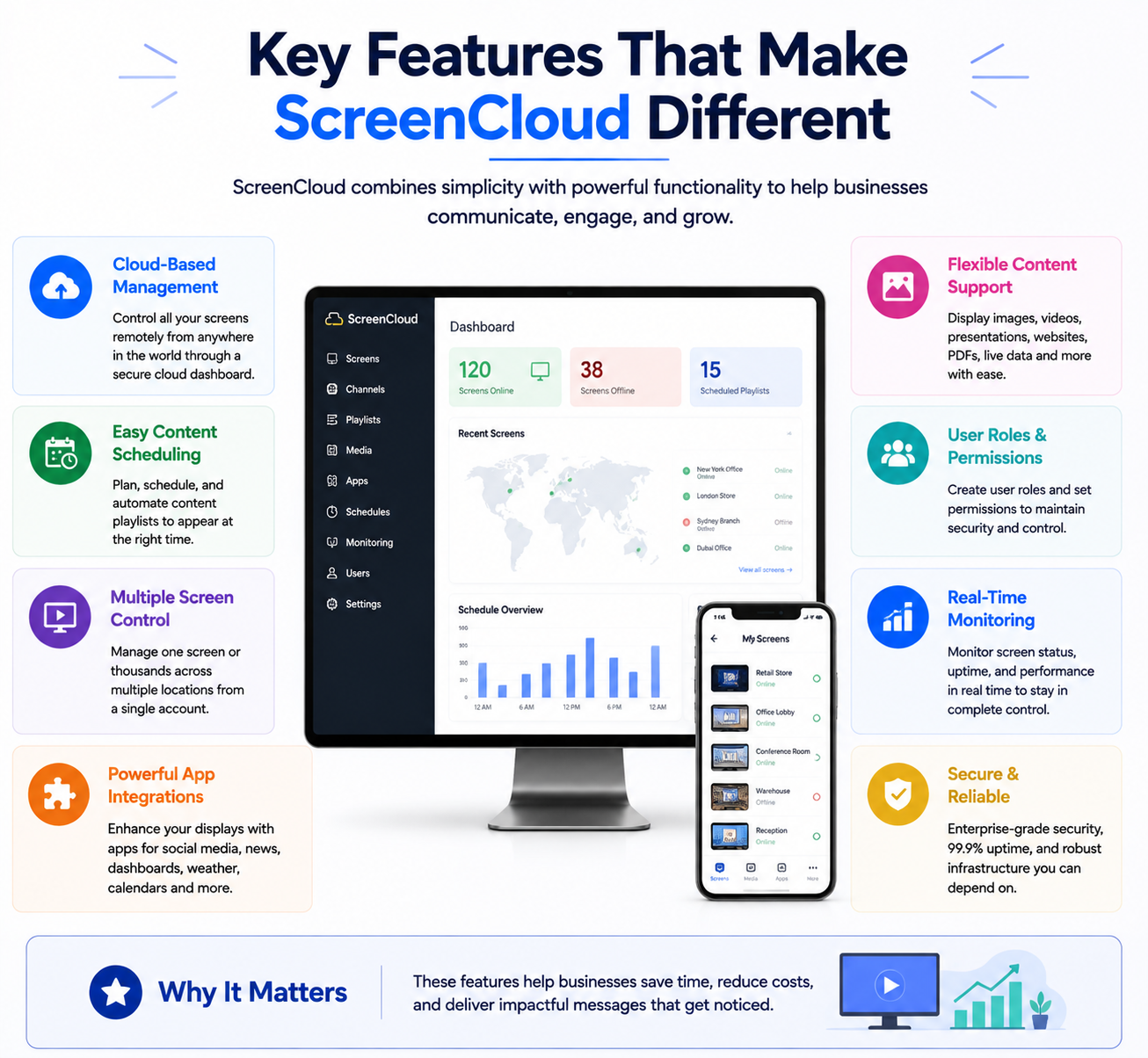
One of the reasons ScreenCloud has become popular is its combination of simplicity and functionality. Many digital signage platforms offer advanced features but become difficult for everyday users. ScreenCloud focuses on making professional digital communication accessible.
Important features include:
Cloud-Based Management
Users can manage screens remotely without being physically present. This is especially valuable for companies with multiple branches or international operations.
Content Scheduling
Businesses can prepare content in advance and schedule when it appears. This helps maintain consistent communication without manual updates.
App Marketplace
ScreenCloud supports different applications that allow users to display useful information such as calendars, dashboards, social media updates, and business data.
Multiple Screen Control
Organizations can manage hundreds or thousands of displays from one dashboard.
User Permissions
Companies can control access levels so different teams can manage specific screens or content.
Major Benefits of Using ScreenCloud for Businesses
Digital signage provides benefits beyond simple advertising. It improves communication, strengthens branding, and creates better experiences for customers and employees.
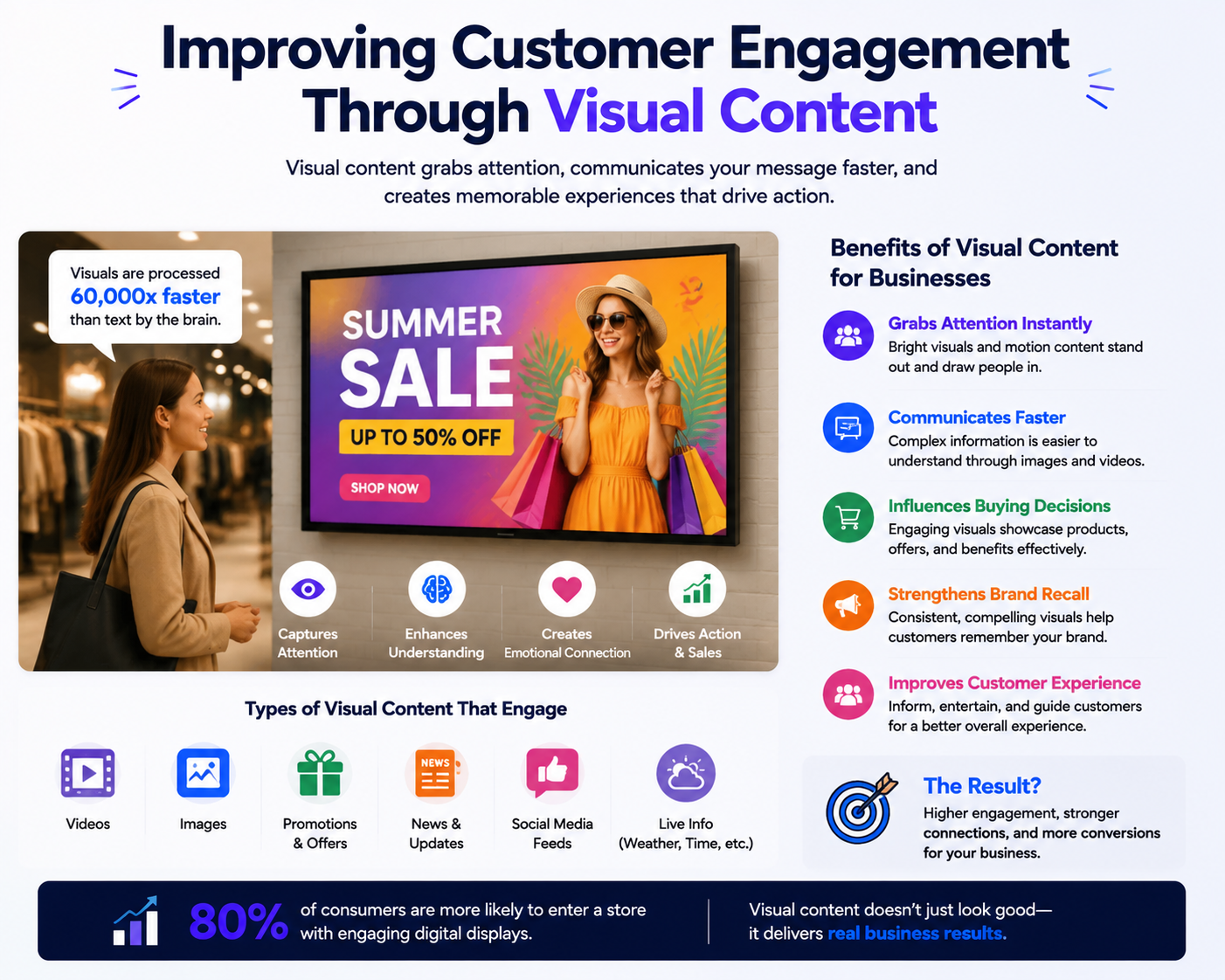
One major advantage is increased engagement. Visual content naturally attracts attention faster than plain text. A bright, dynamic display can communicate information within seconds, making it easier for viewers to understand messages.
Businesses can also save money over time. While digital signage requires an initial investment in screens and software, it reduces ongoing printing and replacement costs.
Another important benefit is speed. If a company needs to announce a new promotion, update safety instructions, or share urgent information, digital signage allows immediate changes.
ScreenCloud also supports brand consistency. Companies with multiple locations can ensure that every screen follows the same design standards while still allowing local customization.
Improving Customer Engagement Through Visual Content
Customers today are surrounded by digital experiences everywhere they go. Businesses must compete for attention, and digital signage provides a powerful way to stand out.
Retail stores can use ScreenCloud to highlight new products, promotions, and customer reviews. Restaurants can display menus, special offers, and seasonal campaigns. Hotels can welcome guests and provide information about services.
The effectiveness comes from combining visuals, motion, and timing. A customer may ignore a printed advertisement but notice an attractive video playing on a digital screen.
Businesses can also use screens to create emotional connections. Storytelling videos, brand messages, and interactive experiences can make customers feel more connected to a company.
ScreenCloud Digital Signage Features in 2026
In 2026, digital signage platforms are becoming more intelligent. ScreenCloud continues to represent the shift toward flexible and connected communication systems.
Modern businesses expect digital signage software to integrate with existing tools rather than operate separately.
ScreenCloud supports connections with various business applications, making screens more informative and useful.
Content Management and Scheduling Tools
Content management is the foundation of any digital signage platform. ScreenCloud provides tools that allow users to upload, organize, and display content efficiently.
A marketing team can create campaigns months ahead and schedule them automatically. A company can prepare holiday promotions before the season begins. An office can schedule weekly announcements without constant manual work.
The ability to automate content saves time and improves consistency.
Apps, Integrations, and Smart Display Capabilities
A major advantage of modern digital signage is integration.
ScreenCloud can connect displays with useful business information, including:
- Employee calendars
- Social media updates
- Performance dashboards
- News feeds
- Weather information
These integrations turn screens into active information centers rather than passive displays.
ScreenCloud Pricing and Plans: What Businesses Should Know
Pricing is an important factor when selecting digital signage software. ScreenCloud generally follows a subscription-based model where businesses pay according to their requirements, such as the number of screens and features needed.
Factor | Consideration |
Number of screens | More screens usually require higher plans |
Features | Advanced integrations may affect pricing |
Business size | Small businesses need different solutions than enterprises |
Support requirements | Dedicated support may be included in higher tiers |
Before choosing a plan, businesses should evaluate their goals, number of locations, content requirements, and expected growth.
Industries That Benefit Most From ScreenCloud
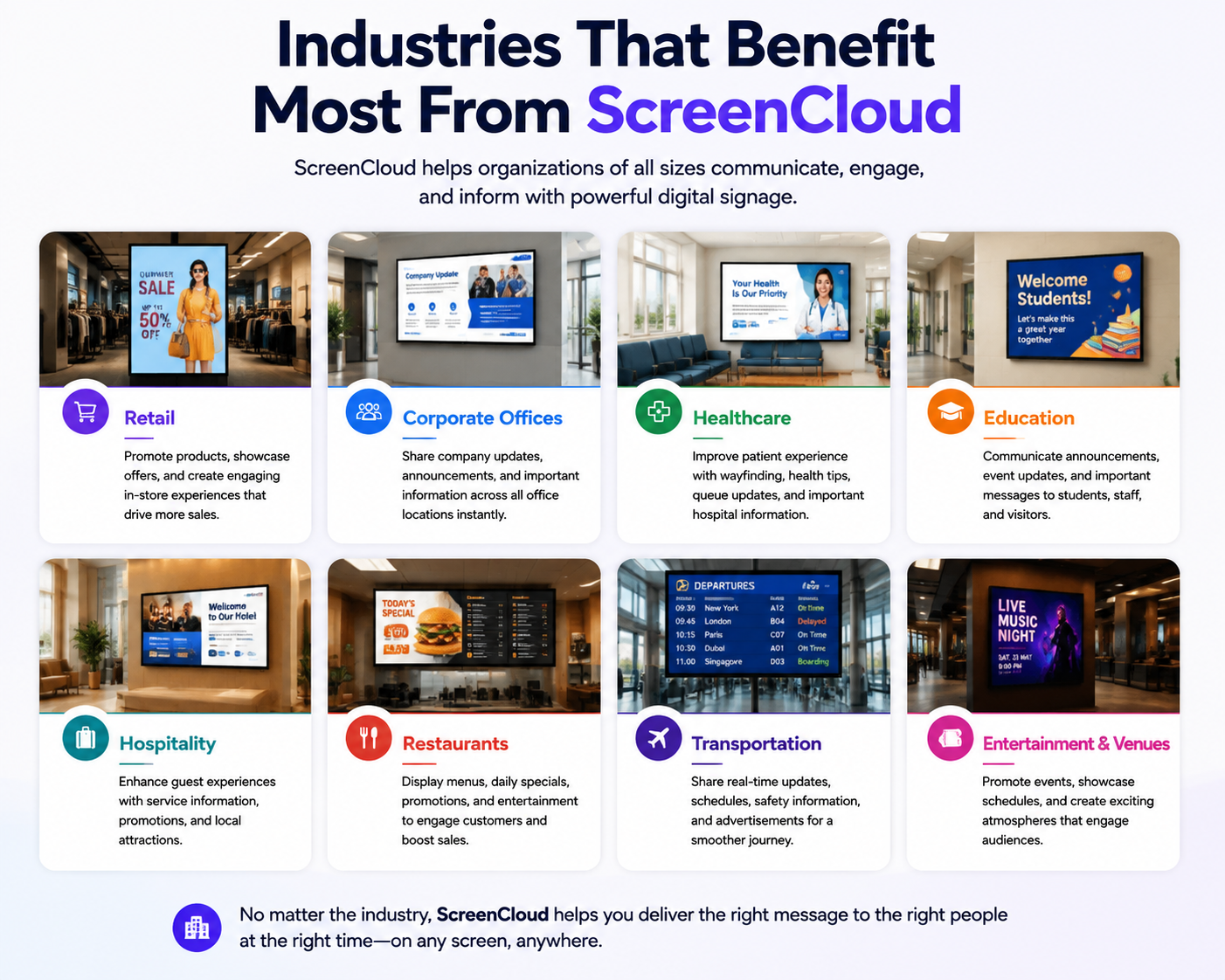
Digital signage has applications across almost every industry.
Retail, Healthcare, Education, and Corporate Uses
Retail businesses use digital signage to improve shopping experiences. Schools and universities use it for announcements and campus communication. Healthcare organizations use displays for patient guidance and important information.
Corporate offices benefit from digital signage by improving internal communication. Employees can receive updates about company news, meetings, achievements, and safety information.
Hotels and restaurants also use digital displays to improve guest experiences.
How AI Is Changing Digital Signage in 2026
Artificial intelligence is becoming a major part of digital signage technology.
AI can help businesses understand audience behavior, recommend content, automate scheduling, and create personalized experiences.
Future digital signage systems may automatically adjust messages based on customer demographics, traffic patterns, or real-time conditions.
This means screens will become smarter and more responsive.
Setting Up ScreenCloud: A Complete Beginner-Friendly Guide
Setting up ScreenCloud is designed to be simple:
- Choose a compatible display.
- Install the ScreenCloud player.
- Connect the device to the internet.
- Add the screen to your account.
- Upload and schedule content.
Once connected, users can manage displays through the cloud dashboard.
The simplicity makes it suitable for small businesses and large organizations.
ScreenCloud vs Traditional Digital Signage Solutions
Feature | ScreenCloud | Traditional Solutions |
Remote management | Available | Often limited |
Cloud control | Yes | Sometimes unavailable |
Setup difficulty | Beginner-friendly | Often complex |
Updates | Instant | Manual |
Scalability | High | Limited |
ScreenCloud focuses on reducing complexity while providing professional digital signage capabilities.
ScreenCloud Security and Reliability Features
Security is essential because digital signage systems often display important business information.
ScreenCloud focuses on secure cloud management, user permissions, and controlled access.
Businesses can manage who can upload content, edit screens, or access specific locations.
Reliable cloud infrastructure also helps reduce downtime and maintain consistent communication.
Customer.io vs Competitors: Which Marketing Automation Platform Is Best?
How to Get Started with Thryv: A Beginner’s Step-by-Step Guide
Is Ivacy VPN Worth It? A Complete Review for Privacy-Conscious Users
Top Reasons to Shop at SwimOutlet.com for Swimwear and Accessories
Best Gaia Herbs Products for Immune Support, Stress Relief, and Overall Health
Future Trends of Digital Signage Beyond 2026
The future of digital signage will likely include deeper AI integration, interactive displays, voice technology, and advanced analytics.
Screens will become more personalized and connected with smart environments.
Businesses that adopt digital signage early can create stronger customer relationships and more efficient communication systems.
Conclusion
ScreenCloud represents the modern approach to digital signage in 2026. Instead of treating screens as simple display devices, businesses can use them as powerful communication platforms that connect customers, employees, and communities.
With cloud management, scheduling tools, integrations, and user-friendly controls, ScreenCloud helps organizations create professional digital experiences without unnecessary complexity.
As businesses continue moving toward faster and smarter communication methods, digital signage will become an essential part of marketing, workplace communication, and customer engagement strategies.
For companies looking to improve visibility, simplify content management, and create better experiences, ScreenCloud offers a flexible solution that matches the future of digital communication.
Frequently Asked Questions
Q. What is ScreenCloud used for?
A. ScreenCloud is used to manage digital displays for businesses, schools, offices, retail stores, healthcare facilities, and other organizations.
Q. Does ScreenCloud require technical skills?
A. No. ScreenCloud is designed for everyday users and does not require advanced technical knowledge.
Q. Can ScreenCloud manage multiple screens?
A. Yes. Businesses can manage multiple displays from one centralized dashboard.
Q. Is ScreenCloud suitable for small businesses?
A. Yes. Small businesses can use ScreenCloud to create professional digital signage without expensive infrastructure.
Q. How does AI improve digital signage?
A. AI helps improve digital signage by enabling smarter content recommendations, automation, personalization, and better audience understanding.
Table of Contents
Related Posts