
Why Travelers Choose Booking.com North America for Their Next Trip
Planning a trip has become completely different from what it was a decade ago. Travelers no longer want to spend hours calling hotels, comparing printed brochures, or searching through countless websites to find the right place to stay. Today’s travelers expect speed, flexibility, transparency, and confidence before they confirm a reservation. This is exactly where Booking.com North America has become a popular choice for millions of people planning vacations, business trips, family adventures, and weekend escapes.
North America offers some of the most diverse travel experiences in the world, from the skyscrapers of New York City and the beaches of California to the national parks of Canada and the scenic roads of the United States. Because every traveler has different expectations, finding the perfect accommodation can feel overwhelming. Booking.com helps simplify that process by bringing together millions of accommodation options, useful filters, traveler reviews, and convenient booking features in one place.
Recent travel trends show that people are increasingly looking for personalized journeys rather than standard vacations. Booking.com’s own travel research highlights that travelers are moving toward experiences that match their individual interests, preferences, and lifestyles. The company surveyed more than 29,000 travelers across 33 countries and territories for its travel predictions research, showing that personalization and technology are becoming major factors in travel decisions.
So, what makes Booking.com such a preferred platform for travelers exploring North America? The answer lies in its combination of choice, convenience, technology, trust, and flexibility.
Table of Contents
Understanding the Growing Popularity of Booking.com in North America
How Online Travel Booking Has Changed Modern Trips
The travel industry has experienced a major digital transformation. In the past, travelers often depended on travel agents or direct hotel calls to organize their trips. While those methods still exist, online platforms have changed expectations completely. People now want to research destinations, compare prices, read reviews, and complete reservations within minutes.
Think about planning a road trip across the United States. A traveler might need a hotel in Chicago, a vacation rental near a national park, and a comfortable apartment in Los Angeles. Instead of visiting multiple websites, online travel platforms allow everything to be managed from a single dashboard. This convenience saves time and reduces the stress associated with trip planning.
Booking.com has benefited from this shift by creating a marketplace where travelers can discover accommodations that match different budgets and preferences. According to company filings, Booking.com’s platform included approximately 4.7 million properties globally as of mid-2026, including hotels, resorts, homes, apartments, and other alternative accommodations.
For North American travelers, this variety is especially valuable because the region has extremely diverse travel needs. A solo traveler visiting Toronto may want a budget-friendly downtown hotel, while a family visiting Florida may prefer a spacious vacation home. Business travelers may need convenient locations near conference centers, while adventure travelers may search for cabins near natural attractions.
Online booking has essentially turned travel planning into a personalized shopping experience. Travelers can now build trips around their lifestyle instead of adjusting their plans around limited options.
Booking.com’s Expanding Role in North American Travel
North America represents one of the world’s most important travel markets. Travelers within the United States, Canada, and Mexico frequently explore both domestic and international destinations. This creates demand for platforms that can handle different types of trips, currencies, languages, and accommodation expectations.
Booking.com’s strength comes from its ability to connect travelers with a broad selection of properties while offering tools that make decisions easier. Instead of simply listing hotels, the platform provides detailed property information, photos, location details, guest ratings, and availability information.
The company has also expanded beyond traditional hotels by focusing heavily on alternative accommodations such as apartments, homes, and unique stays. These options have become increasingly attractive because modern travelers often want experiences that feel more personal and local. Booking.com reported strong growth in alternative accommodations, with millions of homes, apartments, and unique properties available through its marketplace.
For travelers exploring North America, this means more freedom. Someone visiting a major city can choose a modern apartment instead of a standard hotel room. Someone planning a mountain vacation can look for cabins or vacation homes. Someone traveling with a large family can find properties with kitchens, multiple bedrooms, and additional living space.
Wide Range of Accommodation Choices for Every Traveler
Hotels, Resorts, Apartments, and Unique Stays
One of the biggest reasons travelers choose Booking.com North America is the impressive variety of accommodation choices. Travel is not one-size-fits-all, and people want options that match their purpose, budget, and personal style.
A couple planning a romantic getaway may search for a boutique hotel with excellent dining options. A family traveling with children may prioritize spacious rooms and convenient facilities. A digital nomad might look for a long-stay apartment with reliable internet access. Booking.com’s large selection makes these different travel scenarios easier to manage.
Traditional hotels remain a major part of the platform. Travelers can find everything from international hotel chains to independent properties offering unique local experiences. Luxury resorts, roadside accommodations, business hotels, and affordable stays are all available for different types of journeys.
However, modern travelers increasingly want more than a simple hotel room. Vacation rentals and alternative accommodations have become popular because they provide flexibility and comfort. A home rental can feel like a temporary residence rather than just a place to sleep.
This trend is especially important in North America, where travelers often take longer road trips or travel with larger groups. A family exploring California or a group visiting a national park may prefer a full home instead of multiple hotel rooms.
Options for Budget Travelers and Luxury Seekers
Another reason Booking.com attracts North American travelers is that it serves almost every price category. Budget-conscious travelers can search for affordable stays, while luxury travelers can discover premium resorts and exclusive properties.
Travel costs have become an important factor in decision-making. People want memorable experiences but also want control over their spending. Booking.com allows travelers to compare different options before making a final choice.
For example, someone planning a trip to New York City may compare a downtown hotel, a nearby apartment, and a budget accommodation outside the city center. Instead of guessing which option provides the best value, travelers can review prices, locations, and guest feedback.
Luxury travelers also benefit from detailed property information. High-end vacations often require more planning because expectations are higher. Travelers want to know about amenities, services, location advantages, and previous guest experiences before spending significant amounts of money.
This balance between affordability and premium choices makes Booking.com appealing to a broad audience.
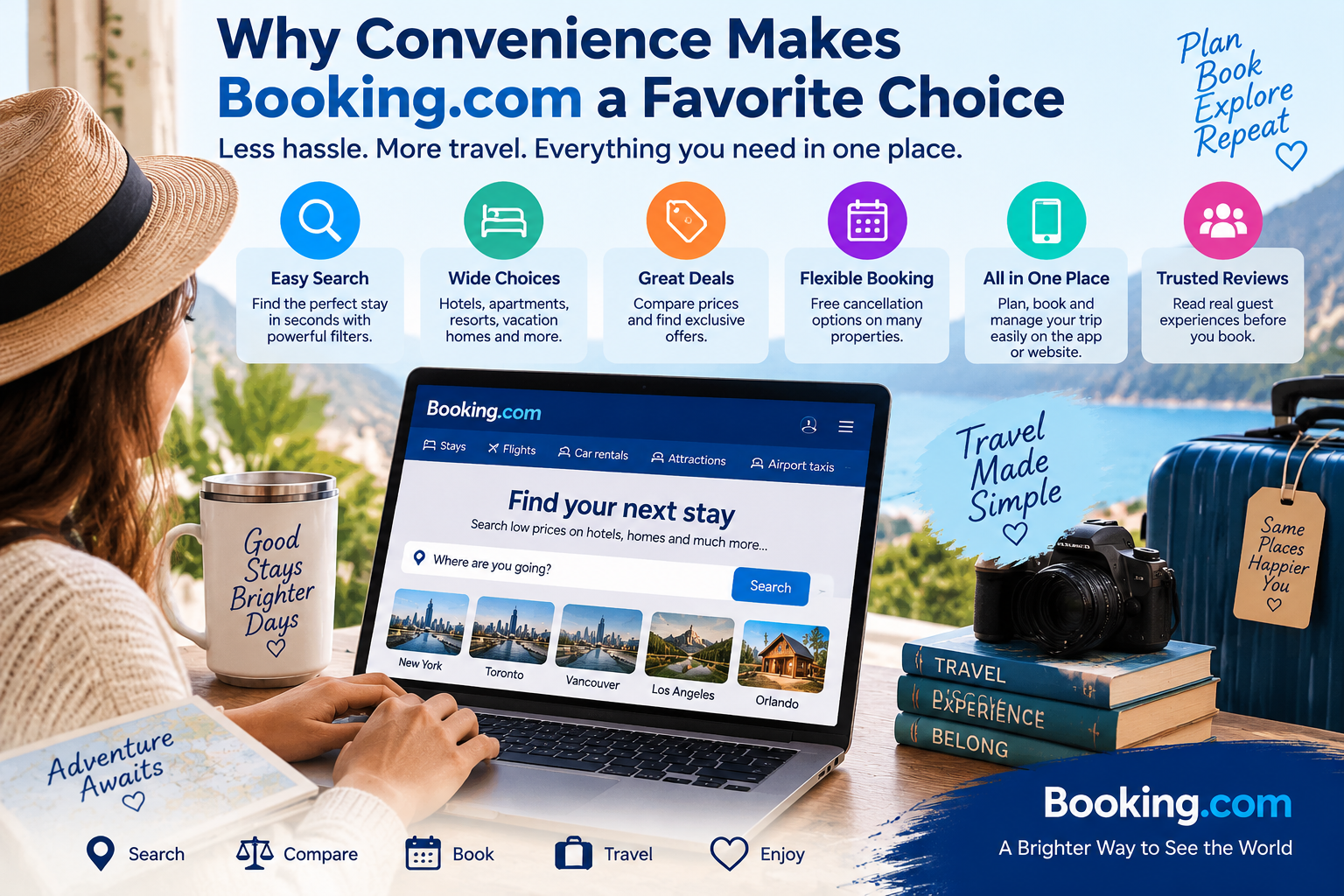
Why Convenience Makes Booking.com a Favorite Choice
Simple Search and Comparison Features
Travel planning can quickly become complicated when dozens of factors need to be considered. Location, price, amenities, cancellation rules, ratings, and availability all influence the final decision.
Booking.com simplifies this process through search filters that help travelers narrow down choices. Instead of scrolling through endless possibilities, users can focus on what matters most to them.
A traveler searching for accommodation in Miami might filter results based on beachfront location, swimming pools, price range, or guest rating. Someone visiting a business district might prioritize properties with transportation access or workspace facilities.
This approach makes travel planning feel less like a difficult research project and more like a guided experience.
Flexible Booking Policies and Traveler-Friendly Options
Flexibility has become one of the most important factors in travel decisions. Unexpected situations can happen, including schedule changes, weather issues, or personal emergencies.
Many travelers prefer booking options that provide cancellation flexibility or clear policies. Having transparent information before booking creates confidence and reduces uncertainty.
Modern travelers are not only searching for low prices; they are searching for reliability. A slightly higher-priced option with better flexibility may feel more valuable than the cheapest choice with strict restrictions.
Booking.com’s focus on displaying important booking details helps travelers make decisions based on their individual needs.
Technology and Personalization Behind Better Travel Experiences
Smart Recommendations and AI-Powered Travel Assistance
Technology is changing the way people discover destinations. Travelers increasingly expect platforms to understand their interests and provide relevant suggestions.
Artificial intelligence and data-driven recommendations are becoming important parts of travel planning. Instead of manually searching for ideas, travelers can receive suggestions based on previous searches, preferences, and travel behavior.
Booking.com has highlighted the growing role of technology in creating more personalized journeys. Its travel research shows that many travelers are interested in AI-supported tools that help discover destinations and create customized experiences.
This is similar to having a digital travel assistant available anytime. Rather than offering the same recommendations to everyone, technology can help match travelers with experiences that fit their personality.
Mobile-Friendly Travel Planning
Smartphones have transformed travel habits. Many travelers now research destinations, compare accommodations, and manage reservations directly from mobile devices.
A mobile-friendly booking experience is essential because travel decisions often happen while people are on the move. Someone sitting in an airport, traveling by train, or exploring a new city may need quick access to reservation details.
Mobile apps provide convenience by keeping booking information, confirmations, and travel updates in one place.
This creates a smoother experience from the moment a traveler starts planning until the journey ends.

The Benefits of Using Booking.com for North American Destinations
Exploring Popular Cities and Hidden Gems
North America offers endless travel opportunities. Famous destinations such as New York, Las Vegas, Vancouver, Orlando, and Los Angeles attract millions of visitors every year. However, many travelers are also searching for smaller towns and unique destinations.
Booking platforms help people discover places they may not have considered before. Travelers can explore accommodations in coastal communities, mountain regions, countryside locations, and cultural destinations.
This ability to discover hidden gems has changed how people travel. Instead of following only traditional tourist routes, many travelers now create personalized adventures.
Supporting Different Travel Styles
Every traveler has a different reason for exploring North America. Some travel for relaxation, some for adventure, and others for work.
Booking.com supports different travel styles by offering options suitable for:
- Family vacations
- Business trips
- Romantic getaways
- Solo adventures
- Road trips
- Long stays
- Outdoor experiences
The platform’s flexibility allows travelers to create trips that match their personal goals.

Customer Trust, Reviews, and Transparent Information
The Importance of Verified Traveler Feedback
Online reviews have become one of the most important parts of travel decisions. Travelers want to know what previous guests experienced before committing to a reservation.
Reviews provide insights that official property descriptions cannot always provide. Guests often share information about cleanliness, location, service quality, and overall experience.
This creates a community-driven decision-making process. Instead of relying only on advertisements, travelers can learn from real experiences
Building Confidence Before Booking
Trust is essential when planning a trip. A poor accommodation choice can affect an entire vacation experience.
Detailed listings, photos, ratings, and guest feedback help reduce uncertainty. Travelers feel more confident when they understand what they are booking.
This transparency is one reason online travel platforms continue to grow in popularity.
Website Performance and Reliability With (IS) Interserver Webhosting and VPS
Why Hostinger Is a Popular Choice for Startups and Small Businesses
How NordVPN DE Helps Users Protect Their Online Privacy and Data
Holiday Autos 2026 Guide: How Online Car Rental Services Are Evolving
Logitravel ES Review: Features, Benefits, and Travel Services Explained
How Booking.com Supports Modern Travel Trends
Sustainable Travel and Changing Preferences
Travelers are becoming more aware of environmental and social impacts. Many people now consider sustainability when selecting destinations and accommodations.
Booking.com research indicates that climate concerns are influencing travel decisions, with many travelers considering weather risks when choosing destinations and travel timing.
This shows that modern travelers are not only asking, “Where should I go?” but also “How should I travel responsibly?”
Family, Business, and Adventure Travel Solutions
North American travel includes many different purposes. Families need comfort, business travelers need efficiency, and adventure travelers need access to unique locations.
A flexible travel platform must support all these needs. Booking.com’s wide marketplace allows travelers to choose accommodations based on their specific situations.
Conclusion
Booking.com North America has become a preferred choice for travelers because it combines convenience, variety, technology, and trust in one platform. Modern travelers want more control over their journeys, and Booking.com provides tools that help them discover accommodations that match their expectations.
From affordable stays to luxury resorts, from city hotels to unique vacation homes, the platform offers options for nearly every type of traveler. As travel continues to become more personalized and technology-driven, platforms that understand customer needs will remain essential.
For anyone planning their next North American adventure, Booking.com provides a practical way to explore possibilities, compare choices, and create a travel experience that feels truly personal.
Frequently Asked Questions
Q. Why do travelers prefer Booking.com for North American trips?
A. Travelers choose Booking.com because it offers a large selection of accommodations, easy comparison tools, customer reviews, and flexible booking options.
Q. Can I find vacation rentals on Booking.com North America?
A. Yes. Booking.com offers many alternative accommodations, including apartments, homes, villas, and unique stays suitable for different travel needs.
Q. Is Booking.com useful for budget travelers?
A. Yes. Travelers can compare different price ranges and find accommodations that match their budgets.
Q. Does Booking.com help travelers discover new destinations?
A. Yes. The platform allows users to explore both popular cities and lesser-known destinations across North America.
Q. Why are traveler reviews important when using Booking.com?
A. Reviews help travelers understand real guest experiences and make more informed booking decisions.
Table of Contents
Related Posts