
Discovering Ferry Routes and Travel Services Available With MrFerry DE
Discover the convenience of MrFerry DE with this complete guide to ferry routes and travel services across Europe. Learn about popular connections from Germany to Sweden, Denmark, Norway, Finland, and other destinations, along with ticket booking, vehicle transportation, cabins, pet travel, and helpful planning tips for a smoother ferry journey.
Table of Contents
Understanding MrFerry DE and Its Ferry Booking Approach
Planning a ferry journey can feel surprisingly complicated when several operators, departure ports, sailing times, vehicle options, cabins, and prices are involved. MrFerry DE is designed to simplify that process by bringing different ferry connections together in one online comparison environment. Rather than checking numerous ferry companies individually, travelers can enter their preferred route and travel date and compare the available departures, prices, and travel options. The platform covers ferry travel across Northern Europe and the Mediterranean, making it particularly useful for people planning journeys between Germany, Scandinavia, the Baltic region, and other European destinations.
The German MrFerry platform currently presents itself as a ferry comparison and booking service that brings together offers from more than 90 shipping companies. Its network includes destinations such as Sweden, Denmark, Norway, Finland, Estonia, Latvia, Lithuania, and several Mediterranean destinations. This broad selection means the service can be useful for different types of travelers, from families taking a road trip to Scandinavia to passengers looking for a long overnight crossing. The important advantage is not simply the number of routes available, but the ability to compare alternatives before committing to a particular sailing.
Why Ferry Travel From Germany Is Worth Considering
Germany occupies an interesting position within Europe’s ferry network because its northern ports provide practical connections toward Scandinavia and the Baltic Sea. Travelers can leave from ports such as Kiel, Rostock, Travemünde, and Puttgarden and reach destinations in Denmark, Sweden, Finland, Norway, and the Baltic states. For someone traveling with a car, camper, motorcycle, or substantial luggage, a ferry can be much more convenient than combining multiple flights and ground transfers. Instead of treating the sea as an obstacle, ferry travel turns the crossing itself into part of the journey.
The choice can be especially attractive for road trips. Imagine driving through Germany in the afternoon, boarding a ship in the evening, having dinner and sleeping in a cabin, and arriving in another country the next day. That is a very different experience from spending hours inside an airport. Ferry travel also gives passengers the opportunity to bring a vehicle, which can be valuable when exploring destinations where public transport does not reach every scenic area. For travelers who enjoy flexibility, this combination of transportation and accommodation can make a ferry crossing feel more like a moving hotel than simply a method of getting from one shore to another.
Major German Departure Ports Available Through MrFerry DE
One of the first things travelers should understand is the role played by Germany’s major ferry ports. Kiel, Rostock, Travemünde, and Puttgarden are among the important departure points for international ferry travel from Germany. Each port serves a different geographical purpose, so choosing the right one can make a substantial difference to the overall journey. A traveler heading toward Norway may find Kiel particularly convenient, while someone traveling to Denmark may prefer Puttgarden or Rostock depending on the final destination.
Travemünde is particularly important for longer Baltic Sea journeys, including connections toward Sweden and Finland. Rostock provides important links toward Denmark and Sweden, while Puttgarden is associated with the short crossing toward Rødby in Denmark. Kiel is useful for routes toward destinations including Gothenburg and Oslo. Instead of choosing a port simply because it is geographically closest, travelers should consider the complete journey, including driving time to the terminal, crossing duration, arrival location, and onward transportation.
Exploring Ferry Routes Between Germany and Sweden
Sweden is one of the most interesting destinations for travelers using MrFerry DE, especially those planning a road trip. Current route information on the platform includes important connections such as Kiel–Gothenburg, Rostock–Trelleborg, Travemünde–Malmö, and Travemünde–Trelleborg. These routes serve different travel purposes, so there is no single “best” ferry for everyone. Someone heading toward western Sweden may find Gothenburg more convenient, while a traveler exploring southern Sweden may prefer Malmö or Trelleborg.
The Kiel–Gothenburg route is particularly suited to travelers who like overnight travel because the crossing takes considerably longer than the short Baltic connections. Rostock–Trelleborg, on the other hand, can be attractive for travelers who want a relatively shorter sea crossing before continuing by road through Sweden. Travemünde–Malmö is another useful option for reaching southern Sweden directly. When comparing these routes, it makes sense to look beyond the ticket price and consider the total travel time, vehicle requirements, departure schedule, cabin availability, and the distance between the arrival port and your final destination.
Discovering Germany–Denmark Ferry Connections
Denmark is another major part of the ferry network available through MrFerry DE. Two particularly important connections from Germany are Puttgarden–Rødby and Rostock–Gedser. The Puttgarden–Rødby crossing is a short connection and can be useful for travelers who want to reach Denmark quickly before continuing toward Copenhagen or other parts of Scandinavia. Rostock–Gedser takes longer but provides another direct maritime gateway into Denmark.
The choice between these routes depends heavily on the wider road itinerary. If the traveler is already driving toward northern Germany and wants a very short sea crossing, Puttgarden may be appealing. Someone approaching from another direction might find Rostock more practical. Denmark can also function as more than a final destination because it provides an important stepping stone toward Sweden and Norway. This makes ferry planning particularly interesting for multi-country road trips, where a single journey can combine Germany, Denmark, Sweden, and Norway rather than treating each country as a separate vacation.
Ferry Options Toward Norway
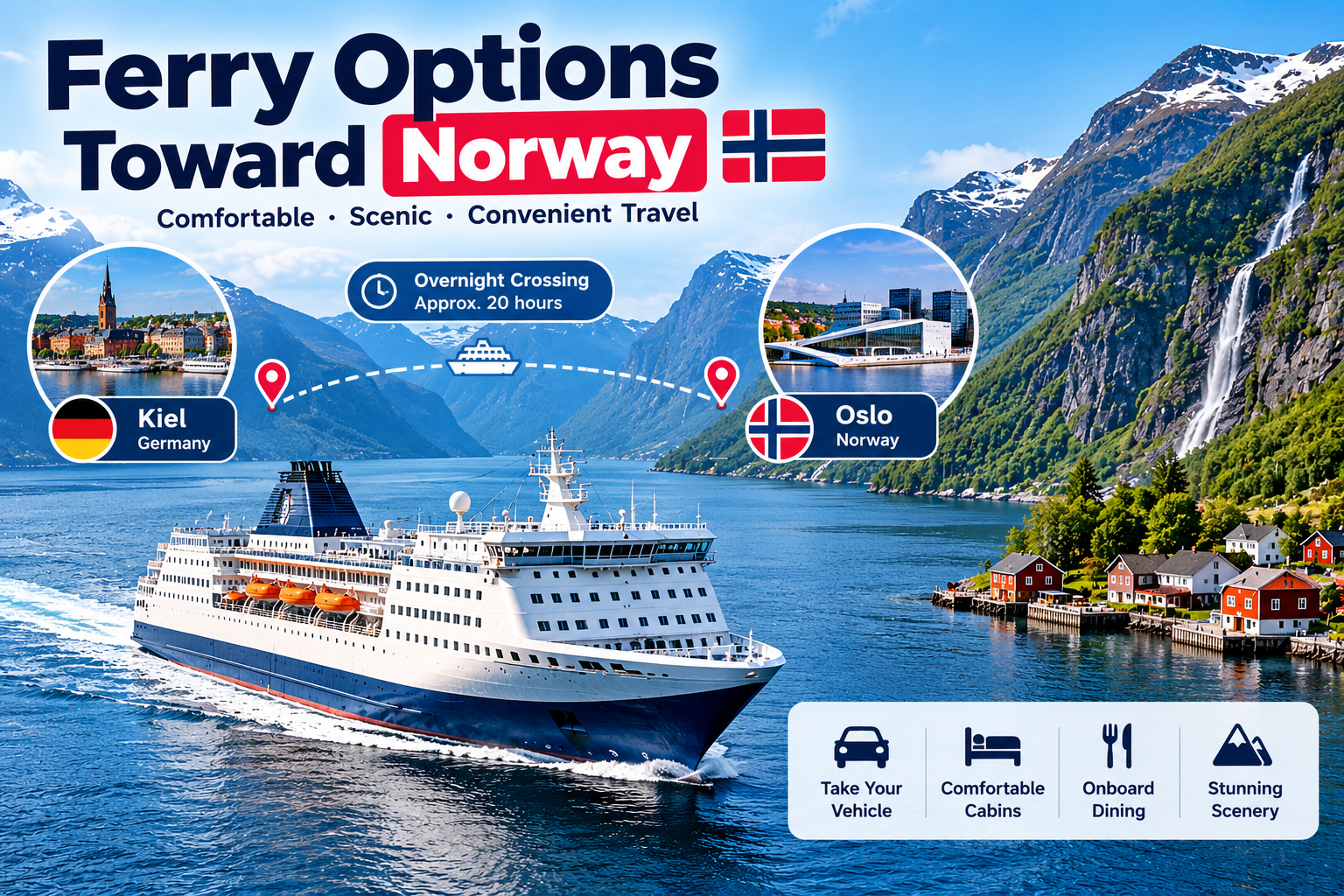
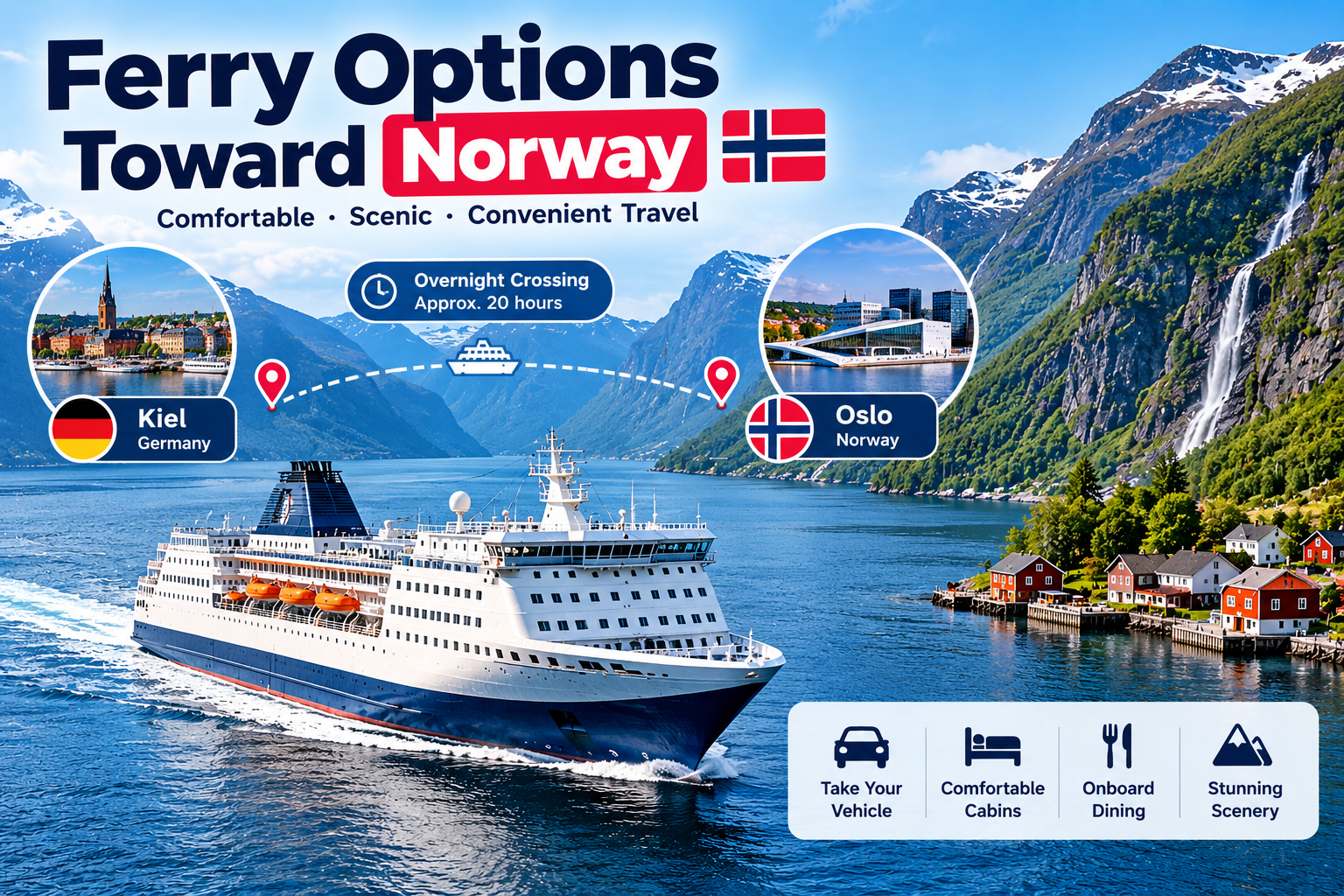
Norway is famous for dramatic landscapes, fjords, mountains, and scenic road trips, and ferry travel can provide an appealing way to begin such an adventure. For travelers departing directly from Germany, Kiel–Oslo is one of the most notable ferry connections. The route is designed as a longer journey rather than a quick crossing, with passengers able to travel overnight and arrive in Norway without driving through Denmark and Sweden first.
The overnight nature of the route can change how travelers think about the ticket price. A ferry fare may include transportation and, depending on the booking, a cabin that replaces the need for a separate hotel night. That does not automatically make every ferry booking cheaper than flying, but it can make the overall travel experience more convenient. Once in Oslo, travelers can continue by car toward other parts of Norway. MrFerry DE also provides access to comparisons involving Norwegian routes connected through Denmark, giving road-trip planners more possibilities when building a Scandinavian itinerary.
Reaching Finland by Ferry From Germany
Finland is one of the longer-distance destinations accessible from Germany by ferry. The Travemünde–Helsinki connection is especially significant because it allows travelers to take a vehicle across the Baltic Sea rather than driving through several countries before reaching Finland. The crossing takes around 30 hours, making it a very different experience from short ferry routes to Denmark or southern Sweden.
For long crossings like this, accommodation becomes an important part of the booking decision. Travelers should think about whether they want a private cabin, what type of seating or sleeping arrangement is available, and what onboard facilities are included. A long ferry trip can actually become one of the most relaxing portions of a road trip when planned properly. Instead of watching kilometers disappear through a car window, passengers can spend the journey resting, eating, reading, or simply watching the Baltic Sea.
Baltic Ferry Routes and Eastern European Connections
The Baltic region adds another dimension to the ferry network available through MrFerry DE. Germany is connected by maritime routes toward destinations including Latvia and Lithuania, while Sweden and Finland provide additional connections across the Baltic Sea. These routes can be useful for travelers planning more unusual European itineraries, particularly people who want to combine several countries without relying entirely on air travel.
Baltic ferry travel can also be attractive for travelers with vehicles because it creates a bridge between mainland Europe and northern or eastern destinations. Routes such as Travemünde–Liepāja and connections toward Klaipėda provide alternatives to very long road journeys. However, long-distance Baltic routes require more preparation than short crossings. Departure times, cabin availability, vehicle dimensions, port arrival requirements, and seasonal schedules should all be checked carefully before booking.
Comparing Ferry Companies Through MrFerry DE
One of the strongest reasons to use a comparison platform is that different ferry companies may operate similar routes or serve nearby ports. MrFerry’s current German website states that it brings offers from more than 90 shipping companies together, allowing travelers to compare available options rather than automatically selecting the first operator they find. This can be particularly useful when prices and schedules vary according to travel date, passenger numbers, vehicle type, accommodation, and availability.
Comparison shopping matters because the cheapest basic fare is not necessarily the cheapest complete journey. One operator may offer a lower passenger price while another may have a more convenient departure time or better vehicle availability. A night sailing with a cabin could also provide greater practical value than a cheaper daytime crossing followed by a hotel stay. The best approach is therefore to compare the complete travel package rather than focusing on one number displayed on the first search result.
How MrFerry DE Ticket Search Works
The booking process is designed around a straightforward search: travelers select their departure and arrival points, choose a date, enter passenger information, and provide vehicle details when necessary. The platform then displays available departures that match the requested journey. Travelers can compare departure times, prices, accommodation choices, and other options before selecting the preferred sailing.
This process becomes particularly useful when travel plans are flexible. Instead of searching only one sailing, travelers can check alternative departure times and dates to identify better prices or more convenient schedules. For example, changing an evening departure to the following morning might affect both availability and cost. Similarly, traveling on a weekday rather than a busy weekend may provide more choices. The more flexible the traveler is, the more useful a comparison platform can become.
Traveling With Cars, Motorcycles, and Campers
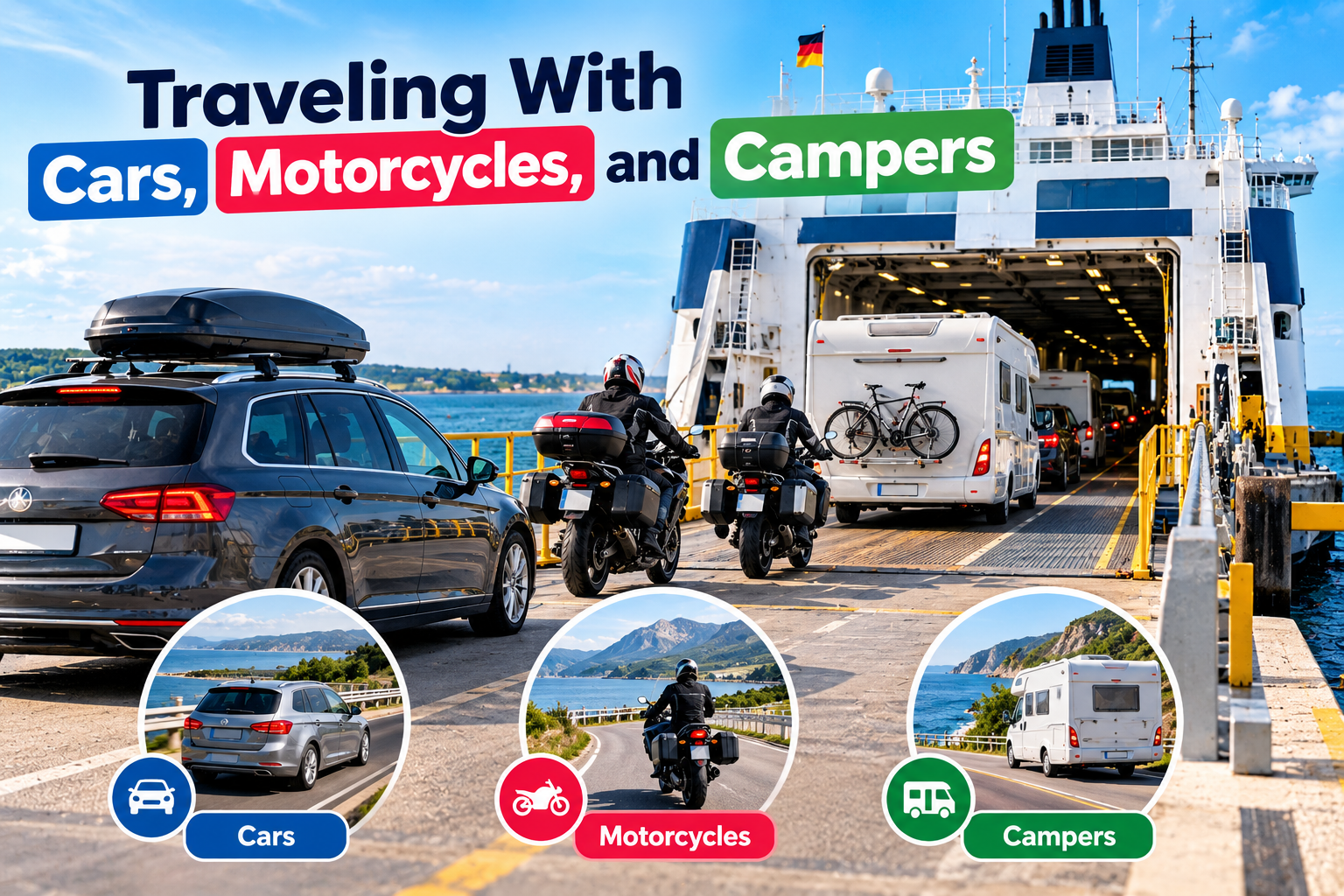
Vehicle travel is one of the major advantages of ferry transportation. A flight might get you to Stockholm, Oslo, or Helsinki quickly, but it does not solve the problem of transporting your own car. A ferry can allow you to take your vehicle with you, giving you the freedom to explore beyond the major cities after arrival. This is particularly valuable in Scandinavia, where road trips through rural areas, coastal regions, forests, and mountain landscapes are popular.
However, vehicle information needs to be entered accurately. The vehicle category, length, height, and sometimes additional specifications can influence the available booking options and price. A campervan that is longer or taller than a standard passenger car may require a different vehicle category. Travelers should therefore check their vehicle measurements before completing the reservation. Getting this information right at the beginning can help prevent unpleasant surprises at the port.
Choosing Cabins and Onboard Accommodation
Accommodation can transform a ferry crossing from basic transportation into a comfortable travel experience. Short crossings may require little more than a normal passenger seat or lounge area, but longer overnight journeys are different. Routes toward Sweden, Finland, Norway, and the Baltic region can involve many hours at sea, making a cabin an important consideration.
When deciding whether to book a cabin, think about the purpose of the journey. If the goal is simply to save money on a short daytime crossing, a cabin may not be necessary. If the ferry travels overnight and arrives early the following morning, however, a cabin can make the journey much more comfortable. MrFerry provides accommodation options as part of the comparison process, allowing travelers to consider the complete cost of the crossing rather than looking only at the basic passenger fare.
Ferry Travel With Pets
Traveling with a pet requires additional preparation, particularly on international routes. Ferry companies can have their own rules concerning pet documentation, designated areas, cabins, and movement around the ship. MrFerry’s booking information includes options and guidance relating to pets, while its published conditions indicate that pets may be accepted on board subject to applicable rules and documentation requirements.
Pet owners should not assume that every ferry treats animals in exactly the same way. Before completing a reservation, check whether the selected vessel allows pets, whether a pet-friendly cabin is available, and which documents are required for international travel. European journeys may require identification and appropriate vaccination documentation. Planning these details early can prevent a situation where a passenger has a valid ticket but discovers that their chosen accommodation does not permit animals.
Understanding Ferry Prices and What Influences Them
Ferry prices are not fixed in the same way as a simple bus fare. The final price can depend on the route, travel date, passenger count, vehicle category, accommodation, sailing time, demand, and available fare type. MrFerry’s current German pages provide indicative pricing for some destinations, but the actual amount payable depends on the specific journey and selected options.
This is why comparing the total booking is more useful than relying on a general “starting from” price. A solo passenger without a vehicle may pay dramatically less than a family traveling with a car and cabin. Summer holidays, weekends, and popular travel dates can also affect availability. If the dates are flexible, checking several departures can reveal meaningful differences. Early comparison can also be useful on longer routes where cabins and vehicle spaces may become limited.
Best Ways to Plan a Ferry Trip With MrFerry DE
Good ferry planning begins before the booking screen. Start by identifying the destination and then work backward to determine which arrival port makes the most sense. A ferry that looks attractive because of a low fare may not be the best option if it leaves you several hundred kilometers from your final destination. Think about the entire journey, including the drive to the departure port and the drive after arriving.
It is also helpful to compare day and night departures. Day crossings may be preferable when the journey is short and passengers want to enjoy the sea views. Overnight crossings can make more sense for long-distance routes because travelers can combine transportation with rest. For families, checking cabin arrangements, meal options, vehicle access, and boarding requirements in advance can make the experience much smoother.
A Complete Guide to Understanding the Online Lottery Experience With Lottoland
How Digital Threats Are Driving Interest in Services Like Kaspersky.se
Exploring Affordable Home Décor and Furniture Solutions From IKEA
Smart Shopping Tips for Exploring Products From Havaianas ES
Why Fashion Shoppers Are Exploring Affordable Styles at BIK BOK
Pros and Considerations When Using MrFerry DE
There are several clear advantages to using a specialized ferry comparison platform. Travelers can compare multiple operators, review available sailing times, check route options, and select additional services such as cabins or vehicle transportation. The platform’s current German website emphasizes real-time comparison of prices and availability, while its broader network covers a substantial number of ferry operators and European destinations.
At the same time, travelers should remember that the final terms of a booking depend on the selected ferry company, route, fare, and travel date. A comparison platform does not eliminate the need to read ticket conditions. Cancellation rules, modification fees, vehicle restrictions, boarding deadlines, and pet policies can differ. The smartest approach is to use MrFerry DE to make comparison easier while still reading the conditions attached to the specific sailing before paying.
Conclusion
MrFerry DE provides a convenient way to explore ferry routes from Germany and across Northern Europe without having to visit numerous operator websites individually. Its current route coverage includes important German departure ports such as Kiel, Rostock, Travemünde, and Puttgarden, with connections toward destinations including Sweden, Denmark, Finland, Norway, and the Baltic region. The platform is particularly useful for travelers who want to compare sailing times, prices, vehicle options, accommodation, and availability before choosing a ferry.
The real value of ferry travel is flexibility. You can take your car, bring a camper, travel overnight, turn the crossing into part of the holiday, and reach destinations that may be less convenient by air. Whether the goal is a Scandinavian road trip, a journey to Finland, a Norwegian adventure, or a quick crossing into Denmark, comparing routes carefully can make the entire trip more efficient. By considering the departure port, arrival location, crossing duration, vehicle requirements, cabin options, and total journey cost, travelers can choose a ferry experience that fits their plans rather than simply selecting the cheapest available ticket.
Frequently Asked Questions
Q. What is MrFerry DE?
A.MrFerry DE is an online ferry comparison and booking platform serving German-speaking travelers. It allows users to compare ferry routes, operators, schedules, prices, availability, and travel options across numerous European destinations.
Q. Which countries can travelers reach by ferry from Germany through MrFerry DE?
A.Depending on the route and travel date, ferry connections from Germany include destinations in Denmark, Sweden, Finland, Norway, Latvia, and Lithuania. The available routes can change according to schedules, seasons, and operator availability.
Q. Can I take my car on a ferry booked through MrFerry DE?
A.Yes, many international ferry routes from Germany allow passengers to travel with cars, motorcycles, or campers. Vehicle type and dimensions must be entered accurately during the booking process because capacity and pricing depend on the selected sailing.
Q. Are cabins available on German ferry routes?
A.Cabins are available on many longer and overnight crossings, particularly routes toward Sweden, Finland, Norway, and the Baltic region. Short crossings may instead focus on passenger seating and common onboard areas.
Q. How early should I arrive at the ferry port?
A.The exact boarding requirement depends on the ferry operator and route. MrFerry's published conditions generally advise passengers with vehicles to arrive at least one hour before departure and passengers without vehicles at least 30 minutes before departure, although travelers should always follow the specific instructions provided with their booking.
Table of Contents
Related Posts