Website Performance and Reliability With (IS) Interserver Webhosting and VPS
A website today is more than just an online address. It is a digital storefront, communication channel, marketing platform, and sometimes the main source of revenue for a business. Because of this, website performance and reliability have become two of the most important factors when choosing a hosting provider. A slow website can frustrate visitors, reduce conversions, and negatively affect search engine visibility, while unreliable hosting can lead to downtime and lost opportunities. Choosing the right hosting infrastructure is similar to choosing a strong foundation for a building—the stronger the foundation, the better the structure can perform under pressure.
InterServer Web Hosting and VPS solutions are designed to help website owners maintain stable performance, flexible resources, and dependable hosting environments. Founded in 1999, InterServer has built its hosting services around affordability, infrastructure control, and customer support. The company provides shared hosting, cloud VPS, dedicated servers, and specialized hosting options for different types of users. Its VPS platform includes features such as KVM virtualization, SSD storage, root access, operating system choices, backups, monitoring options, and a 99.9% uptime guarantee.
For website owners, developers, and businesses, hosting performance is not only about having a server online. It involves how quickly pages load, how efficiently resources are managed, how well the infrastructure handles traffic spikes, and how easily the hosting environment can grow with business needs. InterServer approaches these challenges by offering flexible VPS configurations that allow users to increase resources as their websites expand.
Table of Contents
Understanding the Importance of Website Performance and Hosting Reliability
Website performance influences nearly every aspect of an online business. When visitors land on a website, they expect pages to appear quickly and interactions to feel smooth. Even a few seconds of delay can create a poor experience, causing users to leave before exploring products, services, or information. Search engines also consider page experience factors when evaluating websites, making speed optimization an important part of modern SEO strategies.
Hosting plays a major role in determining website performance because the server acts as the engine behind every visitor request. A poorly optimized hosting environment can create slow response times, database delays, and performance problems during periods of increased traffic. On the other hand, a reliable hosting provider gives websites the resources they need to operate consistently.
Think of website hosting like a highway system. A small road may work perfectly when only a few cars are traveling, but heavy traffic creates congestion. Shared hosting environments can sometimes experience similar challenges because multiple websites share server resources. VPS hosting creates a more controlled environment where websites receive dedicated portions of server resources, allowing them to handle more demanding workloads.
InterServer VPS hosting provides users with scalable cloud computing resources, including CPU allocation, memory, storage, and operating system flexibility. This makes it suitable for websites that have outgrown basic shared hosting but do not require the cost or complexity of a fully dedicated server.
Why Website Speed Matters for Businesses and Online Growth
Website speed directly affects user satisfaction, customer engagement, and revenue potential. Visitors today are accustomed to fast digital experiences from major online platforms, and they expect similar performance from smaller websites. A slow-loading website can make a business appear less professional and may reduce trust among potential customers.
For online stores, speed is even more critical. Customers browsing products need quick access to images, descriptions, payment pages, and account features. If these elements load slowly, shoppers may abandon their carts and choose competitors instead. A reliable hosting solution helps maintain smooth performance even when websites receive more visitors.
InterServer’s VPS hosting options support performance-focused websites by providing resources that are not limited to traditional shared hosting environments. Users can choose operating systems, install required software, and manage server settings according to their technical needs. This flexibility allows developers and businesses to create optimized hosting environments instead of relying on fixed configurations.
The Connection Between Hosting Infrastructure and User Experience
Many website owners focus heavily on design, content, and marketing but overlook the importance of hosting infrastructure. However, even a beautifully designed website can fail if the underlying server cannot deliver content quickly and consistently.
A strong hosting environment improves several important areas:
- Faster page loading
- Better handling of visitor traffic
- Improved website availability
- More reliable database performance
- Greater flexibility for future growth
InterServer’s infrastructure includes cloud VPS solutions with redundant storage features, server monitoring, and scalable resources. These features help websites maintain stable operations while allowing administrators to adjust resources when requirements change.
A reliable hosting provider works quietly in the background. Visitors usually do not notice excellent hosting because everything simply works. Pages open quickly, forms submit correctly, and online services remain available. This invisible reliability is one of the biggest advantages businesses gain when investing in quality hosting infrastructure.
Introduction to InterServer Web Hosting and VPS Solutions
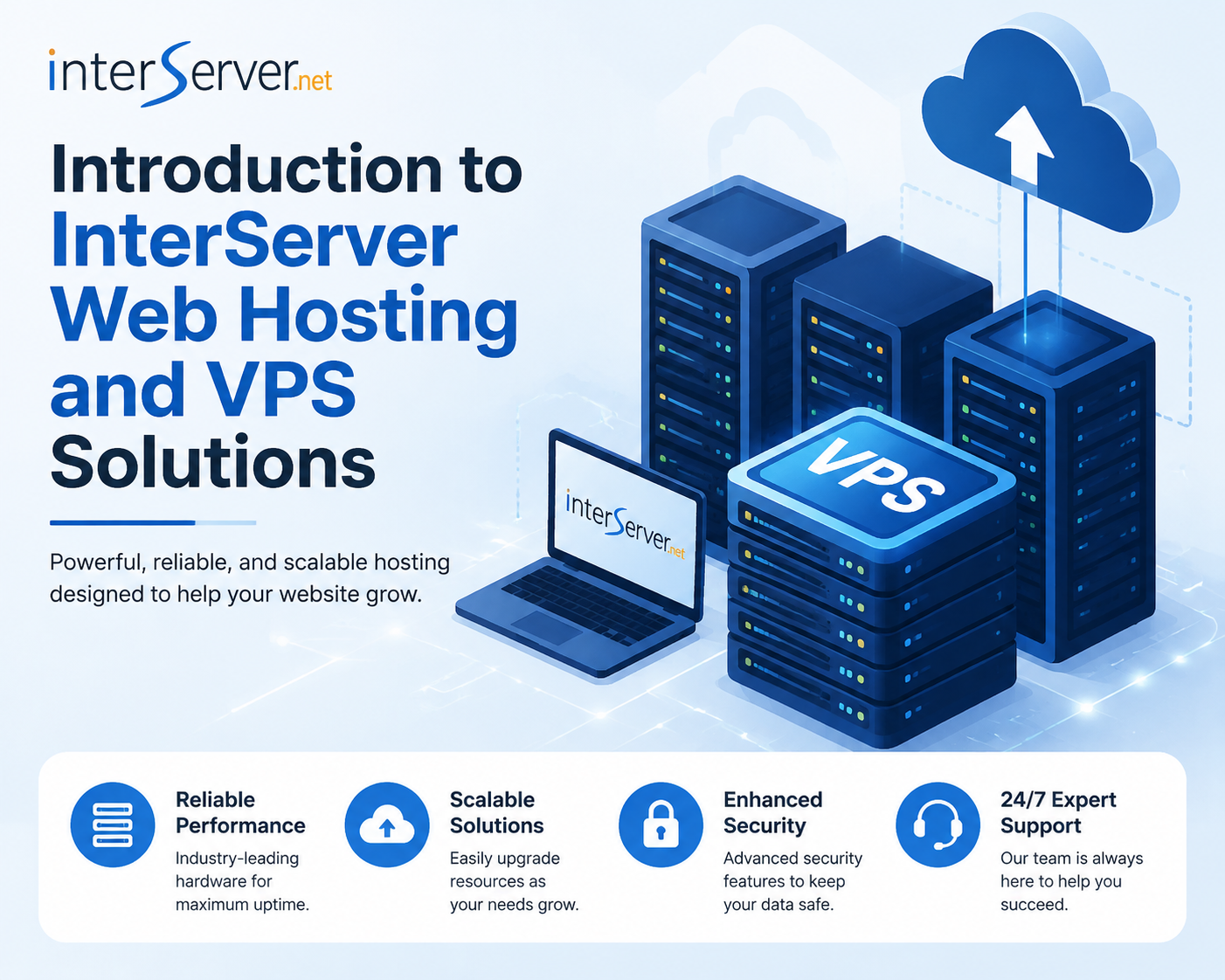
Choosing a hosting provider is one of the most important decisions for anyone building an online presence. Whether you are running a personal blog, a company website, an online store, or a web application, your hosting environment determines how efficiently your website performs. InterServer Web Hosting and VPS solutions are designed to provide users with flexible hosting options that balance performance, reliability, and affordability. Instead of offering only basic hosting packages, InterServer provides multiple solutions that allow users to select the right level of server power based on their website requirements.
InterServer has been operating in the web hosting industry for more than two decades, focusing on infrastructure ownership, customer support, and flexible server solutions. The company operates its own data center facilities and provides services including shared hosting, virtual private servers, dedicated servers, and cloud hosting options. This approach allows InterServer to maintain greater control over its hosting environment and optimize performance for different types of customers.
A major advantage of InterServer is its VPS hosting platform, which provides a middle ground between shared hosting and dedicated servers. Many websites begin with shared hosting because it is affordable and simple to manage. However, as traffic increases, websites often require more processing power, memory, and customization options. VPS hosting solves this challenge by creating an isolated virtual server environment where users receive dedicated resources without paying the full cost of physical hardware.
Overview of InterServer’s Hosting Ecosystem
InterServer offers a variety of hosting solutions designed for different website sizes and technical requirements. Beginners may prefer shared hosting because it requires minimal server management, while developers and businesses often choose VPS or dedicated hosting for greater control.
The main hosting options include:
| Hosting Type | Best For | Performance Level | Customization |
|---|---|---|---|
| Shared Hosting | Blogs, small websites, beginners | Basic to moderate | Limited |
| VPS Hosting | Growing websites, developers, businesses | High | Extensive |
| Dedicated Servers | Large applications and enterprise websites | Very high | Complete |
Shared hosting is an entry-level solution where multiple websites use the same physical server resources. It is cost-effective but may have limitations when websites experience sudden traffic growth. VPS hosting creates a more isolated environment, reducing the impact of other users on the same server.
InterServer VPS solutions use virtualization technology that allows each VPS account to operate like an independent server. Users can install applications, configure settings, select operating systems, and manage resources based on their requirements. This makes VPS hosting particularly useful for developers, agencies, and businesses that need more control.
Another important part of InterServer’s hosting ecosystem is its emphasis on scalability. Websites are rarely static. A small business website today may become a high-traffic platform tomorrow. A hosting solution that allows easy upgrades helps businesses avoid complicated migrations and unnecessary downtime.
How InterServer VPS Differs From Traditional Shared Hosting
The biggest difference between VPS hosting and shared hosting is resource allocation. In shared hosting, multiple websites compete for the same server resources. If one website experiences unusually high traffic or consumes excessive resources, other websites on the server may experience slower performance.
VPS hosting creates a separate virtual environment with allocated resources. This means websites have access to dedicated CPU power, memory, and storage capacity. The result is improved stability and better performance during traffic increases.
Imagine shared hosting as living in an apartment building where everyone shares electricity, water, and common facilities. VPS hosting is more like having your own private apartment with dedicated utilities. You still share the building structure, but your resources are separated and controlled.
InterServer VPS hosting provides several advantages compared with traditional shared hosting:
- Better website loading speed
- Increased server control
- Ability to install custom software
- Improved security isolation
- Easier resource upgrades
- Better performance during traffic spikes
For websites that depend on consistent availability, VPS hosting can provide a significant improvement. Online stores, membership platforms, business applications, and content-heavy websites often benefit from moving beyond shared hosting.
Key Features That Improve Website Performance With InterServer
Website performance depends on several technical factors, including server hardware, storage technology, resource availability, software optimization, and network quality. InterServer focuses on these areas by providing infrastructure designed to support fast and stable website operations.
A hosting provider cannot improve every aspect of a website automatically. Content optimization, image compression, coding practices, and database management also influence speed. However, choosing a reliable hosting environment provides the foundation needed for these improvements to deliver results.
SSD Storage and Optimized Server Resources
One of the most important performance improvements in modern hosting is the use of SSD storage. Traditional hard disk drives rely on mechanical components, while SSDs use flash memory technology to access data much faster. This difference can significantly improve website operations, especially for websites that frequently access databases or process dynamic content.
Websites using content management systems such as WordPress, online stores, and web applications often perform better with SSD-based hosting because files and databases can be accessed more quickly. Faster storage helps reduce delays when users request pages, images, or application features.
InterServer VPS hosting uses SSD storage technology along with scalable server resources. This allows users to build hosting environments capable of supporting demanding websites and applications. Instead of being restricted by fixed shared hosting limitations, VPS users can choose configurations that match their performance requirements.
Resource optimization also plays an important role. A website with thousands of visitors requires more CPU power and memory than a simple informational website. InterServer allows VPS customers to select different resource levels, making it easier to match hosting capacity with actual needs.
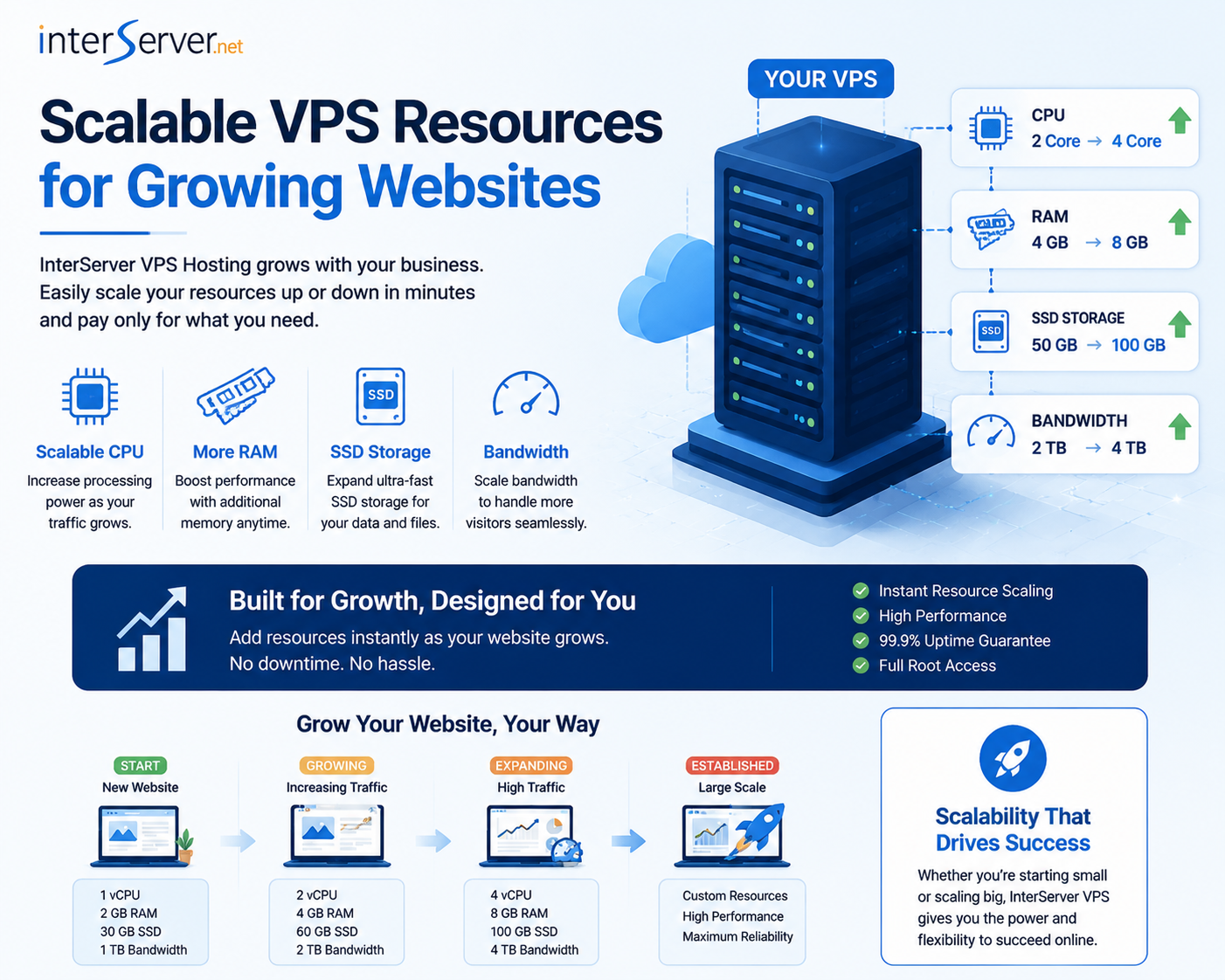
Scalable VPS Resources for Growing Websites
Growth is one of the biggest challenges for online businesses. A website that performs well with a few hundred visitors may struggle when traffic increases to thousands of visitors per day. Without enough server resources, websites can become slow, unstable, or unavailable during important moments.
Scalable VPS hosting helps solve this problem by allowing businesses to increase resources as they grow. Instead of moving to an entirely new platform, website owners can adjust their VPS configuration to handle additional demand.
For example, an online store running a seasonal promotion may temporarily need additional resources. A growing software application may require more memory and processing power as more users join. VPS scalability provides flexibility that traditional hosting packages often cannot match.
InterServer’s VPS solutions support different levels of customization, allowing users to create environments suitable for their technical requirements. Developers can select operating systems, manage applications, and configure server settings based on their projects.
This flexibility makes VPS hosting valuable for:
- Growing businesses
- Software developers
- Digital agencies
- Online marketplaces
- High-traffic blogs
- Web applications
A scalable hosting environment is like having an expandable workspace. Instead of moving every time your business grows, you simply add the space and tools you need.
Reliability Factors Behind InterServer Hosting
Website reliability is just as important as speed. A fast website that frequently goes offline can damage customer trust and reduce business opportunities. Reliability means that a website remains accessible, performs consistently, and continues working properly even during periods of increased demand. For businesses that depend on online sales, customer communication, or digital services, hosting reliability is not optional—it is a requirement.
InterServer focuses on reliability through infrastructure management, server monitoring, data center operations, and flexible hosting technology. Instead of relying entirely on third-party infrastructure, the company has invested in its own data center environment, giving it greater control over hardware, network operations, and server maintenance. This approach helps improve consistency because hosting performance is managed within a controlled ecosystem.
A reliable hosting provider works like the foundation of a house. Visitors may never see the foundation, but every part of the structure depends on it. If the foundation is weak, problems eventually appear. Similarly, unstable hosting can create slow loading times, unexpected downtime, security concerns, and technical problems that affect both businesses and users.
InterServer’s hosting solutions are built to support websites with different requirements, from small websites to resource-intensive applications. VPS customers receive isolated server environments that reduce the risks commonly associated with shared hosting. This separation allows websites to maintain more predictable performance because their resources are not heavily affected by other users.
Uptime Guarantee and Network Stability
One of the most important measurements of hosting reliability is uptime. Uptime represents the amount of time a website remains available online. Even small periods of downtime can have consequences, especially for websites that process transactions, generate leads, or provide important services.
InterServer advertises a 99.9% uptime guarantee, which means the company aims to maintain high availability for hosted websites. While no hosting provider can promise perfect uptime in every situation, a strong uptime commitment shows the importance placed on network stability and server performance.
Reliable uptime depends on multiple factors:
- Quality server hardware
- Network redundancy
- Proper maintenance
- Monitoring systems
- Fast technical response
A hosting provider must continuously monitor servers to identify potential issues before they become major problems. Early detection allows technical teams to resolve problems quickly and reduce service interruptions.
For businesses, uptime directly connects with reputation. Imagine visiting an online store several times and finding that it is unavailable. Over time, customers may lose confidence and choose another provider. Reliable hosting helps create a consistent experience that encourages users to return.
InterServer’s VPS environment provides additional reliability advantages because users have dedicated virtual resources. Unlike traditional shared hosting, where multiple websites share the same server environment, VPS hosting provides stronger isolation and control.
Data Center Infrastructure and Server Protection
A hosting provider’s data center infrastructure plays a major role in website reliability. Servers must operate in controlled environments with proper cooling, power management, security systems, and network connections.
InterServer operates its own data center facilities in the United States, allowing the company to maintain direct control over server operations. This ownership model can provide advantages compared with providers that rely completely on rented infrastructure.
Data center reliability involves several important components:
- Continuous server monitoring
- Environmental control systems
- Network management
- Hardware maintenance
- Security protection
Modern websites also require protection against unexpected failures. Hardware issues, software problems, cyber threats, and configuration mistakes can all impact availability. Hosting providers must combine technology and management practices to reduce these risks.
InterServer provides backup options and security features designed to help users protect their websites and data. VPS customers also have more control over security settings because they can configure their server environment according to their needs.
For developers and businesses, this level of control is valuable. Different websites have different security requirements, and VPS hosting allows users to apply customized solutions rather than relying only on standard hosting configurations.
How InterServer VPS Enhances Website Speed
Website speed is one of the biggest advantages of upgrading from shared hosting to VPS hosting. As websites become larger and more complex, they require additional computing resources to deliver smooth experiences. A VPS environment provides the power needed to handle advanced websites, applications, and higher visitor volumes.
InterServer VPS hosting improves speed by offering dedicated resources, flexible configurations, and server-level control. Instead of sharing processing power with many unknown websites, users receive their own allocated portion of server resources.
This difference becomes especially noticeable during traffic spikes. For example, an online store running a promotional campaign may receive hundreds or thousands of additional visitors within a short period. A limited hosting environment may struggle under this pressure, while a properly configured VPS can handle increased demand more effectively.
Dedicated Resources and Better Traffic Handling
One of the strongest advantages of VPS hosting is resource isolation. CPU power, RAM, and storage are assigned specifically to the VPS environment. This reduces competition for resources and creates more predictable performance.
Traffic handling is essential for modern websites because visitor patterns are often unpredictable. A blog post can suddenly become popular, a marketing campaign can generate additional visitors, or a product launch can create a temporary traffic surge.
With shared hosting, these situations may cause performance problems because resources are limited. VPS hosting provides more flexibility by allowing websites to use dedicated computing power.
Better traffic handling benefits many types of websites:
- ECommerce websites: Faster product pages and smoother checkout experiences.
- Business websites: Reliable access for customers and partners.
- Content websites: Improved performance during viral traffic increases.
- Applications: More stable operation for users.
A faster website also improves user satisfaction. Visitors are more likely to stay, interact, and complete actions when pages respond quickly.
Server Customization and Root Access Advantages
Another major benefit of InterServer VPS hosting is customization. Many advanced users need more control than shared hosting provides. Developers often require specific software versions, custom server settings, or specialized configurations.
VPS hosting provides root access, allowing users to manage their server environment at a deeper level. This means developers can install applications, adjust settings, and optimize performance according to project requirements.
For example, a developer building a custom web application may need specific programming frameworks or database configurations. Shared hosting may not support these requirements, but VPS hosting provides a more flexible environment.
Root access advantages include:
- Installing custom software
- Managing server configurations
- Improving application performance
- Creating specialized environments
- Testing development projects
This flexibility makes VPS hosting popular among technical users who want control without purchasing an expensive dedicated server.
InterServer Hosting for Different Types of Websites
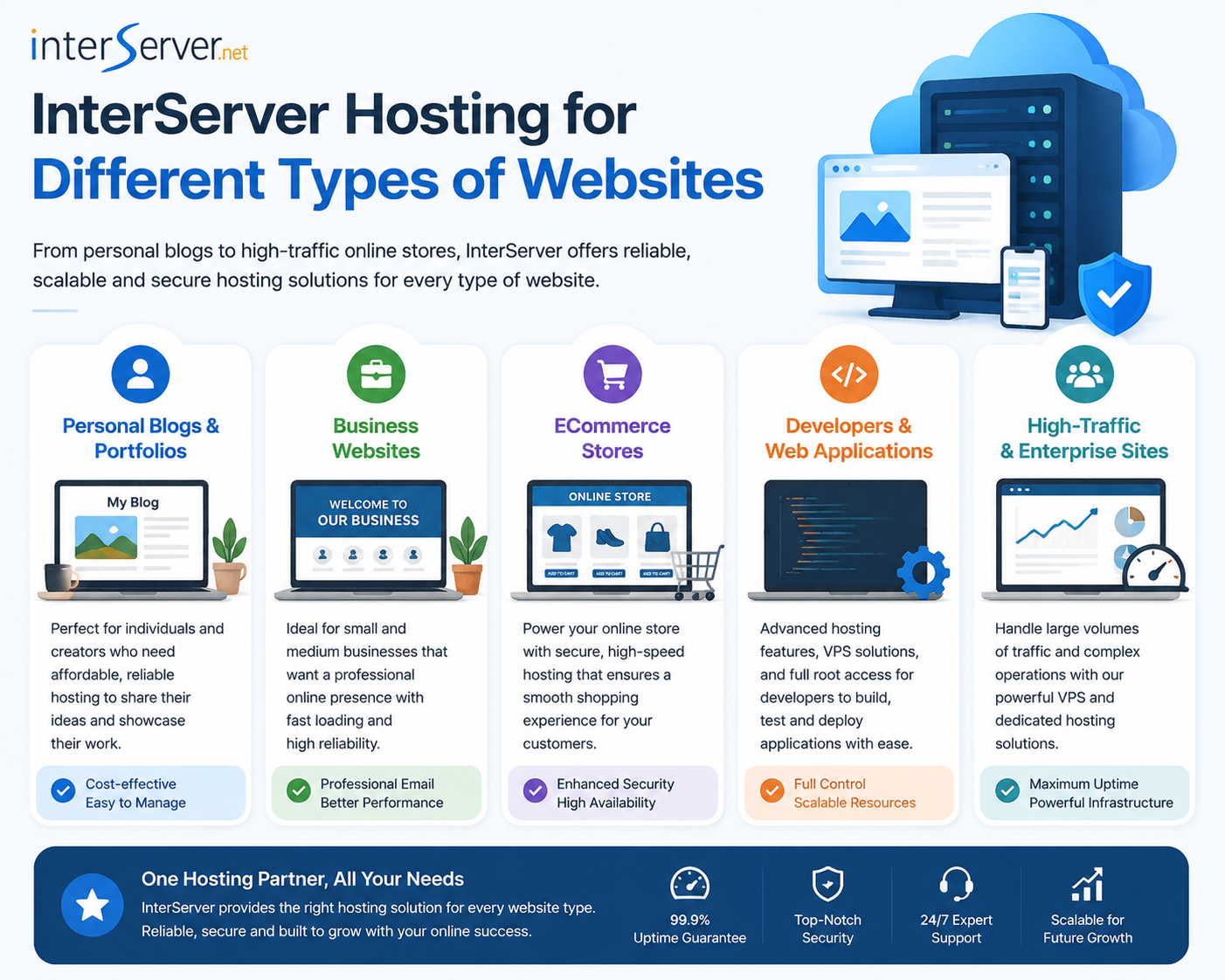
Different websites have different hosting needs. A personal blog, a company website, and a large online store may all require different levels of resources. InterServer provides hosting options designed to support a wide range of website categories.
Small Businesses and Professional Websites
Small businesses often begin with simple websites that provide basic information about products, services, and contact details. Shared hosting may be enough at the beginning, but growing businesses may eventually require better speed and reliability.
A professional website represents a company’s digital identity. If the website loads slowly or experiences downtime, potential customers may question the business’s reliability.
InterServer hosting can support small businesses by providing:
- Reliable website availability
- Improved loading speed
- Email hosting options
- Scalable upgrade paths
As a company grows, moving from shared hosting to VPS can provide additional performance without requiring a complete website rebuild.
ECommerce Stores and High-Traffic Platforms
Online stores have some of the most demanding hosting requirements. They must handle product databases, customer accounts, payment systems, images, and frequent visitor activity.
Performance directly affects sales. A slow checkout process or unavailable product page can result in lost revenue. For this reason, many eCommerce businesses choose VPS hosting for greater reliability and control.
InterServer VPS can support online businesses by providing:
- More processing power
- Better database performance
- Increased traffic capacity
- Custom server configurations
For growing online stores, VPS hosting provides a balance between affordability and performance.
Security Features Supporting Website Reliability
Security and reliability are closely connected. A compromised website can experience downtime, data loss, reputation damage, and customer trust issues. Strong hosting security practices help maintain stable website operations.
InterServer provides security-focused hosting features designed to protect servers and user websites. VPS users also benefit from having isolated environments, reducing the risks associated with shared server setups.
Important security considerations include:
- Regular backups
- Malware protection
- Server monitoring
- Access management
- Software updates
Website owners should also follow security best practices by using strong passwords, updating applications, and monitoring unusual activity.
A secure hosting environment creates confidence for both website owners and visitors. When users know their information is protected, they are more likely to interact with online services.
Comparing Shared Hosting and VPS Performance
Choosing between shared hosting and VPS hosting depends on a website’s size, traffic requirements, technical needs, and future goals. Both options have their advantages, but they serve different types of users. Shared hosting is usually designed for beginners and smaller websites that need an affordable way to establish an online presence. VPS hosting is designed for users who need more control, stronger performance, and greater flexibility.
The difference between these two hosting types is similar to the difference between renting a small workspace in a shared building and having your own private office. A shared workspace may be affordable and convenient, but you have limitations because resources are shared with others. A private office provides more control, better organization, and the ability to customize the environment according to your needs.
The following comparison highlights the main differences:
| Feature | Shared Hosting | InterServer VPS Hosting |
|---|---|---|
| Resource Allocation | Shared among multiple websites | Dedicated virtual resources |
| Performance | Suitable for small websites | Better for growing and high-traffic websites |
| Customization | Limited | Extensive control |
| Server Access | Basic management tools | Root access available |
| Scalability | Limited upgrades | Flexible resource expansion |
| Security Isolation | Lower due to shared environment | Stronger server separation |
| Best For | Blogs, personal websites, startups | Businesses, developers, applications |
Shared hosting remains a practical choice for websites with low traffic and simple requirements. A personal blog, portfolio website, or small informational site may perform perfectly well on a shared hosting plan. The lower cost and easier management make it attractive for beginners.
However, as websites grow, limitations can appear. Increased visitors, larger databases, advanced applications, and higher resource requirements often require a stronger hosting environment. This is where VPS hosting becomes valuable.
InterServer VPS hosting provides a balance between affordability and performance. Users receive more control than shared hosting while avoiding the higher costs and complexity of dedicated servers. This makes VPS an ideal upgrade path for websites that are experiencing growth.
A website owner should consider moving to VPS hosting when they notice signs such as:
- Increasing page loading times
- Frequent resource limitations
- Growing visitor numbers
- Need for custom software
- Requirements for better security control
Selecting the right hosting type is not only about current needs but also about future growth. A website should have enough room to expand without requiring frequent migrations or major technical changes.
Why Hostinger Is a Popular Choice for Startups and Small Businesses
How NordVPN DE Helps Users Protect Their Online Privacy and Data
Holiday Autos 2026 Guide: How Online Car Rental Services Are Evolving
Logitravel ES Review: Features, Benefits, and Travel Services Explained
Top Reasons Businesses Are Switching to Qonto ES for Financial Operations
Benefits of Choosing InterServer for Long-Term Website Growth
Long-term website success requires a hosting solution that can adapt as business needs change. A website that grows successfully will eventually require more resources, stronger performance, and better management capabilities. Choosing a hosting provider that supports growth can save time, money, and technical challenges in the future.
InterServer provides several advantages for users who want a hosting environment that can evolve with their projects.
Flexible Resource Management
One of the biggest benefits of VPS hosting is flexibility. Websites are constantly changing, and their hosting requirements can increase over time. A small website may become a popular platform, while an online store may expand its product catalog and customer base.
InterServer VPS solutions allow users to select configurations based on their specific needs. This flexibility means businesses do not have to pay for unnecessary resources at the beginning but can increase capacity when required.
This approach is especially useful for:
- Startup companies
- Growing online stores
- Web development agencies
- SaaS applications
- Content platforms
A scalable hosting environment works like a growing business facility. Instead of rebuilding everything when expansion happens, you simply add more capacity.
Better Control for Developers and Technical Users
Developers often require more freedom than traditional hosting environments provide. They may need specific software packages, custom server configurations, or advanced testing environments.
InterServer VPS hosting provides greater control through root access and server customization options. This allows developers to create environments that match their application requirements.
For technical users, this control can improve productivity because they are not restricted by fixed hosting settings. They can optimize performance, configure security tools, and manage applications according to project goals.
Cost Efficiency Compared With Dedicated Servers
Dedicated servers provide maximum performance because users receive an entire physical server. However, they can be expensive and require more technical management.
VPS hosting provides many benefits of dedicated servers at a lower cost. Users receive dedicated virtual resources while sharing the physical hardware infrastructure.
For many businesses, VPS offers the best balance between:
- Performance
- Cost
- Flexibility
- Control
This makes InterServer VPS a practical solution for websites that need more power than shared hosting but do not require a full dedicated server.
Why Website Owners Should Focus on Hosting Performance
Many website owners invest heavily in marketing, design, and content creation but underestimate the importance of hosting quality. However, hosting performance affects every visitor interaction.
A website can have excellent content and attractive design, but poor hosting can create problems that prevent users from enjoying the experience.
Hosting performance influences:
Search Engine Optimization:
Search engines prefer websites that provide better user experiences. Faster loading speeds and reliable availability can support stronger website performance.
Customer Trust:
Visitors expect professional websites to work smoothly. Frequent downtime or slow pages can damage credibility.
Conversions and Sales:
For businesses, every delay can affect customer decisions. Faster websites create smoother purchasing experiences.
Business Growth:
Reliable hosting provides the foundation needed to support increasing traffic and new digital opportunities.
InterServer’s hosting solutions focus on providing the technical foundation required for modern websites. By combining flexible resources, reliable infrastructure, and VPS customization, the company helps users build websites that can handle changing demands.
Conclusion
Website performance and reliability are essential factors for anyone building a successful online presence. A website is no longer just a collection of pages; it is a powerful business tool that needs consistent speed, availability, security, and scalability.
InterServer Web Hosting and VPS solutions provide a strong foundation for websites that need dependable performance and room for growth. While shared hosting can be suitable for beginners and smaller websites, VPS hosting offers significant advantages for businesses, developers, and high-traffic platforms that require more control.
With features such as SSD storage, scalable resources, server customization, reliable infrastructure, and strong performance capabilities, InterServer VPS helps website owners create hosting environments that match their goals.
The right hosting solution is an investment in the future of a website. As online competition continues to increase, businesses need websites that load quickly, remain available, and provide excellent user experiences. Choosing a reliable hosting partner like InterServer can help businesses build a stronger digital presence and prepare for long-term growth.
Frequently Asked Questions
Q. Is InterServer VPS hosting suitable for growing businesses?
A. Yes, InterServer VPS hosting can be a suitable option for growing businesses because it provides scalable resources, improved performance, and greater control compared with traditional shared hosting. Businesses can upgrade resources as their websites receive more visitors and require additional computing power.
Q. What is the main advantage of using VPS hosting instead of shared hosting?
A. The main advantage of VPS hosting is resource isolation. Unlike shared hosting, where multiple websites share the same server resources, VPS hosting provides dedicated virtual resources that improve stability, performance, and customization options.
Q.Can beginners use InterServer VPS hosting?
A. Beginners can use InterServer VPS hosting, but it is generally better suited for users who need more control or are willing to learn server management. Users who prefer simple website management may find shared hosting easier initially.
Q. Does website hosting affect SEO performance?
A. Yes, hosting can influence SEO indirectly through website speed, uptime, and user experience. A reliable hosting environment helps ensure that search engines and visitors can access a website consistently.
Q. Why should a website upgrade from shared hosting to VPS?
A. A website should consider upgrading to VPS when it experiences slower performance, increased traffic, resource limitations, or the need for advanced customization. VPS hosting provides more power and flexibility for websites that are growing.
Table of Contents
Related Posts