Discover how Zumub built a strong e-commerce presence in the competitive supplements industry. This article explores Zumub’s digital-first strategy, product variety, customer-focused approach, and smart partnerships that helped the brand grow into a leading online sports nutrition retailer in Europe.

How Zumub Built a Strong E-Commerce Presence in Supplements
Table of Contents
Introduction to Zumub and the Modern Supplement Market
The global sports nutrition and supplement industry has undergone a dramatic transformation over the past decade. Instead of relying solely on brick-and-mortar fitness stores, many brands now operate primarily online. Among these success stories is Zumub, a Portuguese supplement brand that built its reputation almost entirely through e-commerce.
Founded in 2010 and headquartered in Portugal, Zumub operates as a digital-first retailer selling sports nutrition, supplements, and wellness products to customers across Europe. The company’s mission is simple but powerful: make high-quality sports nutrition accessible to everyone at competitive prices. What began as a niche online store has evolved into one of Europe’s most recognized supplement marketplaces.
Today, Zumub offers more than 10,000 products and has delivered over 3 million orders, demonstrating the scale of its online operations. These numbers highlight how e-commerce can propel a brand from startup to international presence within a relatively short time.
What makes Zumub especially interesting is how it leveraged digital strategies to build trust, scale quickly, and compete with global supplement brands. Rather than relying on traditional retail expansion, the company focused on technology, logistics, and community partnerships to grow its market share.
This article explores how Zumub built its strong e-commerce presence, the strategies that fueled its growth, and the lessons other online brands can learn from its journey.
The Origins of Zumub
Founding Vision and Early Challenges
Every successful brand begins with a vision, and Zumub was no exception. The company was founded in 2010 by Urbano da Veiga in Portugal with the goal of providing reliable and affordable sports nutrition products online. At the time, the supplement industry was already growing rapidly, but the online market was still relatively fragmented.
Many customers struggled with two major issues when buying supplements online: trust and accessibility. Products were often expensive, information was unclear, and delivery options were limited. Zumub’s founder recognized an opportunity to solve these problems by building a digital platform focused on transparency and convenience.
The company started as a multi-brand supplement store, offering products from well-known manufacturers while also developing its own product line. This strategy allowed the brand to quickly attract customers who were already familiar with established supplement brands.
Like many startups, Zumub faced early challenges. Competing with global giants in the fitness industry required strong differentiation. Instead of trying to outspend competitors on advertising, the company focused on building a customer-centric e-commerce experience.
The approach worked. Over time, Zumub built a reputation for offering reliable supplements, competitive prices, and fast delivery. The brand gradually expanded across Europe, gaining recognition as a trusted source for sports nutrition.
The Role of E-Commerce in Zumub’s Business Model
Digital-First Distribution Strategy
Unlike traditional supplement brands that began with physical retail stores, Zumub adopted a digital-first strategy from day one. E-commerce wasn’t just one of its sales channels—it was the foundation of the entire business.
This decision allowed the company to operate with greater efficiency and scalability. By selling directly online, Zumub avoided many costs associated with physical retail locations, such as store rent and large sales teams. Instead, the company invested heavily in technology, logistics, and digital marketing.
The advantages of this strategy soon became clear. Customers could browse thousands of products, compare prices, and order supplements in just a few clicks. The company’s online platform also provided detailed product information, making it easier for buyers to make informed decisions.
Another advantage of the digital model was geographic reach. Instead of being limited to one city or country, Zumub could serve customers across Europe from its central operations in Portugal.
As the online store grew, it became the brand’s most valuable asset. In fact, the flagship domain zumub.com generated about $47 million in revenue in 2024, demonstrating the scale of its e-commerce success.
This digital-first mindset helped Zumub grow faster than many traditional supplement companies that relied on offline retail expansion.
Building a Massive Online Product Catalog
Offering Thousands of Products
One of the key reasons customers keep returning to Zumub is the sheer variety of products available on its platform. Instead of focusing on a small niche, the company built an extensive catalog covering nearly every category of sports nutrition.
The online store features supplements such as protein powders, amino acids, creatine, vitamins, weight gainers, energy products, and functional foods. In addition, the platform also sells healthy snacks, beverages, sports accessories, and fitness gear.
According to company data, Zumub offers over 10,000 products and works with more than 300 supplement brands. This massive selection positions the website as a one-stop shop for fitness enthusiasts.
The advantage of such a broad catalog is simple: customers rarely need to shop elsewhere. Whether someone is a professional athlete or a beginner starting their fitness journey, they can find relevant products in one place.
This strategy also improves search visibility and SEO performance. A larger catalog means more product pages, which increases the likelihood of ranking in search engines for different supplement-related keywords.
The result is a marketplace that feels more like an ecosystem than a simple online store.
Customer Experience as a Competitive Advantage
Simplified Shopping and Fast Delivery
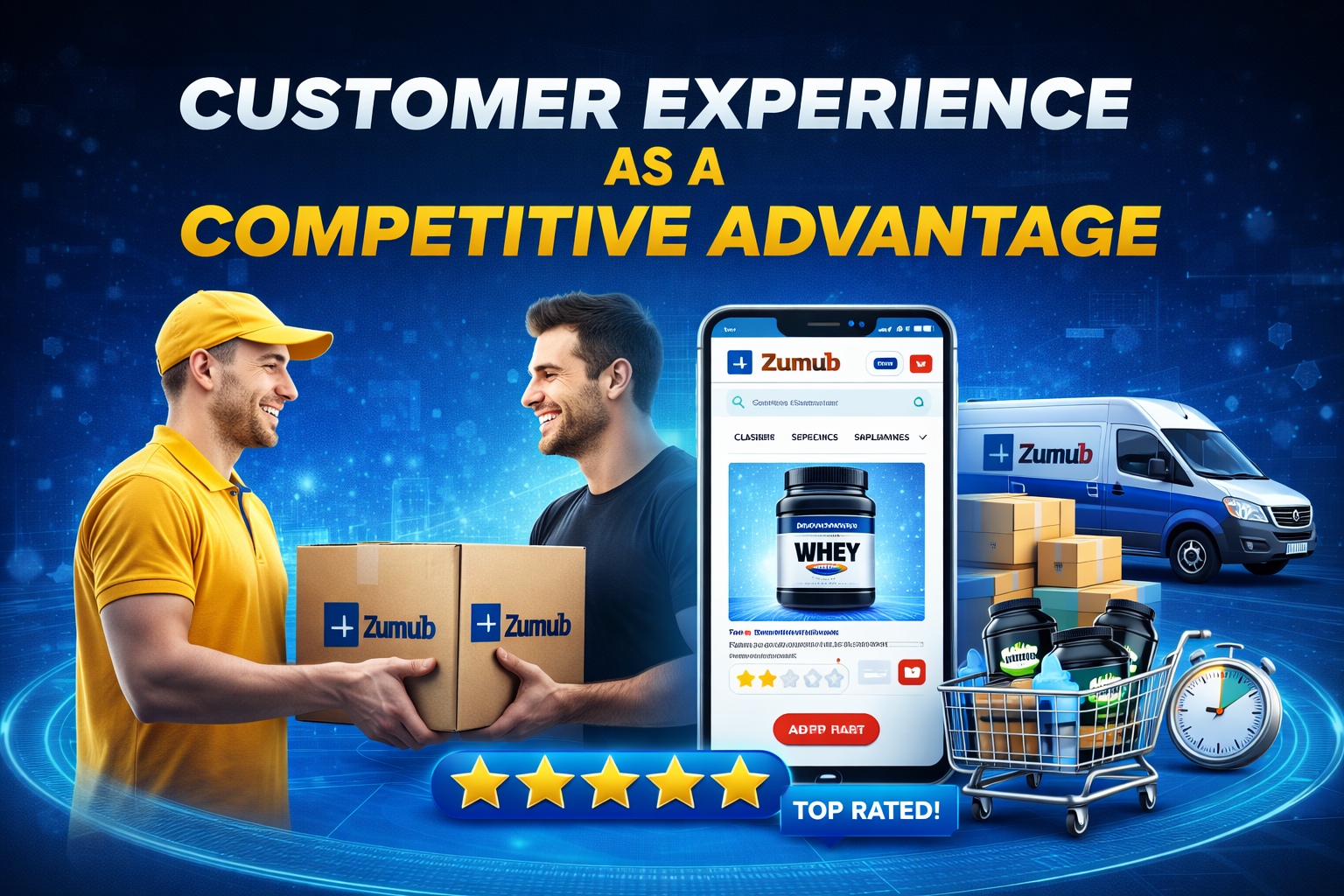
In the e-commerce world, customer experience often determines success. Even the best products can fail if the shopping process is frustrating or unreliable. Zumub recognized this early and designed its platform with simplicity and convenience in mind.
The website allows customers to navigate easily, search for products quickly, and complete purchases in just a few clicks. The ordering process is designed to be intuitive, which reduces friction during checkout.
Shipping is another critical factor. Zumub offers express and free delivery options depending on order size, ensuring customers receive their supplements quickly. Fast shipping is particularly important in the supplement market, where customers often reorder products frequently.
Customer satisfaction has become a key part of the brand’s reputation. Zumub maintains a strong rating of around 4.7 out of 5 based on thousands of reviews, highlighting the importance of service quality.
These efforts create a shopping experience that feels reliable and professional—two qualities that are essential for building long-term customer relationships.
Pricing Strategy and Market Accessibility
Competitive Pricing and Discounts
Pricing plays a major role in the supplement industry. Many consumers compare multiple websites before purchasing products, looking for the best value.
Zumub addresses this behavior by offering competitive pricing and regular discounts. Customers frequently find promotions, cashback offers, and bundle deals on the platform.
The brand’s direct relationships with manufacturers and its own product development capabilities also allow it to maintain attractive price points.
By balancing affordability with quality, Zumub positions itself as a brand that delivers value without compromising on product standards.
Leveraging Partnerships with Sports Teams
Collaborations with Professional Clubs
Brand credibility in the fitness industry often comes from association with professional athletes and sports organizations.
Zumub strengthened its reputation by forming partnerships with several major European sports clubs. These collaborations include organizations such as AS Monaco and Benfica, where Zumub serves as an official nutrition partner.
These partnerships provide multiple benefits:
- Increased brand visibility
- Association with elite performance
- Trust among fitness communities
When athletes and sports teams use a supplement brand, it signals quality and reliability. For many consumers, this endorsement can influence purchasing decisions.
Technology and Data-Driven Growth
E-Commerce Tech Stack
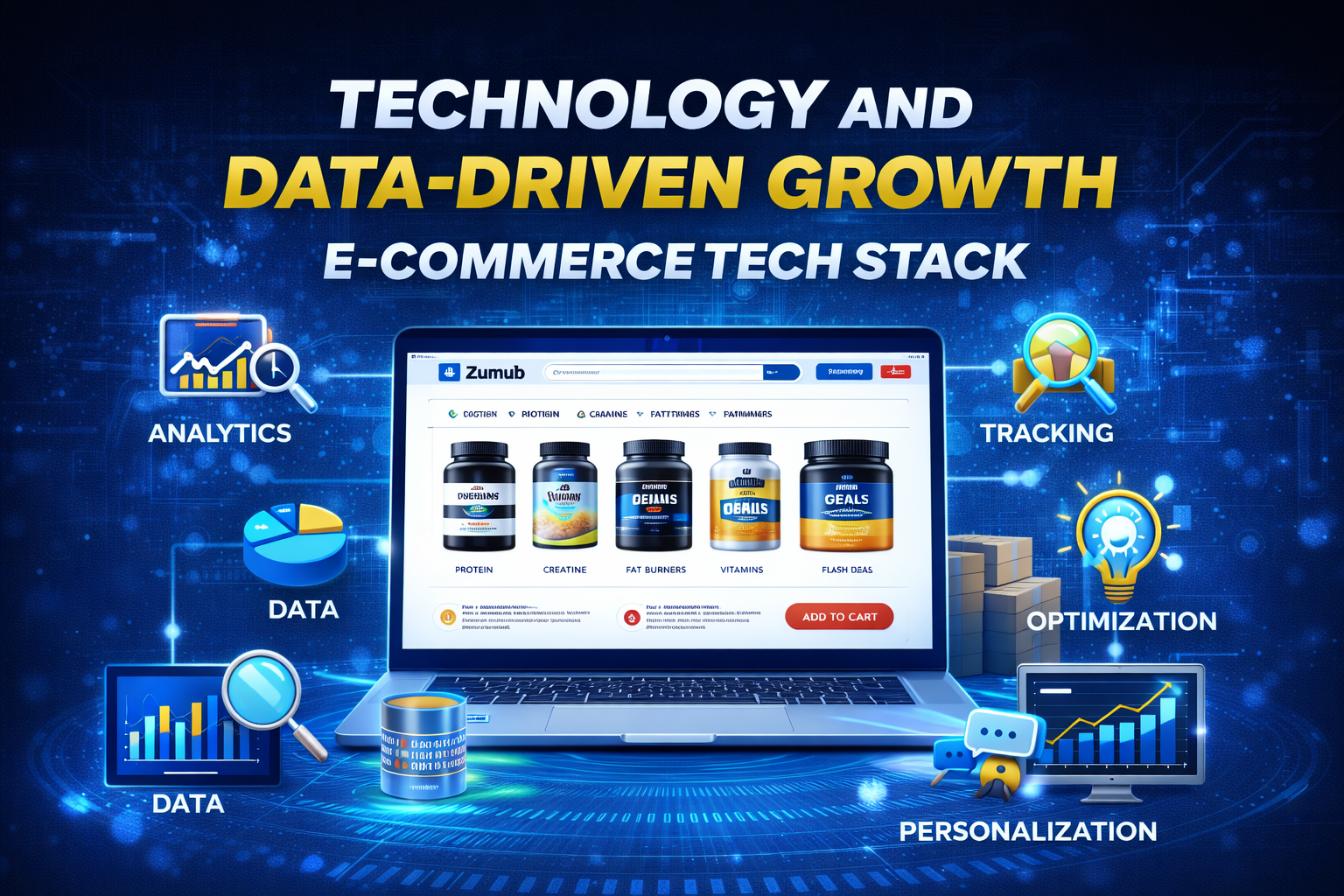
Behind every successful e-commerce platform lies a powerful technology infrastructure. Zumub relies on a range of digital tools to analyze customer behavior and improve marketing performance.
The company’s technology stack includes analytics platforms, tracking tools, and website optimization technologies that help monitor customer activity and sales performance.
These tools allow the business to:
- Track conversion rates
- Improve website usability
- Optimize digital advertising
- Personalize customer experiences
Data-driven decision-making enables Zumub to refine its strategies continuously.
Logistics and Operational Efficiency
Scaling Through Infrastructure Investments
As demand grew, Zumub invested heavily in logistics infrastructure to support its expanding operations.
Recent developments include the establishment of new logistics centers in Portugal, designed to improve operational efficiency and support international expansion.
Efficient logistics are essential in e-commerce because they affect delivery speed, shipping costs, and customer satisfaction.
By strengthening its supply chain, Zumub ensured it could handle increasing order volumes without sacrificing service quality.
Product Development and Zumub Labs
Innovation in Supplement Manufacturing
Zumub is not only a retailer but also a manufacturer of supplements through Zumub Labs. The company has developed hundreds of products using modern production facilities that follow strict safety standards such as HACCP compliance.
This manufacturing capability allows the brand to control product quality and experiment with new formulas.
Innovation plays a major role in the supplement market. Consumers are constantly searching for new ingredients, flavors, and performance-enhancing formulas.
By maintaining in-house product development, Zumub stays competitive and keeps its product lineup fresh.
Brand Trust and Customer Loyalty
Reviews and Customer Satisfaction
Trust is the foundation of any online brand. Without it, customers hesitate to buy.
Zumub addresses this challenge through transparent product information, clear ingredient lists, and responsive customer service.
Thousands of positive reviews highlight the brand’s reliability and commitment to quality. These reviews act as social proof, reassuring new customers that they are buying from a reputable company.
Satisfied customers often become repeat buyers, which helps sustain long-term growth.
Revenue Growth and Market Expansion
International Sales and Market Share
Zumub’s e-commerce strategy has translated into impressive financial performance.
The company generated approximately $52 million in revenue in 2024, with Portugal accounting for around 42% of total sales.
Expansion into other European markets continues to drive growth.
This demonstrates the scalability of online supplement businesses. With the right digital infrastructure, a brand can serve customers across multiple countries without opening physical stores in each location.
Content Marketing and Fitness Community Engagement
Educating Customers Through Digital Content
Beyond selling supplements, Zumub invests in educating its audience about fitness and nutrition.
Content marketing helps the brand build authority in the health and wellness space. Articles, product guides, and training tips encourage customers to learn more about supplements and their benefits.
When customers understand how products work, they are more likely to trust the brand and make informed purchases.
The Competitive Landscape
Competing With Global Supplement Brands
The supplement market includes major players such as Optimum Nutrition, MuscleTech, and other global brands.
Instead of trying to outcompete them directly, Zumub integrates many of these brands into its marketplace while promoting its own products.
This hybrid strategy turns competitors into partners while expanding the store’s catalog.
Lessons From Zumub’s E-Commerce Strategy
What Entrepreneurs Can Learn
Entrepreneurs can learn several valuable lessons from Zumub’s growth story:
- Focus on customer experience
- Build a strong digital infrastructure
- Offer a wide product selection
- Invest in logistics and delivery speed
- Use partnerships to build credibility
These principles apply to many industries, not just supplements.
Future Outlook for Zumub
Continued Growth and Innovation
Looking ahead, Zumub is expected to continue expanding internationally and investing in product innovation.
The company has already secured investment funding to support growth and production capacity improvements.
As the global fitness industry grows, online supplement retailers like Zumub are well positioned to capture increasing demand.
Conclusion
Zumub’s rise in the supplement industry demonstrates the power of a well-executed e-commerce strategy. By focusing on digital infrastructure, customer experience, and product variety, the company transformed from a small Portuguese startup into a recognized European brand.
Its ability to combine online retail, manufacturing, sports partnerships, and logistics efficiency has created a scalable business model. The brand’s success proves that in today’s digital economy, a strong online presence can be just as powerful—if not more powerful—than traditional retail expansion.
For entrepreneurs and marketers studying e-commerce success stories, Zumub provides a valuable example of how strategic thinking, innovation, and customer focus can drive remarkable growth.
Frequently Asked Questions
Q. What is Zumub?
Zumub is a Portuguese e-commerce company that sells sports nutrition, dietary supplements, and wellness products across Europe.
Q. When was Zumub founded?
Zumub was founded in 2010 by Urbano da Veiga.
Q. How many products does Zumub sell?
The platform offers over 10,000 products across supplements, healthy foods, and sports accessories.
Q. How much revenue does Zumub generate?
Zumub generated approximately $52 million in revenue in 2024 through its e-commerce operations.
Q. What makes Zumub different from other supplement brands?
Zumub combines a massive product catalog, strong logistics network, competitive pricing, and partnerships with professional sports teams to build trust and scale its online business.
Table of Contents
Related Posts