A Beginner’s Guide to Finding the Right Online Tutor on Preply
Discover how to find the perfect online tutor with Preply. This beginner-friendly guide explains how to compare tutors, check reviews, understand pricing, book trial lessons, and choose the right teaching style to achieve your learning goals. Start your online learning journey with confidence using Preply!
Table of Contents
Introduction to Online Learning
Online education has changed the way people develop new skills, improve their knowledge, and prepare for professional opportunities. In the past, students generally depended on traditional classrooms, local coaching centres, and private teachers to learn something new. Today, technology has made education more accessible than ever. With an internet connection, a laptop, or even a smartphone, you can connect with experienced teachers from different parts of the world without leaving your home. Whether you want to improve your English speaking skills, learn another language, prepare for an examination, or develop professional communication abilities, online tutoring provides a convenient way to work towards your goals. However, having access to thousands of teachers does not automatically mean that choosing the right one will be easy. Different tutors have different teaching methods, qualifications, prices, and levels of experience. This is where a platform such as Preply can make the process easier. It allows learners to explore tutor profiles, compare teaching approaches, check reviews, and arrange lessons according to their availability. For someone new to online education, understanding how to evaluate these options is an important first step. The right tutor can make complicated subjects easier, encourage regular practice, and help you feel more confident throughout your learning journey.
What Is Preply and How Does It Work?
Preply is an online tutoring marketplace that connects students with independent tutors for personalized learning sessions. The platform is particularly well known for language education, including English, Spanish, French, German, and many other languages. It also provides access to tutors offering different learning specializations, depending on the subjects available on the platform. Instead of attending a traditional classroom with several students, learners can arrange individual online sessions with a tutor who understands their specific requirements. This approach can be helpful when you need additional attention, want to improve a particular skill, or prefer learning at your own pace. To begin, you can visit the Preply website, select your preferred subject, and browse available tutors. You can narrow your search by using filters such as price, availability, specialization, and language preferences. Each tutor profile provides information that can help you make an informed decision, including teaching experience, qualifications, student feedback, and an introduction video when available. After identifying a suitable tutor, you can book a paid trial lesson to discuss your expectations and experience the tutor’s teaching approach. If you decide to continue, you can select an appropriate subscription plan. Preply’s official guidance explains that trial lessons are available in 25-minute and 50-minute formats, allowing students to meet a tutor before deciding whether to continue.
Understanding Preply's Online Tutoring Platform
The platform is designed to make communication between students and tutors straightforward. Students can browse tutor profiles, check available lesson times, book sessions, and manage their learning schedules through their accounts. Online lessons are conducted through Preply’s virtual classroom, making it possible to study from different locations. This arrangement can be particularly useful for people who have busy schedules, work responsibilities, or limited access to experienced local teachers. For example, a college student preparing for an English interview can find a tutor who specializes in professional communication. Similarly, someone interested in learning Spanish for international travel can look for a tutor who focuses on everyday conversations. Rather than following the same learning plan as everyone else, students can discuss their strengths, weaknesses, and personal objectives with their tutor. Understanding how the platform works before making a payment helps beginners avoid confusion and choose a learning arrangement that suits their needs.
Why Choose Preply for Online Learning?
One of the biggest advantages of online tutoring is flexibility. Traditional coaching classes usually follow fixed schedules, which may not be convenient for students who have college, employment, family responsibilities, or other commitments. Preply allows learners to explore tutors with different availability, making it easier to find a suitable lesson time. Another important benefit is personalized attention. In a one-on-one session, the tutor can concentrate on your individual difficulties instead of dividing attention among a large group. For instance, if you understand English grammar but struggle to speak confidently, your tutor can focus more on conversation practice, pronunciation, and sentence formation. If you are preparing for IELTS, you can look for someone with relevant examination preparation experience. This makes the learning process more focused and practical. The platform also gives students access to tutors from different cultural and educational backgrounds, allowing them to experience different teaching approaches. However, the best learning experience does not necessarily come from choosing the most expensive teacher or the tutor with the highest number of reviews. It comes from finding someone whose communication style, subject knowledge, and teaching methods match your expectations. Preply provides the tools to compare available options, but students should still evaluate each tutor carefully before committing to regular lessons.
Benefits of Personalized One-on-One Lessons
Personalized tutoring can make a significant difference because every learner has a different starting point. Some people understand new concepts quickly but need additional practice, while others prefer detailed explanations and repeated examples. In a private lesson, you can ask questions whenever something is unclear without feeling uncomfortable in front of a large classroom. Your tutor can also adjust the difficulty of activities according to your progress. For example, a beginner learning English might initially practise simple introductions, everyday vocabulary, and basic sentence structures. As confidence improves, the lessons can gradually move towards professional conversations, presentations, and interview preparation. This gradual approach prevents learners from feeling overwhelmed. It also makes it easier to identify weaknesses and work on them consistently. Another advantage is the opportunity to receive individual feedback. Instead of simply completing exercises, you can understand why a particular answer is incorrect and how to improve it. When combined with independent practice, personalized lessons can help build stronger learning habits and greater confidence.
Identify Your Learning Goals
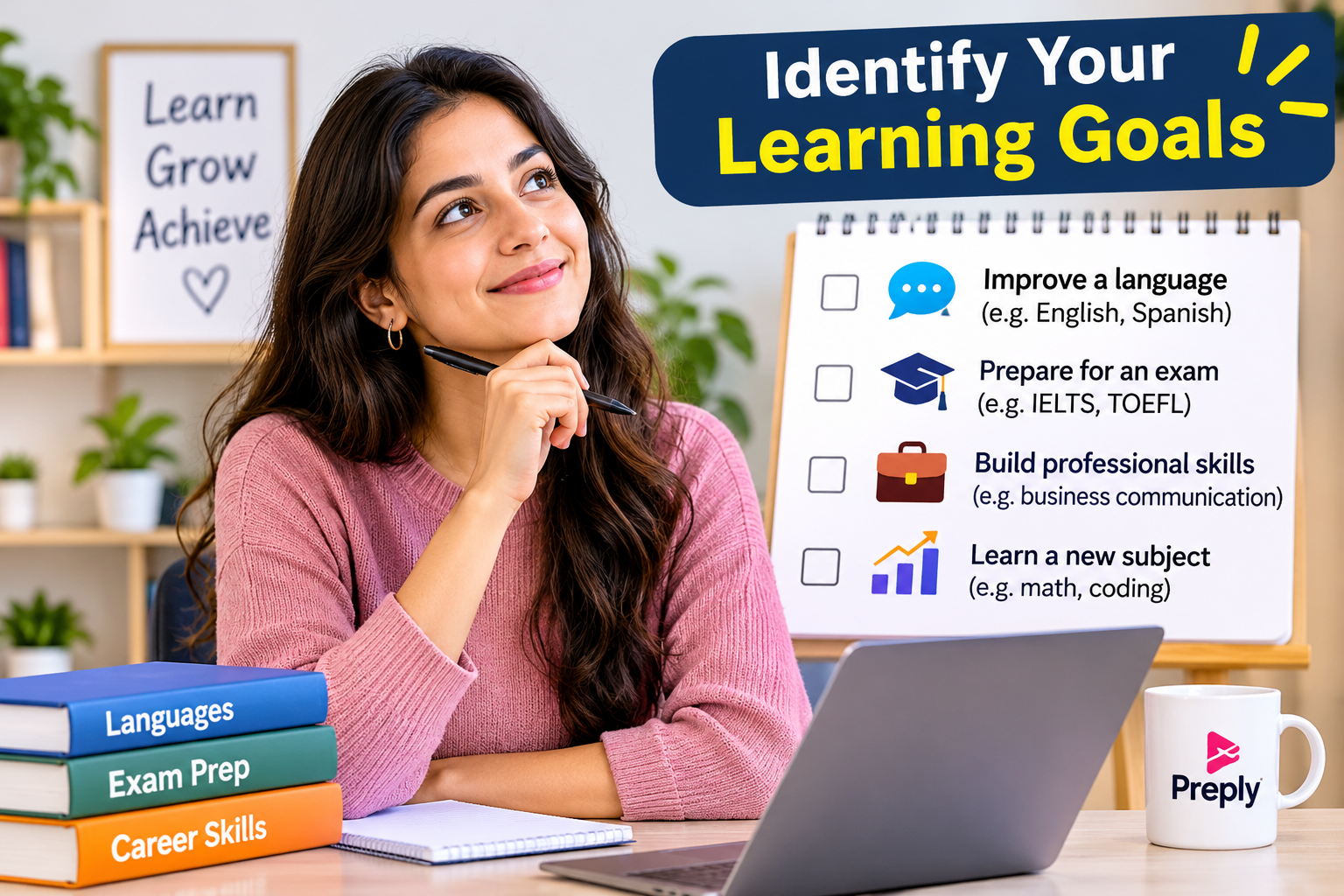
Before searching for a tutor, take some time to understand exactly what you want to achieve. Many beginners make the mistake of selecting a teacher first and thinking about their learning objectives later. This can create confusion because a tutor who is excellent at teaching conversational English may not necessarily specialize in IELTS preparation or business communication. Your learning goal should influence the type of tutor you choose. Start by identifying whether you want to learn a completely new subject, improve an existing skill, prepare for an examination, or achieve a professional objective. Try to make your goal specific rather than using a general statement such as wanting to become better at English. A clearer objective would be to improve spoken English for job interviews within three months or develop enough conversational Spanish to communicate during a holiday. You should also consider your current skill level. Someone who has never studied a language may require a patient beginner-friendly teacher, whereas an advanced learner might benefit from challenging discussions and specialized vocabulary. Think about how much time you can dedicate to lessons and independent practice every week. Having realistic expectations will help you select a tutor who can create a practical learning plan instead of promising unrealistic results.
Choosing the Right Subject and Specialization
Once you understand your main objective, select the appropriate subject and specialization. Preply’s tutor search allows learners to choose a subject and narrow their options through available specializations. For example, English learners may look for business English, pronunciation, general conversation, or examination preparation. Someone interested in mathematics may prefer a teacher experienced in school-level concepts or advanced problem-solving, depending on what is available. Choosing the correct specialization matters because teaching a subject and teaching a specific skill are not always the same thing. A general language teacher might help you develop everyday communication, while a tutor specializing in interview preparation may focus on answering professional questions, explaining your experience, and improving presentation skills. Before booking, read the tutor’s description and check whether their experience matches your requirements. You should also explain your goals clearly during the trial lesson. A tutor who understands what you want to achieve can recommend suitable exercises, learning materials, and lesson activities. This makes it easier to measure progress over time and determine whether your learning plan is working.
How to Search for Tutors on Preply
Finding a suitable tutor starts with using the search function effectively. Visit Preply and open the tutor search section. Choose the subject you want to study and explore the available teachers. Instead of scrolling through every profile, use the filters to narrow down the results according to your preferences. You can select a price range, choose relevant specializations, consider native-language preferences where applicable, and check tutors whose schedules match your availability. These filters are useful because they reduce the number of unsuitable options and make comparisons easier. For example, if you want to improve spoken English after work, you can prioritize tutors who offer evening sessions and specialize in conversational English. Similarly, if your budget is limited, selecting an appropriate price range will help you avoid spending time on tutors outside your financial comfort zone. Preply’s published help guidance describes these filters as tools for selecting subjects, specializations, prices, native-speaker preferences, and compatible schedules.
Preply Help Center
Once you have a shortlist, open individual profiles and examine their teaching experience, student feedback, introduction videos, and lesson availability. Do not make your decision based on the first attractive profile you see. Compare at least three tutors before booking a trial. A little research at the beginning can save time, money, and frustration later.
Understanding Tutor Profiles and Qualifications
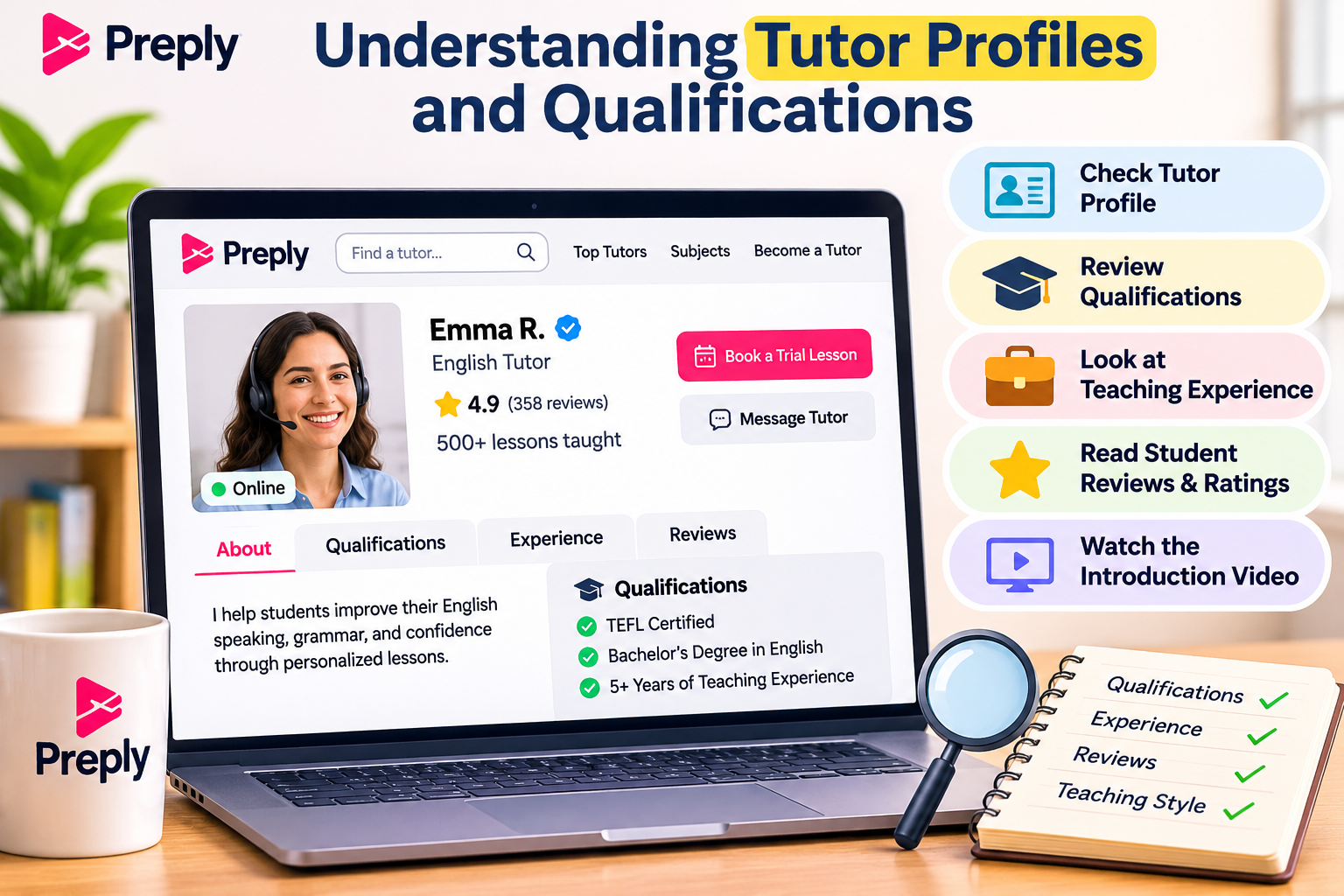
A tutor’s profile is one of the most useful sources of information when deciding whether someone is suitable for your learning requirements. It generally includes a personal introduction, teaching background, areas of specialization, qualifications, experience, and other information that helps students understand the tutor’s approach. Some tutors also provide introduction videos, which can give you an idea of their communication style, personality, and pronunciation. When reading a profile, focus on relevant experience rather than simply counting the number of certificates. For example, if you want to prepare for an English-speaking job interview, a tutor with professional communication and interview coaching experience may be a better choice than someone who focuses exclusively on academic grammar. Similarly, a beginner learning French might benefit from a teacher who has experience working with new learners. Qualifications can provide useful evidence of formal training, but they should not be the only factor influencing your decision. Teaching requires patience, clear explanations, good communication, and the ability to recognize different learning needs. A tutor may have impressive academic achievements but still use a teaching style that does not suit you. Therefore, consider qualifications alongside reviews, experience, specialization, and the overall impression you receive during the introductory meeting.
Checking Student Reviews and Ratings
Student reviews can provide valuable insights into the actual learning experience. While a tutor’s profile explains how they describe their own teaching methods, reviews help you understand how previous students experienced their lessons. Look beyond the overall star rating and read individual comments carefully. Do students mention that the tutor explains difficult topics clearly? Do they appreciate the teacher’s patience, punctuality, and communication? Are there comments about structured lessons or improvements in confidence? These details can help you identify qualities that matter for your own learning goals. It is also helpful to read a combination of positive and critical feedback rather than focusing only on the most enthusiastic comments. A tutor might receive an occasional negative review because their teaching style was not suitable for a particular student, even though they may work very well with other learners. Try to identify repeated patterns instead of judging someone based on one opinion. Also consider how many reviews are available and whether they are relevant to the subject you want to study. A teacher with fewer reviews but strong experience in your specific learning area might be more appropriate than someone with many reviews in an unrelated specialization. Use reviews as supporting information, then confirm your impression through a trial lesson.
Comparing Tutor Prices and Your Budget
Budget is an important factor when choosing an online tutor because learning often requires regular sessions rather than a single meeting. Preply allows students to filter tutors according to their hourly rates, which makes it easier to find teachers within a comfortable spending range. However, choosing the cheapest option is not always the best financial decision. You should consider the value of the lessons, the tutor’s experience, the specialization offered, and how effectively the teacher supports your learning objectives. A slightly more expensive tutor may provide a better learning experience if their teaching methods match your needs. At the same time, paying a premium price does not guarantee excellent teaching. Beginners should establish a realistic monthly education budget before starting. Consider how many lessons you can comfortably afford and whether you have enough time to complete independent practice between sessions. It is also important to understand the platform’s payment structure before purchasing a plan. Preply uses subscriptions for ongoing lessons rather than offering ordinary standalone lesson purchases after the trial stage. Therefore, review the number of lessons, billing dates, and renewal conditions carefully. A good financial decision is one that allows you to continue learning consistently without creating unnecessary financial pressure.
Understanding Tutor Availability and Scheduling
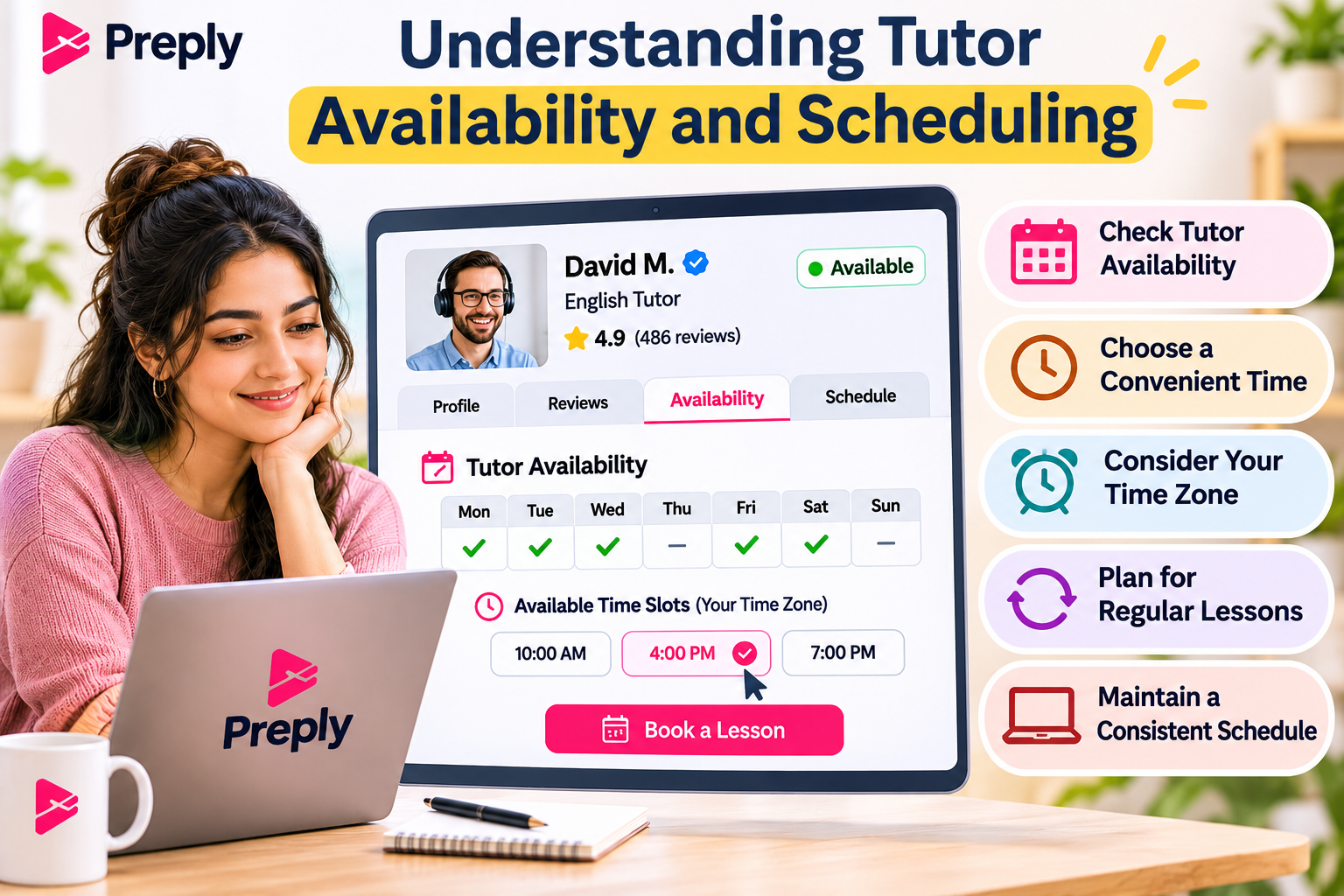
A good tutor should fit your schedule as well as your learning requirements. Even an experienced teacher may not be the right choice if their available lesson times consistently conflict with your daily routine. Before booking, check the tutor’s calendar and make sure the displayed times work for you. Pay attention to the time zone shown in your account, especially when choosing teachers who live in other countries. For example, a student in India may find a tutor based in Europe or North America, where the local time difference can affect lesson availability. Choose a schedule that you can maintain regularly rather than selecting an inconvenient time simply because a particular teacher looks impressive. Consistency is important because learning a language or developing a new skill requires repeated practice. If you are a working professional, evening or weekend lessons might be more practical. Students attending college may prefer sessions between classes or during free periods. You should also discuss the tutor’s future availability and preferred scheduling arrangements before choosing a subscription. A realistic schedule reduces missed sessions and makes it easier to build a positive learning routine.
The Importance of Trial Lessons
A trial lesson is one of the most useful steps when choosing an online tutor because it allows you to experience the teaching relationship before committing to regular sessions. Rather than relying entirely on profile descriptions and ratings, you get an opportunity to speak directly with the teacher and understand their approach. Preply currently offers paid trial lessons lasting either 25 or 50 minutes, depending on the option selected. During the session, you can introduce yourself, explain your learning objectives, discuss your current skill level, and experience a sample learning activity. The tutor may also suggest a possible learning plan based on your requirements.
Preply Help Center+1
Use this opportunity to evaluate whether the teacher listens carefully and explains things clearly. Ask how they normally structure lessons and how they measure student progress. If you are learning English, you might request a short conversation exercise to understand whether the tutor can help improve your speaking confidence. If you are preparing for an examination, discuss the topics you need to cover and the kind of practice you expect. Remember that the purpose of a trial lesson is not to demonstrate that you already know everything. It is an opportunity to find out whether the tutor can support your development. Take your time, ask questions, and avoid subscribing simply because you feel pressured to make an immediate decision.
Preparing for Your First Online Lesson
Good preparation can make your first tutoring session more productive. Before the scheduled time, make sure your internet connection is stable and your device has a working microphone and camera if required. Find a quiet place where you can concentrate without unnecessary interruptions. Keep a notebook or digital document ready for recording important explanations, new vocabulary, corrections, and practice activities. You should also prepare a short description of your current skill level and the main difficulties you want to overcome. For example, if your objective is to improve spoken English, you can tell the tutor that you understand basic grammar but hesitate while speaking. If you want to prepare for a professional examination, identify the subjects or topics that require the most attention. This information gives your teacher a starting point for planning the lesson. Do not worry if you cannot explain everything perfectly, especially when you are a complete beginner. The tutor is there to help you communicate your needs and develop your skills gradually. After the session, review your notes and identify two or three areas to practise before the next meeting. Preparation does not need to be complicated. Even a few minutes of planning can help you feel more confident and make better use of your lesson time.
Evaluating Teaching Styles and Communication
A tutor’s teaching style can influence your entire learning experience. Some teachers prefer structured lessons with clear objectives, textbooks, exercises, and homework. Others use conversations, practical examples, interactive activities, and flexible discussions. Neither approach is automatically better because different learners respond to different methods. A complete beginner may prefer step-by-step explanations, while an advanced learner may enjoy open discussions and challenging assignments. During your trial lesson, observe how the tutor explains unfamiliar concepts and responds when you make mistakes. A supportive teacher should correct errors constructively rather than making you feel embarrassed. Communication is equally important. You should feel comfortable asking questions, requesting additional examples, and explaining when something is unclear. If you are learning a language, consider whether the tutor speaks at a pace you can understand and whether their pronunciation is suitable for your learning goals. You can also ask whether lessons include speaking practice, listening exercises, homework, and progress reviews. A productive teacher-student relationship should feel collaborative rather than one-sided. The tutor provides guidance, but your participation, practice, and willingness to improve are equally important. Choose someone who encourages you to become an active learner instead of simply listening throughout every session.
Understanding Preply Subscriptions and Payments
Before moving from a trial lesson to regular tutoring, understand how Preply’s subscription system works. According to its current help documentation, subscriptions are connected to individual tutors and operate in recurring 28-day billing cycles. Students select a lesson plan according to their preferred learning frequency, and the payment is automatically renewed unless the subscription is changed, paused, or cancelled. The minimum subscription plan currently includes four lessons per 28-day cycle. This means you should not assume that booking a trial automatically gives you access to unlimited individual lesson purchases.
Subscription feature | What beginners should understand |
Billing cycle | Recurs every 28 days |
Minimum plan | Four lessons per cycle |
Payment | Based on the selected tutor’s rate and lesson plan |
Tutor selection | Each subscription is connected to one tutor |
Flexibility | Plans can be adjusted, paused, or cancelled |
Renewal | Automatic unless changed or cancelled |
One important detail is that unscheduled lessons may expire when a new billing cycle begins, so you should arrange your lessons before the renewal date. Preply also explains that subscriptions can be paused for up to 20 days once per billing cycle, subject to its conditions. If you decide to stop future payments, review the cancellation instructions and complete the process before the billing deadline. The platform’s current guidance says cancellation should be completed at least one day before the next billing date.
Preply Help Center+1
Always check the latest terms in your account because subscription conditions and available options can change. Understanding these details before paying helps you avoid unexpected charges and manage your learning expenses responsibly.
A Complete Guide to the Products and Services of Shenzhen Sonoff Technologies Co.,Ltd
Choosing the Right Ballet Classes: Tips for Beginners and Parents
The Ultimate Sohimi Buying Guide: Features, Value, and Shopping Tips
Why Florasis ( Hua Xizi) Is Gaining Attention in the Global Beauty Market
Why Beauty Enthusiasts Are Exploring MelodySusie for Nail Care
Is Preply Suitable for Beginners?
Preply can be a useful platform for beginners because it allows them to explore teachers with different levels of experience and teaching specializations. You do not need to be an advanced learner before starting online lessons. If you are completely new to a subject, you can look for tutors who specifically mention beginner-friendly instruction. This is particularly helpful for language learners who may initially struggle with pronunciation, vocabulary, grammar, or basic sentence formation. A suitable tutor should be willing to explain concepts slowly, repeat important information, and provide simple examples before introducing more difficult topics. Beginners should also feel comfortable making mistakes because mistakes are a natural part of learning. If your first lesson feels challenging, that does not automatically mean online tutoring is unsuitable for you. Sometimes you simply need a teacher whose communication style matches your learning preferences. Preply’s platform guidance confirms that its tutors cater to learners across different proficiency levels, including beginners.
The important thing is to communicate your starting level honestly and choose realistic learning objectives. With regular lessons, independent practice, and constructive feedback, beginners can gradually develop the confidence needed to move towards more advanced learning.
Conclusion
Finding the right online tutor is an important step towards achieving your educational and professional goals. Preply makes the process more convenient by allowing learners to explore tutors, compare qualifications, read student reviews, check prices, and arrange personalized online lessons. However, choosing a teacher should involve more than looking at ratings or selecting the lowest available price. You should consider your learning objectives, preferred teaching style, available schedule, budget, and the tutor’s experience in your chosen subject. Trial lessons are particularly useful because they allow you to understand how a teacher communicates and whether their approach matches your expectations. Remember that successful learning requires cooperation between the student and the tutor. Even an excellent teacher cannot guarantee results without your regular participation, practice, and commitment. Start with clear goals, choose a realistic learning schedule, and evaluate your progress regularly. Whether you want to improve your English communication, learn a foreign language, prepare for an examination, or develop professional skills, the right tutor can make your journey more organized and rewarding. Take time to compare your options instead of rushing into a decision. With the right approach, Preply can become a valuable part of your long-term learning journey.
Frequently Asked Questions
Q. Is Preply a Good Platform for Beginners?
A.Yes, Preply can be suitable for beginners who want personalized online learning. You can search for teachers who specialize in beginner-level instruction and choose someone who explains concepts patiently. Before committing to regular lessons, consider booking a trial session to understand the tutor's teaching style. Clearly explain your current knowledge, learning difficulties, and expectations so that the teacher can suggest an appropriate learning plan.
Q. How Do I Find the Best Tutor on Preply?
A.Start by selecting your preferred subject and using the available filters to narrow down tutors according to specialization, price, and availability. Next, review their qualifications, experience, student feedback, and introduction videos. Compare several profiles instead of choosing the first available teacher. Finally, arrange a trial lesson to evaluate communication, teaching methods, and compatibility with your learning goals.
Q. Are Preply Trial Lessons Free?
A.No. Preply trial lessons are paid lessons. Students can generally choose between 25-minute and 50-minute sessions. The trial provides an opportunity to introduce yourself, discuss your objectives, understand your current level, and experience the tutor's teaching approach. Check the displayed price and booking conditions before confirming your session.
Q. Can I Change My Tutor on Preply?
A.Yes. Preply provides options for moving lessons to another tutor, subject to the platform's applicable conditions. If you are not satisfied with your initial tutor, you can explore other available teachers whose experience and teaching styles better match your requirements. Review the relevant subscription and lesson-transfer conditions before making changes.
Q. How Much Time Should I Spend Learning With an Online Tutor?
A.The ideal learning frequency depends on your goals, current skill level, available time, and budget. Beginners may benefit from starting with one or two lessons per week and practising independently between sessions. For language learning, regular speaking, reading, and listening exercises can complement your tutoring sessions. Discuss your preferred schedule with your tutor and adjust the frequency as your confidence and learning requirements develop.
Table of Contents
Related Posts