Discover how MERSEA built a powerful customer loyalty and retention strategy to grow its ecommerce business. This blog post explores the marketing funnel, remarketing tactics, personalized communication, and data-driven strategies that help MERSEA turn first-time shoppers into long-term loyal customers. Perfect for businesses looking to learn practical retention techniques from the MERSEA playbook.

MERSEA’s Customer Loyalty & Retention Playbook
Table of Contents
Introduction to MERSEA and Its Customer-Centric Strategy
When people talk about successful ecommerce brands, the conversation often focuses on flashy marketing campaigns, viral social media posts, or influencer partnerships. Yet the real secret behind long-term growth often lies somewhere else: customer loyalty and retention. MERSEA, a lifestyle brand known for travel-inspired apparel and accessories, built its growth strategy around exactly that idea. Instead of chasing quick sales, the brand invested heavily in building meaningful relationships with customers.
Founded in 2013 by Lina Dickinson and Melanie Bolin, MERSEA started as a retail-focused brand that sold through partner stores across the United States. Over time, however, the founders realized that relying solely on retail distribution limited their ability to build a direct relationship with their customers. As ecommerce continued to dominate the retail landscape, MERSEA decided to shift its focus toward online sales and customer engagement. The challenge was simple but difficult: how do you attract online visitors and turn them into loyal repeat buyers?
The answer came through a carefully designed marketing funnel and retention strategy. By combining digital advertising, remarketing, email marketing, social media storytelling, and personalized customer communication, the brand created a system that nurtures customers throughout their journey. This strategy dramatically transformed the company’s performance, with ecommerce sales increasing from 10% to 45% of total revenue within two years.
What makes MERSEA’s approach so interesting is its simplicity. There is no magic trick or secret algorithm behind the strategy. Instead, the company focused on understanding how customers behave online and designing a funnel that guides them naturally from discovery to long-term loyalty. Think of it like building a relationship rather than making a one-time sale.
And that philosophy is exactly what makes MERSEA’s customer loyalty playbook worth studying.
Understanding MERSEA’s Marketing Funnel
To understand MERSEA’s loyalty strategy, we first need to look at its marketing funnel structure. A marketing funnel is essentially the journey a customer takes from discovering a brand to becoming a repeat buyer and brand advocate. While different businesses use slightly different models, most funnels follow similar stages.
MERSEA built its strategy around four core stages: Awareness, Consideration, Conversion, and Loyalty. Each stage has its own marketing tactics, communication methods, and goals. Instead of pushing customers aggressively toward a purchase, the brand nurtures them step by step.
Funnel Stage | Goal | Strategy Used by MERSEA |
Awareness | Introduce the brand to potential customers | Google Ads, Facebook Ads |
Consideration | Build interest and trust | Social media storytelling, email marketing |
Conversion | Encourage purchase | Cart abandonment emails, optimized checkout |
Loyalty | Turn buyers into repeat customers | Personalized emails, SMS updates |
This structured funnel approach allows MERSEA to guide customers naturally toward a purchase while simultaneously building a long-term relationship.
One interesting insight about ecommerce behavior is that most visitors don’t buy during their first visit. In fact, studies suggest that more than 97% of website visitors leave without making a purchase. That means brands must stay connected with customers even after they leave the site.
MERSEA addresses this challenge through remarketing campaigns, personalized communication, and content-driven engagement. Instead of assuming that a customer who leaves the site is lost forever, the brand treats that moment as just another step in the journey.
Think about it like meeting someone at a networking event. You probably wouldn’t ask them for a business partnership five seconds after introducing yourself. You would build trust first. MERSEA applies the same logic to ecommerce marketing.
This mindset is the foundation of its entire loyalty and retention playbook.
Awareness Stage – Getting the Right Customers’ Attention
The first step in MERSEA’s strategy is awareness. Before customers can become loyal fans, they need to discover the brand in the first place. This stage focuses on visibility, reach, and brand introduction.
MERSEA uses a combination of digital advertising channels to get in front of potential customers who are already searching for similar products. These include Google Ads, search ads, and Facebook ads targeted toward lifestyle interests.
Google Ads help the brand appear in search results when users look for products like sweaters, accessories, or travel-inspired clothing. These ads are highly effective because they target people who are already showing purchase intent. If someone searches for a “kimono sweater” or “cozy travel clothing,” MERSEA’s products can appear directly in front of them.
Facebook and Instagram ads work slightly differently. Instead of targeting search intent, these platforms allow the brand to target people based on lifestyle interests, demographics, and behaviors. MERSEA uses this capability to reach audiences who resonate with its brand story of travel, relaxation, and coastal living.
But awareness is not just about advertising. MERSEA also focuses heavily on brand storytelling. Through social media posts, product imagery, and lifestyle content, the company introduces potential customers to the emotional side of the brand. Instead of simply promoting products, MERSEA paints a picture of a lifestyle.
Imagine scrolling through Instagram and seeing someone relaxing on a beach wearing a comfortable sweater while enjoying a sunset. That visual story creates a connection that goes beyond a simple product listing.
By combining targeted advertising with lifestyle storytelling, MERSEA ensures that its first interaction with customers feels authentic and inspiring rather than purely transactional.
Consideration Stage – Building Trust and Interest
Once customers become aware of a brand, the next step is helping them evaluate whether it’s worth their attention and trust. This stage is known as consideration, and it’s where MERSEA excels.
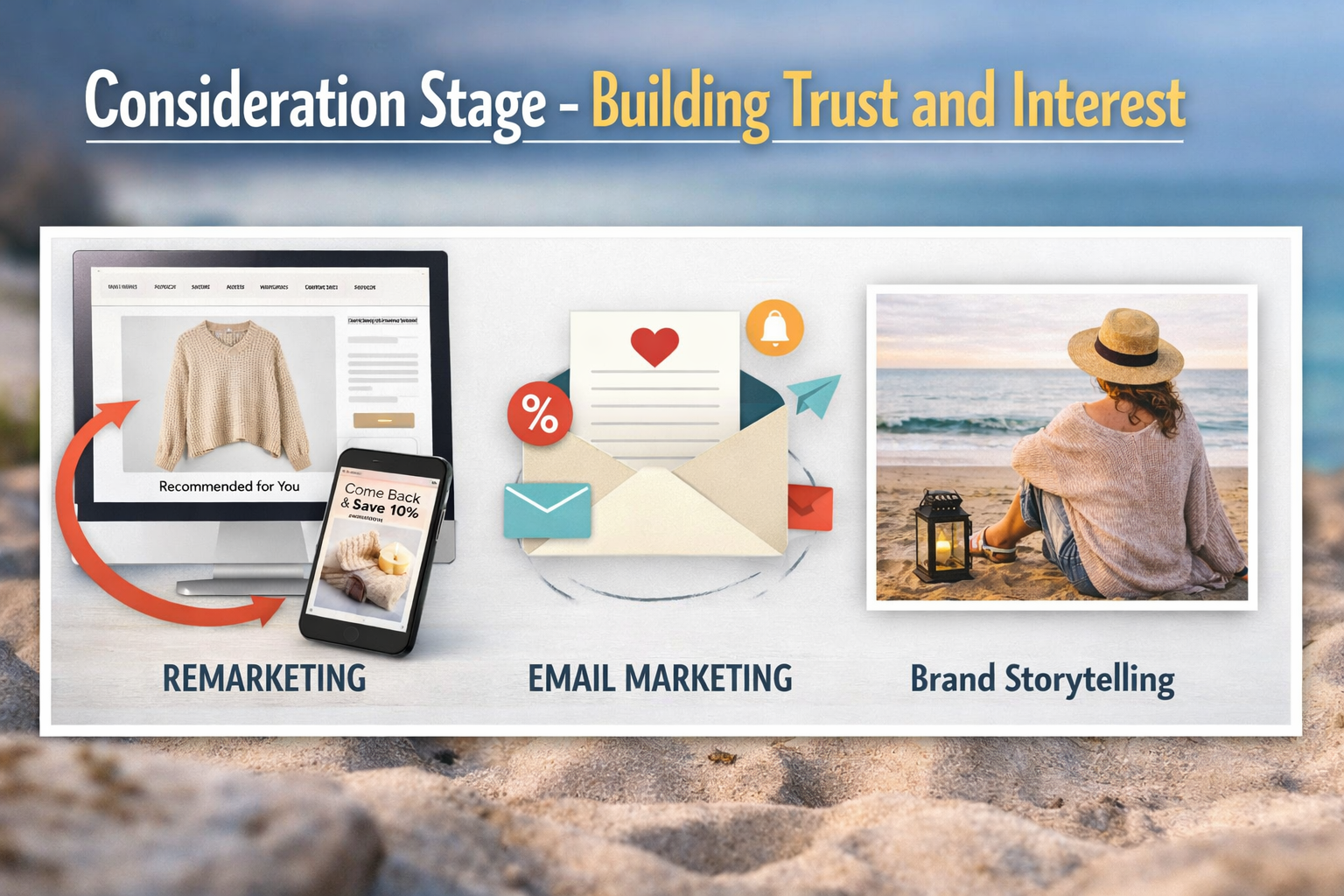
One of the key strategies used here is remarketing. Remarketing allows the brand to display ads specifically to users who have already visited the website. For example, if someone browses a sweater on the site but leaves without purchasing, they may later see ads featuring that same product.
This strategy works because it keeps the brand top of mind. Instead of disappearing from the customer’s awareness, MERSEA continues the conversation. Remarketing ads act like gentle reminders rather than aggressive sales pitches.
Email marketing also plays a huge role in the consideration stage. When visitors subscribe to newsletters or create accounts, MERSEA begins sending story-driven email campaigns. These emails often introduce the inspiration behind products, highlight seasonal collections, or share travel-related themes that align with the brand identity.
What makes these emails effective is that they are not purely promotional. Instead of flooding inboxes with discounts and product links, MERSEA uses storytelling to create an emotional connection with readers. Customers begin to see the brand as more than just a clothing retailer—it becomes part of their lifestyle.
This approach aligns with a broader trend in ecommerce marketing: content-driven engagement. Modern consumers want to feel connected to the brands they buy from. They want stories, authenticity, and values.
MERSEA understands that trust takes time to build. By nurturing customers during the consideration stage, the brand dramatically increases the chances that those visitors will eventually become buyers.
Conversion Stage – Turning Visitors into Buyers
At some point in the customer journey, interest needs to turn into action. That moment is the conversion stage, where visitors become paying customers.
One of the biggest challenges in ecommerce is cart abandonment. Many shoppers add products to their carts but leave before completing the purchase. This can happen for many reasons—distractions, uncertainty, price comparisons, or even a complicated checkout process.
MERSEA tackles this issue with automated cart abandonment emails. If a customer adds a product to their cart but does not complete the purchase, the system sends a follow-up email reminding them about the item. Sometimes these emails include product images, reviews, or limited-time offers to encourage the customer to return.
These emails are surprisingly effective. Studies show that abandoned cart emails can recover a significant percentage of lost sales because they target customers who have already demonstrated strong purchase intent.
Another important aspect of the conversion stage is the shopping experience itself. MERSEA focuses on clear product descriptions, high-quality images, and a seamless checkout process. Small details—like fast-loading pages, simple payment options, and mobile optimization—can dramatically improve conversion rates.
Think of it like visiting a physical store. If the store is organized, welcoming, and easy to navigate, customers feel comfortable making a purchase. If it’s chaotic and confusing, they leave.
The same psychology applies online. By removing friction from the buying process, MERSEA increases the likelihood that visitors complete their purchases.
Data-Driven Retention Strategies Used by MERSEA
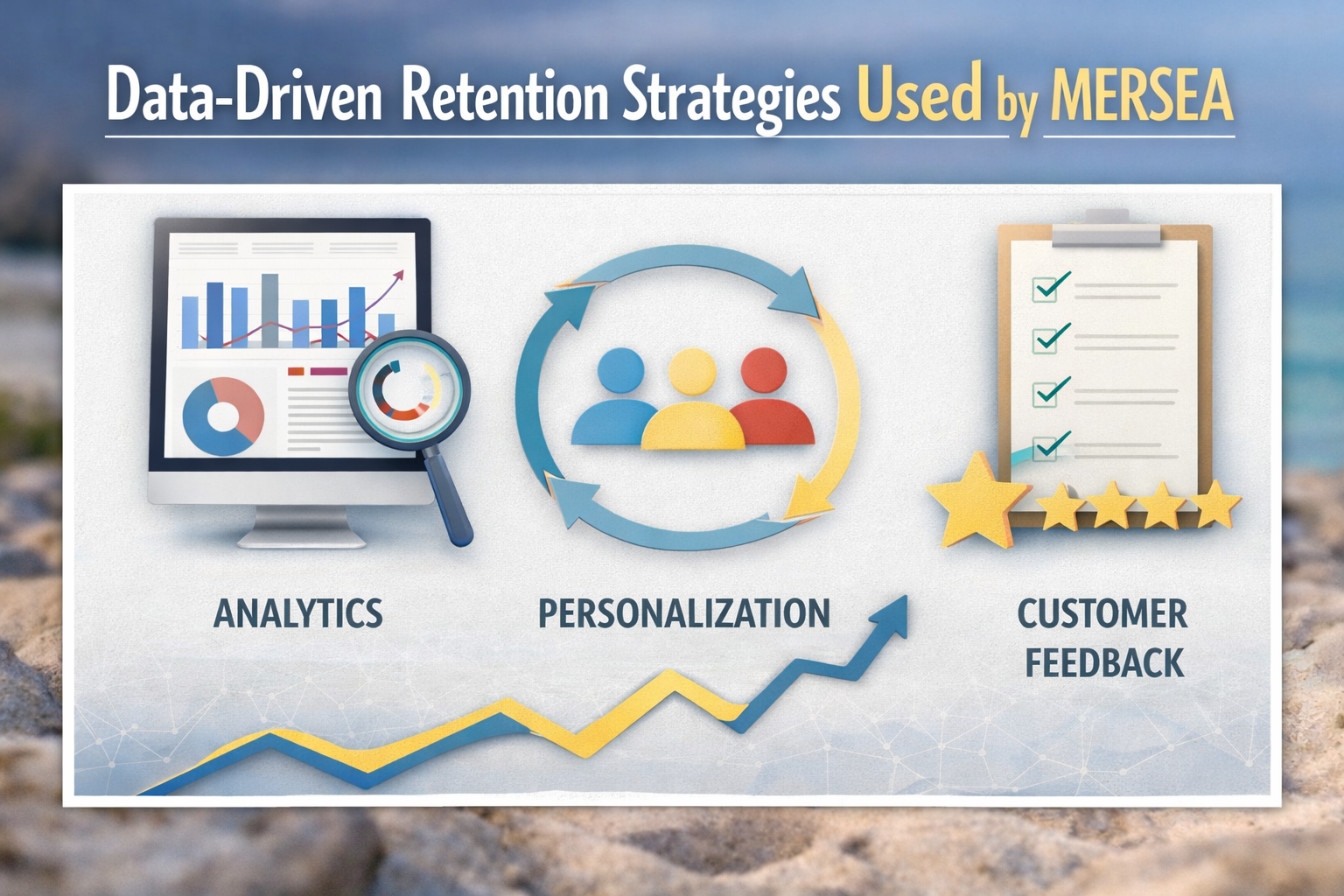
Another critical element of MERSEA’s playbook is data-driven decision making. The brand closely monitors customer behavior across its marketing channels to understand what works and what doesn’t.
For example, analytics tools track metrics like website traffic, conversion rates, email open rates, and repeat purchase frequency. By analyzing these numbers, the marketing team can identify opportunities for improvement.
If a particular email campaign generates high engagement, the brand can replicate that style of messaging in future campaigns. If a product page has a high bounce rate, it may indicate that the page needs better visuals or clearer information.
Data also helps with customer segmentation. Instead of sending the same marketing messages to everyone, MERSEA can tailor campaigns to specific groups. For example:
- New visitors may receive welcome emails introducing the brand
- Existing customers may receive loyalty rewards or early product access
- Inactive customers may receive re-engagement campaigns
This personalized approach ensures that each customer receives relevant communication rather than generic marketing messages.
Loyalty Stage – Creating Repeat Customers
For many businesses, the story ends once a purchase is made. But for MERSEA, that moment is only the beginning of the most important stage: customer loyalty.
The brand understands a fundamental business truth: acquiring new customers is far more expensive than retaining existing ones. That’s why MERSEA invests heavily in post-purchase communication and relationship building.
One of the simplest but most effective strategies is ongoing email communication. Customers receive updates about new collections, seasonal products, and lifestyle inspiration related to the brand. These emails keep the relationship alive even when customers are not actively shopping.
MERSEA also sends personalized text message updates, especially for order confirmations and shipping notifications. These small touches create a sense of personal attention and reliability.
Over time, this consistent communication builds trust. Customers begin to feel familiar with the brand and comfortable returning for additional purchases. In fact, reports suggest that about 50% of MERSEA customers eventually become repeat buyers, highlighting the success of the loyalty strategy.
Loyal customers also become brand advocates. They recommend products to friends, share experiences on social media, and help spread awareness organically.
When a brand reaches this stage, marketing becomes much easier. Instead of constantly chasing new customers, loyal fans help drive growth naturally.
Lessons Businesses Can Learn from MERSEA’s Playbook
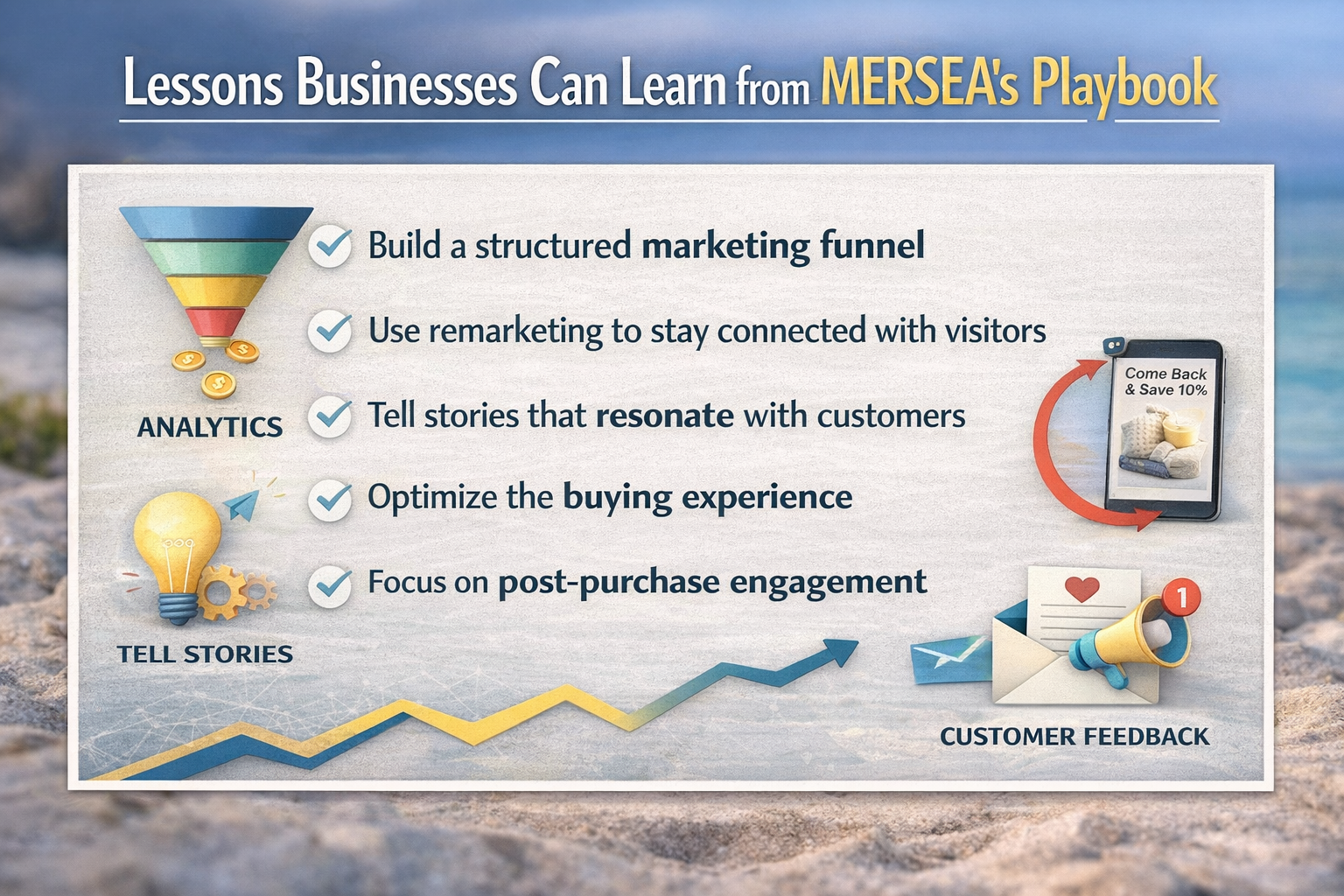
MERSEA’s strategy offers valuable lessons for businesses in any industry. The biggest takeaway is that customer relationships matter more than short-term sales.
Companies that focus solely on acquisition often struggle with long-term growth. They spend heavily on advertising to bring in new customers but fail to build loyalty. MERSEA took a different approach by investing in a structured funnel and retention strategy.
Several key principles stand out from this playbook:
- Build a structured marketing funnel
- Use remarketing to stay connected with visitors
- Tell stories that resonate with customers
- Optimize the buying experience
- Focus on post-purchase engagement
These strategies are not limited to fashion brands. Ecommerce stores, SaaS companies, and service providers can all apply similar principles to improve retention and customer lifetime value.
The Importance of Customer Loyalty in Ecommerce
Customer loyalty is one of the most valuable assets for any ecommerce brand. While acquiring new customers can be expensive, retaining existing customers often leads to higher profits and sustainable growth. For brands like MERSEA, focusing on loyalty means creating meaningful relationships with customers instead of simply pushing one-time purchases.
When customers trust a brand, they are more likely to buy repeatedly and recommend it to others. Loyal customers also tend to spend more over time, which increases the customer lifetime value (CLV). MERSEA understands that loyalty is built through consistent engagement, quality products, and personalized communication. By focusing on these elements, the brand ensures that customers feel valued and connected.
How MERSEA Builds Emotional Connections With Customers
One of the key elements of MERSEA’s customer retention strategy is emotional connection. Instead of focusing solely on selling products, the brand builds a lifestyle around travel, relaxation, and coastal inspiration. This storytelling approach makes customers feel part of something larger than a simple purchase.
Through social media posts, product photography, and storytelling campaigns, MERSEA communicates a consistent brand identity. Customers who resonate with this identity often develop a stronger attachment to the brand. Emotional branding helps create trust, and trust naturally leads to long-term loyalty.
Brands that focus on emotional connections often see higher engagement rates because customers feel personally connected to the brand’s story.
The Role of Email Marketing in MERSEA’s Retention Strategy
Email marketing plays a major role in MERSEA’s customer retention playbook. After a customer signs up for newsletters or makes a purchase, the brand begins sending personalized emails designed to nurture the relationship.
These emails include product recommendations, lifestyle content, and updates about new collections. Instead of overwhelming customers with promotional messages, MERSEA balances sales-focused emails with engaging content that keeps subscribers interested.
Email campaigns also help the brand stay visible in customers’ inboxes. Even when customers are not actively shopping, these emails remind them about the brand and encourage future purchases.
Social Media Engagement and Community Buildi
Social media platforms are powerful tools for customer engagement, and MERSEA uses them effectively to build a loyal community. Platforms like Instagram and Facebook allow the brand to share visually appealing content that reflects its lifestyle-focused identity.
By posting travel-inspired images, product highlights, and customer experiences, MERSEA encourages followers to interact with the brand. Comments, shares, and user-generated content create a sense of community around the brand.
When customers feel like they are part of a brand’s community, they are more likely to stay loyal and continue purchasing products.
Future Opportunities for MERSEA’s Loyalty Strategy
As ecommerce technology continues to evolve, MERSEA has many opportunities to strengthen its customer loyalty strategy. Emerging technologies like artificial intelligence, predictive analytics, and advanced personalization tools can further enhance the customer experience.
For example, AI-powered recommendations can help customers discover products that match their preferences. Loyalty programs and exclusive member benefits could also strengthen the relationship between the brand and its customers.
By continuing to innovate and adapt to changing consumer behavior, MERSEA can maintain strong customer relationships and ensure long-term growth.
Conclusion
MERSEA’s customer loyalty and retention playbook proves that sustainable business growth rarely comes from one-time purchases. Instead, it comes from building genuine relationships with customers over time.
By structuring its marketing funnel around awareness, consideration, conversion, and loyalty, the brand created a system that nurtures customers throughout their entire journey. The combination of targeted advertising, remarketing campaigns, storytelling emails, cart recovery strategies, and personalized communication transformed MERSEA’s ecommerce performance dramatically.
What makes this strategy particularly powerful is its simplicity. MERSEA did not rely on complicated growth hacks or expensive marketing experiments. Instead, it focused on understanding customer behavior and designing experiences that encourage trust, engagement, and repeat purchases.
In today’s competitive ecommerce environment, that kind of relationship-driven approach is not just beneficial—it’s essential
Frequently Asked Questions
Q. What is MERSEA known for?
MERSEA is a lifestyle brand that offers travel-inspired clothing, accessories, and home fragrances designed around comfort, relaxation, and coastal living.
Q. Why is customer loyalty important for ecommerce brands?
Customer loyalty increases repeat purchases, reduces acquisition costs, and improves long-term profitability.
Q. What marketing funnel does MERSEA use?
MERSEA uses a four-stage funnel: awareness, consideration, conversion, and loyalty.
Q. How does MERSEA recover abandoned carts?
The brand uses automated cart abandonment emails that remind customers about items left in their carts.
Q. What makes MERSEA’s retention strategy successful?
Its success comes from consistent communication, personalized messaging, and a strong focus on building long-term customer relationships.
Table of Contents
Related Posts