Medical Guardian: The Best Medical Alert System in 2026
Medical emergencies rarely come with a warning. One minute everything feels normal, and the next, a fall, dizziness, chest pain, or sudden confusion can change everything. That is exactly why medical alert systems have become one of the most important safety technologies for seniors, caregivers, and families in 2026. Among dozens of companies competing in this space, Medical Guardian continues to stand out as the top choice because of its reliability, fast response times, advanced features, and user-friendly devices.
Whether someone lives independently, travels frequently, or simply wants extra peace of mind, Medical Guardian has created a system that feels modern rather than outdated. Instead of bulky panic buttons that look like old technology, the company now offers sleek wearable devices, smartwatch-style alerts, GPS tracking, caregiver apps, and automatic fall detection. It feels less like a medical device and more like smart everyday protection.
According to recent 2026 reviews from trusted senior safety platforms, Medical Guardian consistently ranks among the highest-rated medical alert providers for customer satisfaction, response speed, and feature variety. Monthly plans generally range from around $32 to $47 depending on the device and subscription type. Families increasingly choose Medical Guardian because it balances safety, convenience, and modern technology in a way many competitors still struggle to achieve.
Table of Contents
Understanding Medical Alert Systems
Medical alert systems have evolved dramatically over the last decade. In the past, these devices were often seen as simple emergency buttons designed mainly for elderly individuals living alone. Today, they have transformed into intelligent health and safety ecosystems that combine GPS tracking, fall detection, cellular connectivity, and mobile apps into one seamless solution. In 2026, people no longer view medical alert systems as symbols of aging. Instead, they see them as tools for maintaining independence and confidence.
A medical alert system works like a personal emergency safety net. When a user presses the help button or when automatic fall detection senses a serious fall, the device connects to a 24/7 monitoring center. Trained emergency agents then communicate with the user through built-in speakers or connected base stations. Depending on the situation, they may contact emergency responders, caregivers, or family members immediately. This fast communication can make a massive difference during emergencies where every second matters.
The need for these systems continues to grow because falls remain one of the leading causes of injuries among seniors. Many older adults prefer aging in place instead of moving into assisted living facilities. Families also want reassurance that their loved ones can quickly access help if something goes wrong. Medical Guardian fills this gap perfectly by offering devices suitable for both home use and active lifestyles outside the home.
What makes modern systems like Medical Guardian especially valuable is their simplicity. Users do not need advanced technical knowledge to operate them. Most devices feature one-touch emergency assistance, easy charging systems, and intuitive interfaces. It is technology designed to remove stress rather than create it. That combination of accessibility and innovation explains why Medical Guardian has become one of the most trusted names in the industry.
What Makes Medical Guardian Stand Out in 2026
The medical alert industry has become highly competitive, yet Medical Guardian consistently earns recognition as one of the best providers available. One major reason is reliability. During emergencies, people cannot afford delays, glitches, or confusing interfaces. Medical Guardian focuses heavily on dependable performance, which has earned praise from experts, caregivers, and customers alike.
Recent independent testing showed Medical Guardian emergency response times averaging around 20 to 30 seconds during simulated emergency calls. That speed is incredibly important because medical emergencies often become more dangerous with every passing minute. Whether someone experiences a fall, heart issue, or sudden weakness, immediate communication can significantly improve outcomes.
Another factor separating Medical Guardian from competitors is the diversity of its product lineup. Some companies offer only basic at-home systems, while Medical Guardian provides everything from landline units to wearable GPS-enabled devices and smartwatch-style solutions. This flexibility allows users to choose systems that fit their lifestyle rather than forcing them into one rigid option.
Medical Guardian also embraces modern smart technology better than many older competitors. Devices like the MGMove smartwatch combine emergency response tools with fitness tracking, reminders, weather updates, and messaging features. Instead of feeling clinical, these products feel integrated into everyday life. That matters because users are more likely to wear devices consistently when they are comfortable and visually appealing.
Trusted review platforms in 2026 repeatedly rank Medical Guardian among the top overall medical alert systems because of its balance between innovation and ease of use. While some brands focus only on affordability or flashy technology, Medical Guardian succeeds by combining safety, simplicity, reliability, and convenience into one complete package.
Medical Guardian Devices Explained
Medical Guardian offers several different devices tailored to varying lifestyles and needs. This variety helps users select protection that matches their daily routines rather than settling for generic solutions. Some individuals spend most of their time at home, while others travel frequently, exercise outdoors, or maintain highly active lifestyles. Medical Guardian addresses all these situations through specialized products.
Device | Best For | Monthly Cost Range | Key Feature |
MGHome Landline | Traditional home users | Around $31–$32 | Reliable in-home coverage |
MGHome Cellular | Homes without landlines | Around $38–$39 | Cellular connectivity |
MGMini | Active seniors | Around $39–$44 | GPS and compact design |
MGMove | Smartwatch users | Around $42–$45 | Smartwatch functionality |
The MGHome Landline system is ideal for seniors who spend most of their time at home and already maintain a landline connection. It includes a base station and wearable help button with impressive coverage throughout the home. Even though it uses traditional infrastructure, the device still provides modern safety and reliable monitoring.
The MGHome Cellular system works similarly but eliminates the need for a landline entirely. It uses cellular connectivity instead, making it more flexible for modern households. Reviewers have praised its strong wireless range, with some tests reporting coverage up to 1,400 feet in open areas.
For users who want protection outside the home, the MGMini stands out as one of Medical Guardian’s most popular products. It is small, lightweight, and equipped with GPS tracking plus two-way communication. Users can speak directly with emergency operators through the device itself. Its discreet design makes it especially attractive to active seniors who dislike bulky wearable technology.
Then there is the MGMove smartwatch, which feels more like modern wearable tech than a traditional medical alert device. It includes emergency response features while also offering activity tracking, reminders, messaging, and weather updates. Many seniors appreciate that it looks like a regular smartwatch rather than medical equipment, making it easier to wear confidently in public.
Features That Make Medical Guardian the Best
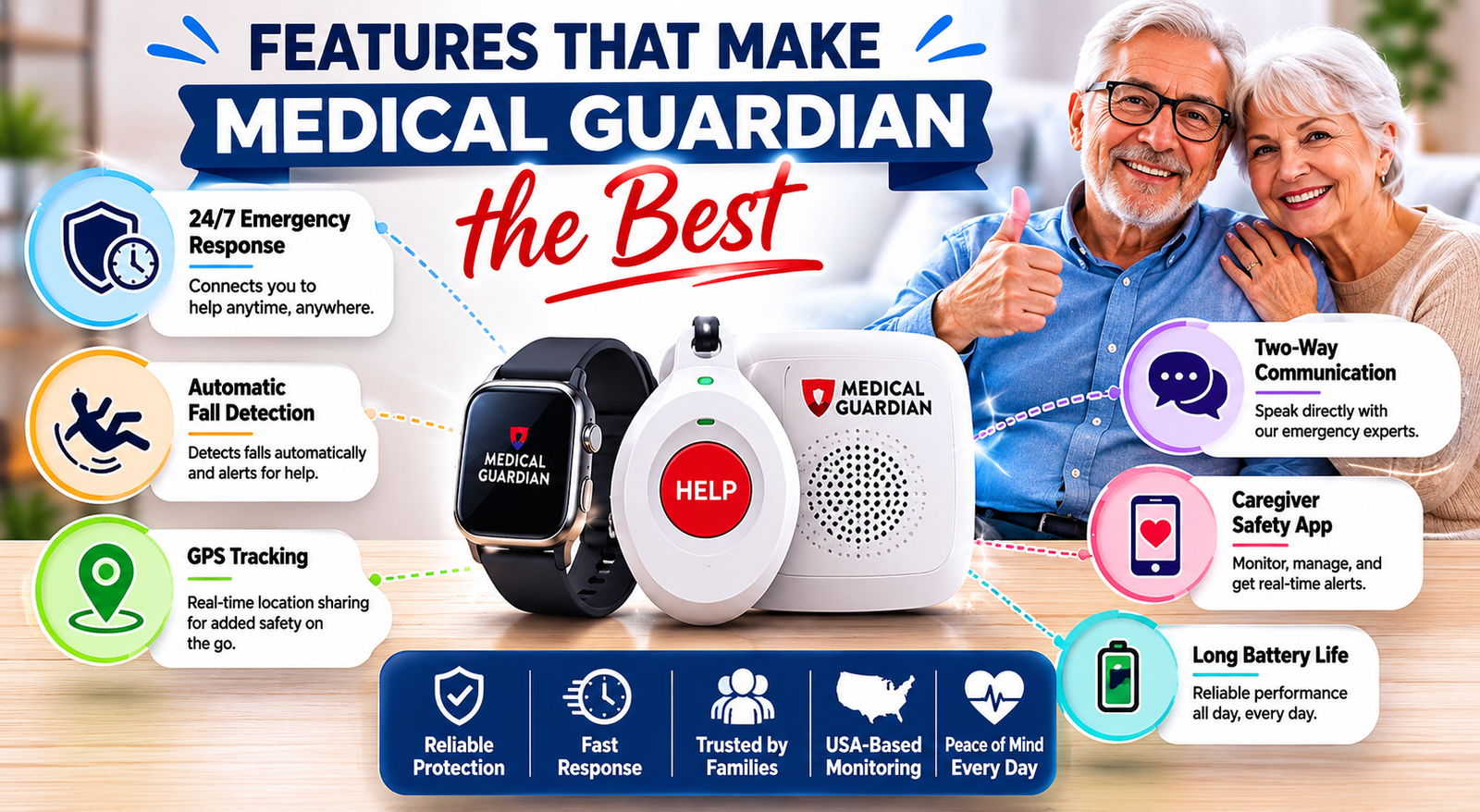
Medical Guardian’s success comes largely from its feature set. While many competitors provide basic emergency assistance, Medical Guardian adds meaningful tools that improve both safety and convenience. These features transform the system from a simple panic button into a comprehensive personal safety platform.
One of the most important features is automatic fall detection. Falls are a major concern for older adults because they can lead to severe injuries, hospitalization, or long-term mobility issues. Fall detection uses motion sensors and intelligent algorithms to identify sudden movements associated with dangerous falls. If the user cannot press the emergency button, the system automatically contacts the monitoring center. Medical Guardian typically offers this feature as an additional monthly option costing around $10.
Another standout feature is two-way communication. Many devices allow users to speak directly with emergency agents through built-in microphones and speakers. This eliminates the need to reach a phone during emergencies. Imagine falling in the kitchen and being unable to stand. Instead of crawling toward a phone, users can simply speak through their wearable device.
GPS tracking is especially valuable for active users or individuals with memory-related conditions. GPS-enabled devices allow emergency responders and caregivers to locate users quickly during emergencies. This feature becomes incredibly important for seniors who travel independently or enjoy outdoor activities like walking, shopping, or gardening.
Medical Guardian’s caregiver-focused mobile app also deserves attention. Family members can monitor battery levels, receive alerts, track device locations, and communicate more effectively. Caregiving often feels stressful because families constantly worry about loved ones when they are apart. The app reduces some of that anxiety by improving communication and visibility.
The company also includes lifestyle-focused features in devices like MGMove. Step tracking, medication reminders, messaging, and weather notifications make the device feel useful beyond emergencies. That broader usefulness encourages daily wear, which ultimately improves safety because the device is more likely to be available when needed.
Pricing and Subscription Plans in 2026
Medical Guardian is not the cheapest medical alert provider on the market, but many reviewers believe the higher cost is justified by better technology and faster response times. Pricing depends on the selected device, subscription length, and optional add-ons like fall detection or protection plans.
According to recent 2026 reviews, Medical Guardian monthly monitoring costs generally range between approximately $32 and $47 depending on the device and payment structure. Some systems also include one-time equipment fees ranging from around $149 to $199.
Device | Equipment Fee | Monthly Monitoring |
MGHome Landline | Around $149 | Around $31–$32 |
MGHome Cellular | Around $149 | Around $38–$39 |
MGMini | Around $149 | Around $39–$44 |
MGMove | Around $199 | Around $42–$45 |
Annual subscription plans often reduce monthly costs slightly. Some reviewers also noted that Medical Guardian occasionally includes free shipping or lockboxes with longer-term payment plans.
Optional add-ons increase costs but may significantly improve safety and convenience. Common add-ons include:
- Automatic fall detection
- Device protection plans
- Extra help buttons
- Wall-mounted emergency buttons
- Messaging and reminder features
While some users initially hesitate because of pricing, many families later view the cost as worthwhile when compared to alternatives like assisted living facilities, hospitalization expenses, or caregiver burnout. In many ways, Medical Guardian functions like insurance for independence. It provides peace of mind that is difficult to quantify purely in dollars.
Comparing Medical Guardian With Competitors
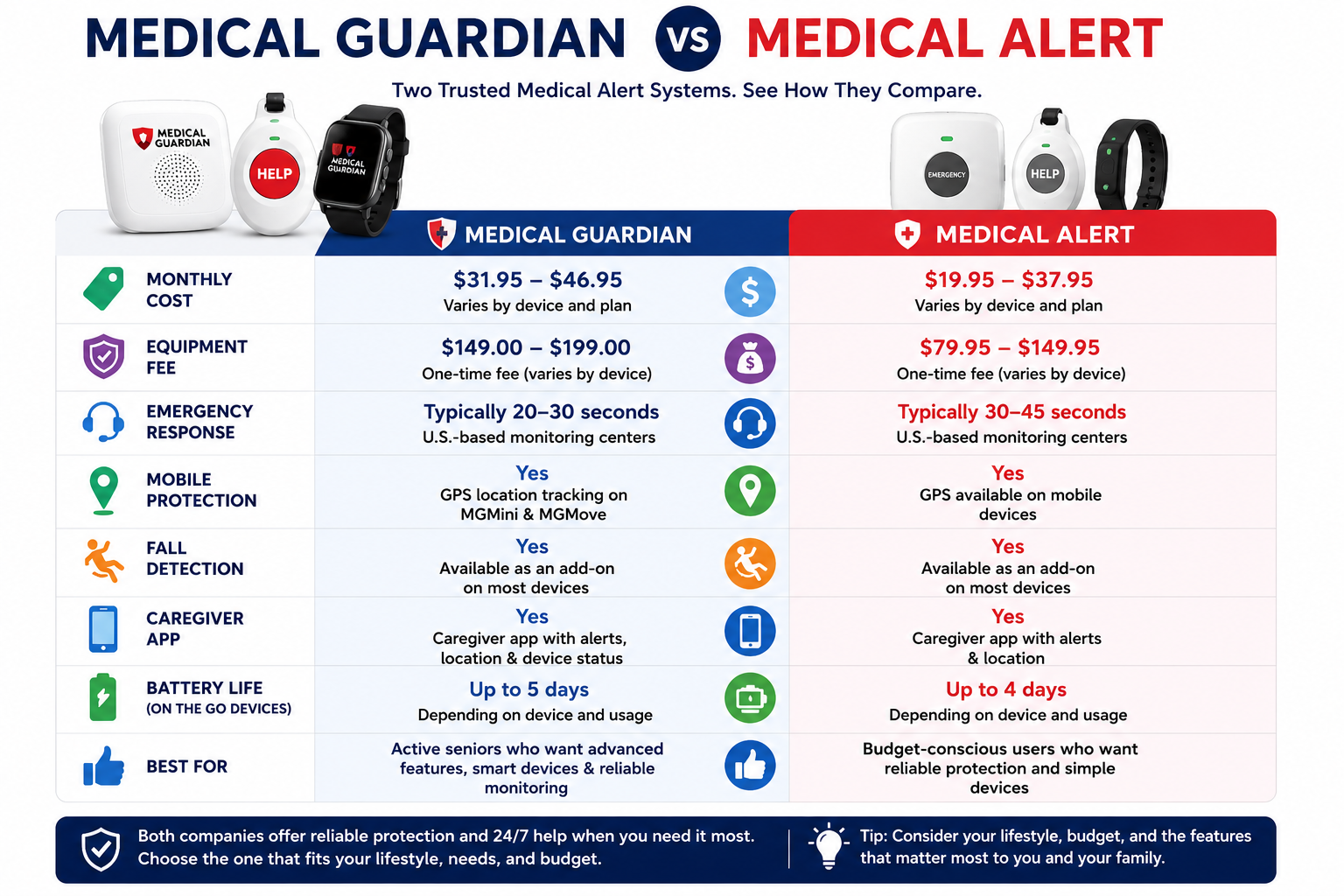
Medical Guardian competes against several well-known brands, including Life Alert and Medical Alert. While each company offers emergency monitoring services, important differences emerge when comparing pricing, technology, flexibility, and overall user experience.
Medical Guardian vs Life Alert
Life Alert remains famous because of its iconic advertising slogan, but many modern reviewers believe Medical Guardian now offers superior technology and value. Independent comparisons in 2026 frequently praised Medical Guardian for offering lower monthly prices, more advanced devices, GPS tracking, fall detection, and better smartwatch options.
One major criticism of Life Alert is its long-term contracts and higher fees. Medical Guardian generally provides more flexibility without locking customers into restrictive agreements. Medical Guardian also offers stronger mobile app functionality and more modern wearable designs.
Medical Guardian vs Medical Alert
Medical Alert is another strong competitor known for straightforward systems and user-friendly setups. However, Medical Guardian often wins in categories related to device variety, mobile GPS options, and technology innovation. Comparisons published in 2026 highlighted Medical Guardian’s longer wireless ranges and broader selection of on-the-go devices.
Medical Alert may appeal to budget-conscious users because some plans cost slightly less. However, families seeking advanced smart features, caregiver tools, and sleek wearable technology frequently lean toward Medical Guardian instead.
The key takeaway is that Medical Guardian balances innovation and practicality better than many rivals. It does not simply focus on flashy technology or rock-bottom pricing. Instead, it prioritizes dependable emergency support while embracing modern user expectations.
Pros and Cons of Medical Guardian
Every product has strengths and weaknesses, and Medical Guardian is no exception. Understanding both sides helps buyers make informed decisions based on their unique needs.
Pros
- Fast and reliable emergency response
- Excellent GPS-enabled mobile devices
- Smartwatch-style medical alert options
- Strong wireless range for home systems
- User-friendly caregiver mobile app
- Modern and discreet device designs
- Flexible device selection for different lifestyles
Cons
- Higher pricing compared to budget competitors
- Equipment fees may feel expensive upfront
- Fall detection costs extra
- Some devices require frequent charging
Despite these drawbacks, most reviewers still rank Medical Guardian highly because its overall performance consistently delivers peace of mind and reliable emergency support. Many customers feel the added costs are justified by the quality of technology and service provided.
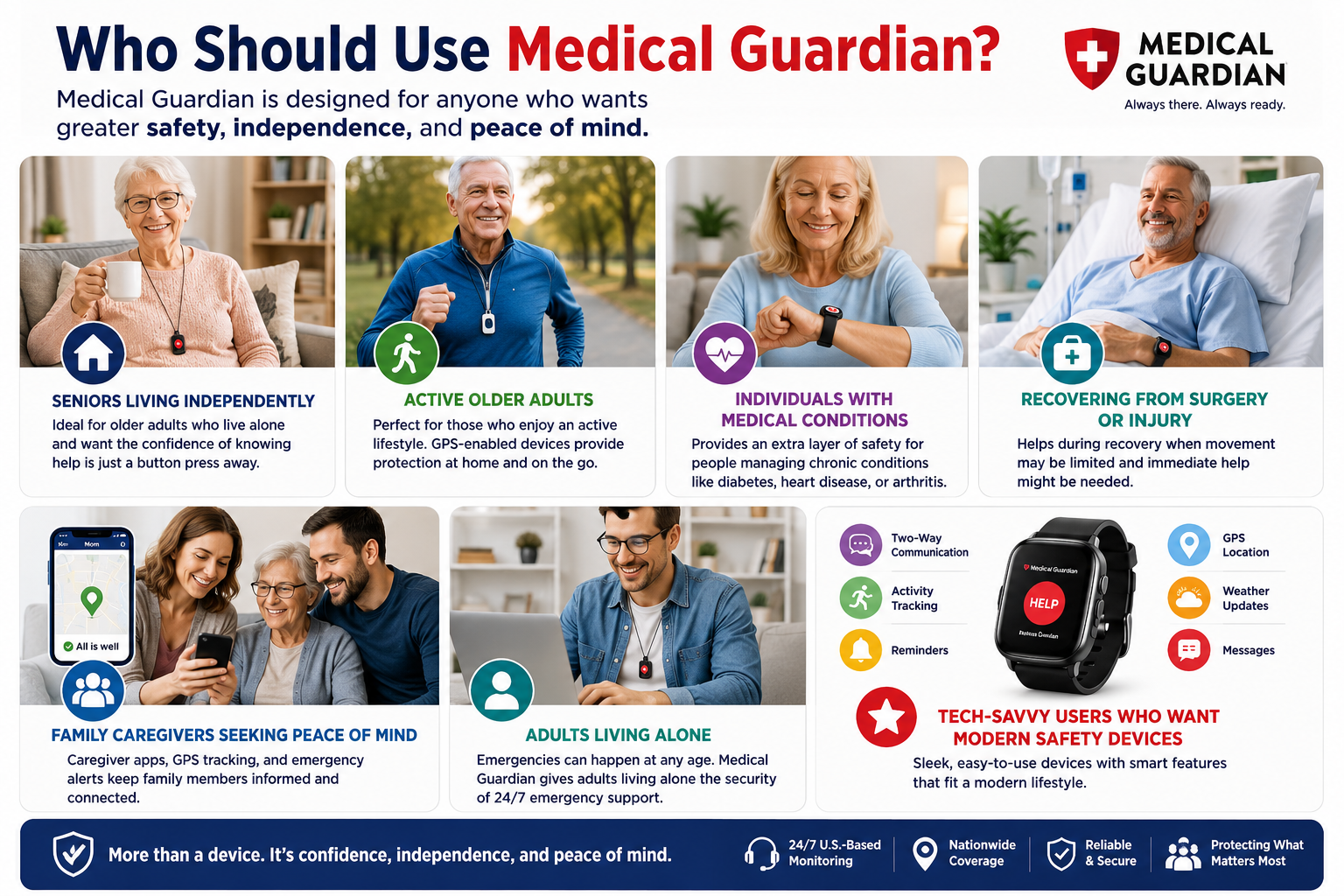
Who Should Use Medical Guardian
Medical Guardian works well for a wide variety of users because its devices are flexible enough to fit different lifestyles and medical needs. Seniors aging independently at home are obvious candidates, but the systems are also valuable for individuals recovering from surgery, people with chronic medical conditions, and adults living alone.
Active seniors benefit greatly from mobile GPS-enabled systems like MGMini and MGMove. These devices provide confidence during walks, shopping trips, exercise, or travel. Users know they can access help anywhere cellular coverage exists.
Families caring for aging parents also gain peace of mind from Medical Guardian’s caregiver tools. The ability to monitor battery life, receive notifications, and track locations reduces stress significantly. Caregiving can feel emotionally exhausting because loved ones constantly worry about potential emergencies. Medical Guardian helps bridge that emotional gap.
People with conditions such as Parkinson’s disease, epilepsy, arthritis, diabetes, or balance issues may especially benefit from automatic fall detection and emergency monitoring. Even younger adults with health concerns sometimes use medical alert systems after surgeries or during periods of rehabilitation.
One important point is that Medical Guardian promotes independence rather than dependence. Many seniors fear losing freedom or becoming burdens to family members. A reliable medical alert system can actually help preserve autonomy because it allows users to live confidently while still having emergency protection available.
Real Customer Experiences and Reviews
Customer reviews in 2026 generally paint Medical Guardian in a positive light. Many users praise the company for responsive emergency monitoring, easy setup processes, and reliable devices. Families frequently mention feeling more comfortable knowing their loved ones have immediate access to help.
One recurring compliment involves the sleek design of devices like MGMini and MGMove. Older generations increasingly appreciate technology that feels modern instead of stigmatizing. Users often report feeling more comfortable wearing smartwatch-style devices in public because they blend naturally into daily life.
Reviewers also consistently highlight Medical Guardian’s emergency response speed. During testing conducted by several review organizations, operators usually responded within roughly 20 to 30 seconds after emergency activation. That consistency creates trust because users know the system works when it matters most.
Some criticisms focus on pricing and battery management. Mobile devices require regular charging, which may frustrate forgetful users. Others dislike additional fees for fall detection or premium features. However, even critical reviews often acknowledge that the company delivers strong overall performance and high-quality support.
Experts in senior safety and caregiving continue recommending Medical Guardian because of its combination of reliability, innovation, and user-focused design. The company has clearly adapted to modern expectations while maintaining the core purpose of emergency protection.
CLASS101: The Ultimate Platform for Creative Online Classes
English4Today: The Ultimate Platform to Improve Your English Skills
Bookemon: The Ultimate Platform for Creating and Publishing Books
SainSmart Products Guide: Best Tools for Makers & DIY
StationX: The Ultimate Platform for Cybersecurity Training in 2026
Tips for Choosing the Right Medical Guardian Device
Choosing the right Medical Guardian system depends heavily on lifestyle, mobility, and personal preferences. Someone who spends most of their time at home likely has very different needs compared to an active senior who frequently travels or exercises outdoors.
For primarily home-based users, MGHome systems provide excellent coverage and simplicity. Landline versions work well for traditional households, while cellular systems offer more flexibility and easier installation.
Users wanting mobility should strongly consider the MGMini because of its lightweight design and GPS capabilities. It balances portability with powerful emergency features without feeling bulky.
The MGMove smartwatch appeals especially to seniors who enjoy wearable technology or dislike traditional medical alert pendants. It feels more modern and integrates useful daily tools beyond emergency monitoring.
Before choosing a device, buyers should think about:
- Daily routines
- Mobility levels
- Comfort with technology
- Charging habits
- Budget
- Importance of GPS tracking
- Need for caregiver connectivity
Selecting the right system is similar to choosing the right car. The “best” option depends on how someone plans to use it. Fortunately, Medical Guardian’s broad lineup makes it easier to find a personalized fit.
Conclusion
Medical Guardian has earned its reputation as one of the best medical alert systems in 2026 because it successfully combines safety, innovation, reliability, and user-friendly design. In a market crowded with outdated devices and confusing plans, Medical Guardian continues leading through modern technology and dependable emergency response.
Its impressive lineup of home systems, mobile GPS devices, and smartwatch-style wearables gives users freedom to choose protection that fits their lifestyles. Features like automatic fall detection, caregiver apps, GPS tracking, and two-way communication provide far more than simple emergency buttons. They create a complete ecosystem focused on independence and peace of mind.
While Medical Guardian may cost slightly more than budget alternatives, many families consider the investment worthwhile because of faster response times, better technology, and stronger overall reliability. Emergencies are unpredictable, and having immediate access to professional assistance can make an enormous difference during critical moments.
For seniors, caregivers, and families searching for dependable medical alert protection in 2026, Medical Guardian remains one of the strongest and most trusted choices available today.
Frequently Asked Questions
Q. How much does Medical Guardian cost in 2026?
A. Medical Guardian monthly plans typically range from around $32 to $47 depending on the device and subscription type. Equipment fees may also apply.
.
Q. Can caregivers monitor Medical Guardian devices remotely?
A. Yes. Medical Guardian offers caregiver-focused mobile apps that allow family members to monitor device status, battery life, and location tracking.
Q. Does Medical Guardian offer automatic fall detection?
A. Yes. Medical Guardian offers optional automatic fall detection for many devices, usually costing around $10 extra per month.
Q. Which Medical Guardian device is best for active seniors?
A. The MGMini and MGMove are excellent choices for active seniors because they include GPS tracking, mobile connectivity, and wearable designs.
Q. Is Medical Guardian better than Life Alert?
A. Many 2026 comparisons rate Medical Guardian higher because of its modern technology, lower pricing, smartwatch options, GPS tracking, and faster response times.
Table of Contents
Related Posts