LATAM Airlines has quietly become one of the most important international carriers for travelers flying between the United States and South America. Whether you are heading to Brazil for Carnival, Peru for Machu Picchu, Chile for Patagonia, or Colombia for a business trip, LATAM often appears as one of the best flight options. The airline connects major U.S. cities with dozens of destinations across Latin America, offering competitive pricing, strong regional coverage, and a growing partnership network with major U.S. airlines.


LATAM Airlines (US): Complete Guide for American Travelers
Table of Contents
What Is LATAM Airlines?
History and Growth of LATAM
LATAM Airlines Group is the largest airline group in Latin America and operates flights throughout South America, North America, Europe, Oceania, and parts of Africa. The company was formed after the merger of Chile’s LAN Airlines and Brazil’s TAM Airlines. That merger changed the airline landscape in South America because it created a massive regional network that could compete globally.
Today, LATAM operates hubs in cities like Santiago, São Paulo, Lima, and Bogotá. For American travelers, that network matters because it allows smooth connections to places that are difficult to reach with many U.S.-based carriers. Imagine trying to travel from New York to Cusco, Peru, or from Miami to Patagonia. LATAM often provides faster connections and more direct regional access than competitors.
Why Americans Choose LATAM
American travelers choose LATAM for a few major reasons. The first is destination coverage. Few airlines offer such deep access across South America. The second is pricing. LATAM often provides competitive fares from cities like Miami, Orlando, Los Angeles, and New York to destinations across Brazil, Chile, Peru, and Colombia.
Another big advantage comes from LATAM’s partnership with Delta Air Lines. Since leaving the Oneworld alliance, LATAM has expanded cooperation with Delta, allowing easier mileage earning, better connections, and coordinated schedules for many routes. Frequent U.S. flyers appreciate this because it creates smoother travel experiences between North and South America.
LATAM Airlines Routes From the United States
Major U.S. Departure Cities
LATAM currently operates flights from several important U.S. gateways, including Miami, New York, Los Angeles, Orlando, and Boston. Miami remains one of the airline’s strongest hubs for North American travelers because of its close geographic connection to Latin America. If you search for flights to Brazil, Peru, or Chile, chances are Miami will appear as a major transfer point.
New York’s JFK Airport also serves as an important connection for East Coast travelers. Meanwhile, Los Angeles supports travelers heading toward Chile, Peru, and beyond. Orlando has grown increasingly important because of tourism demand from South American visitors and American vacationers alike.
Popular South American Destinations
Some of the most popular destinations for U.S. passengers flying LATAM include:
Destination | Why Travelers Visit |
Lima, Peru | Gateway to Machu Picchu |
Santiago, Chile | Wine tourism and Patagonia access |
São Paulo, Brazil | Business and international connections |
Rio de Janeiro, Brazil | Beaches and Carnival |
Bogotá, Colombia | Culture and affordable tourism |
Cusco, Peru | Adventure tourism |
These destinations continue to grow in popularity among Americans. Travel demand to South America has surged after pandemic recovery, and LATAM has expanded capacity on several routes to meet rising demand. Travelers increasingly want experiences instead of traditional vacations, and South America delivers that in abundance.
Key Features of LATAM Airlines
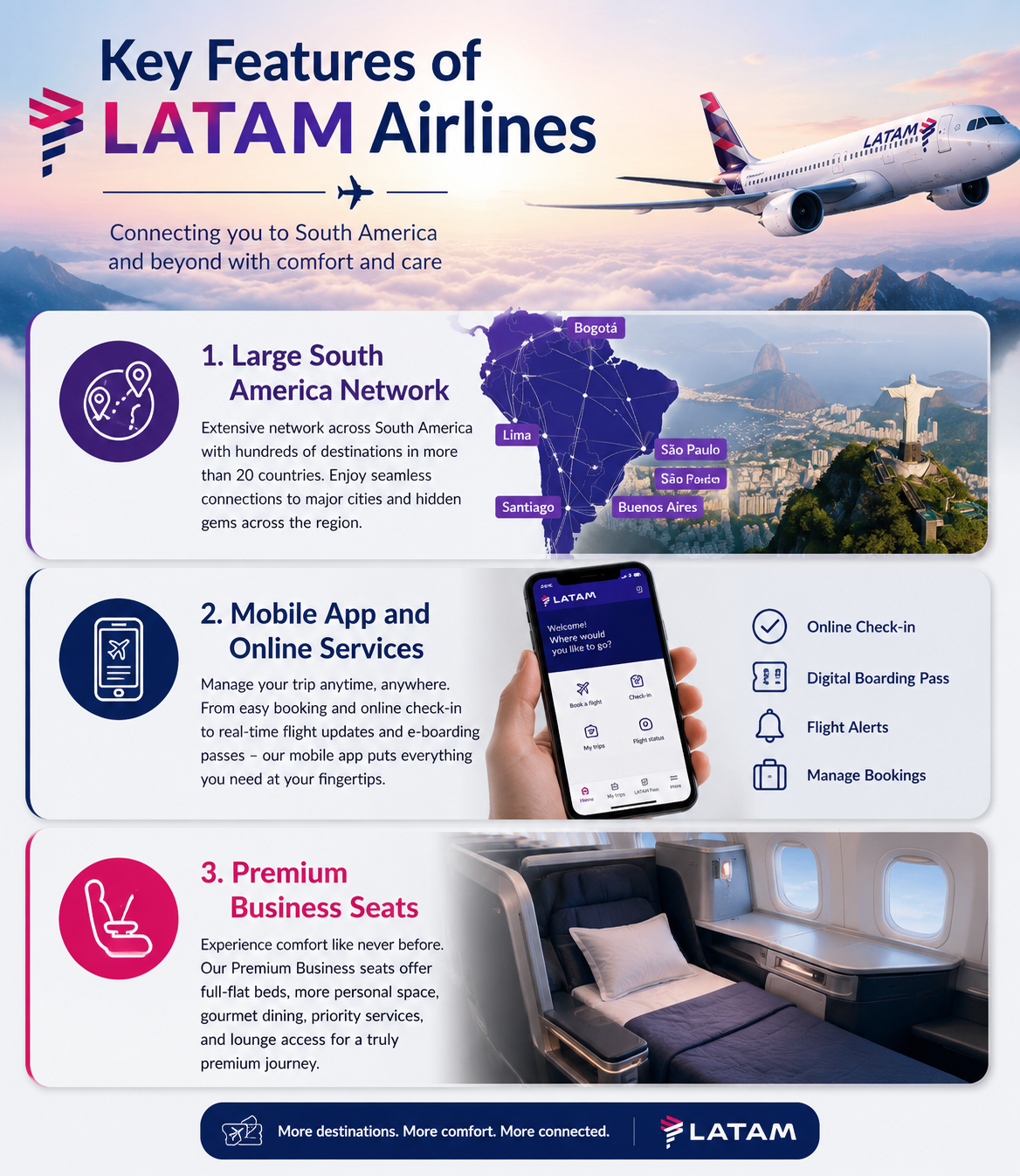
LATAM Airlines offers several features that make it attractive for international travelers, especially Americans visiting South America. One of the biggest highlights is its huge route network. Travelers can fly from major U.S. cities and easily connect to smaller destinations across Latin America without changing airlines multiple times. This saves time and makes travel much smoother.
Large South America Network
One of the biggest strengths of LATAM Airlines is its massive network across South America. The airline connects major cities like São Paulo, Lima, Santiago, Bogotá, and Buenos Aires with several destinations in the United States. This makes traveling between multiple countries much easier for tourists and business travelers.
Mobile App and Online Services
LATAM Airlines offers a user-friendly mobile app that helps travelers manage their trips easily. Passengers can check in online, download boarding passes, choose seats, and receive real-time flight updates directly on their smartphones.
Premium Business Seats
For long international flights, comfort matters a lot. LATAM’s Premium Business Class provides spacious seating designed for better relaxation during travel. On many long-haul aircraft, the seats can fully recline into flat beds, making overnight journeys much more comfortable.
Booking Flights With LATAM
Fare Classes Explained
LATAM uses several fare categories that can confuse first-time passengers. These include Basic, Light, Standard, Full, Premium Economy, and Premium Business depending on the route. Understanding the differences matters because baggage allowances and flexibility vary dramatically between ticket types.
Basic or Light fares are cheaper but often exclude checked bags and sometimes even standard carry-on luggage. Standard fares usually include more flexibility and baggage options. Premium cabins add lounge access, priority boarding, and larger baggage allowances.
Best Time to Book LATAM Flights
Timing matters when booking LATAM flights. Experts generally recommend booking international South American travel around two to four months in advance for the best balance between price and seat availability. Holiday periods such as Carnival, Christmas, and summer vacations in South America can drive prices much higher.
Flights to Brazil during Carnival season can become extremely expensive if booked late. Patagonia travel during peak hiking season also fills quickly. Travelers flexible with dates often save hundreds of dollars simply by flying midweek instead of weekends.
Tips for Getting Cheap LATAM Flights
Finding cheap international tickets feels a little like treasure hunting. Timing matters a lot.
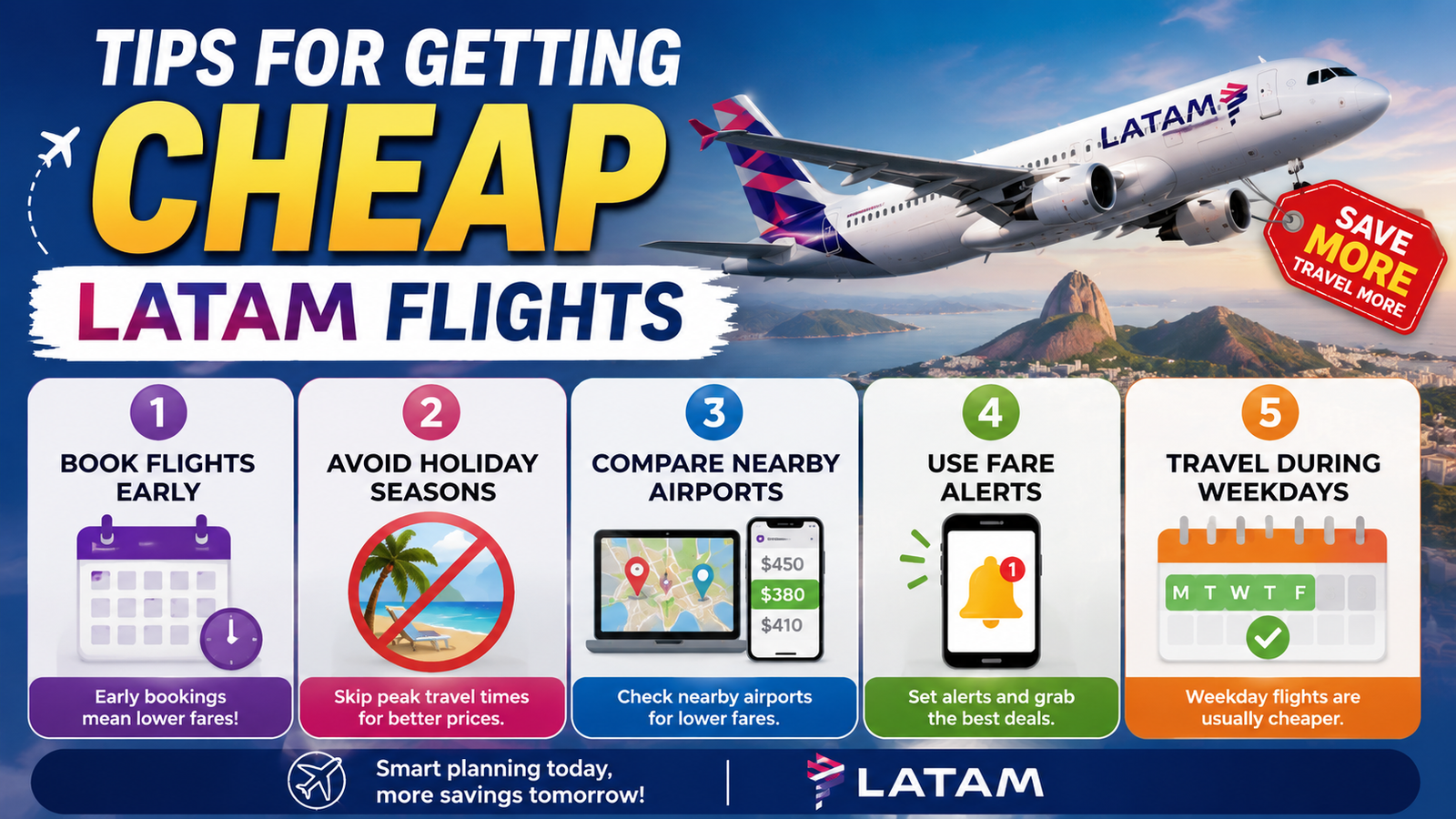
Here are some simple tips:
- Book flights early
- Avoid holiday seasons
- Compare nearby airports
- Use fare alerts
- Travel during weekdays
Travel websites also suggest February as one of the cheaper months for some LATAM flights.
Many travelers also save money by booking directly through the LATAM website because special promotions sometimes appear there first.
LATAM Baggage Policy for U.S. Travelers
Carry-On Rules
LATAM’s baggage rules are one of the most important things American travelers should understand before flying. The airline can be strict about dimensions and weight, especially on regional South American flights. According to LATAM’s official baggage guidelines, carry-on bags generally must not exceed 55 x 35 x 25 cm.
Passengers are also allowed one personal item like a purse, laptop bag, or small backpack. The allowed carry-on weight depends on cabin class. Economy travelers usually receive lower limits compared to Premium Economy or Business Class passengers.
Here is a simplified breakdown:
Baggage Type | Standard Limit |
Personal Item | 45 x 35 x 20 cm |
Carry-On Bag | 55 x 35 x 25 cm |
Economy Weight Limit | Around 10-12 kg |
Premium Cabin Limit | Up to 16 kg |
Many travelers get caught by assuming U.S. airline rules apply universally. LATAM sometimes checks bag sizes more carefully than domestic U.S. carriers. Overstuffed backpacks and oversized rollers can trigger extra fees at the gate.
Checked Baggage Rules
Checked baggage rules depend heavily on fare class and destination. Most economy checked bags must remain under 23 kg and below 158 linear centimeters in combined dimensions.
Premium cabins generally allow additional checked bags and higher weight limits. Travelers flying long-haul international routes often receive at least one checked bag included in certain fare categories, while cheaper tickets may include none.
Extra Baggage Fees
Excess baggage fees can become expensive quickly. Oversized or overweight bags may cost anywhere from $60 to over $200 depending on the route and severity of the violation.
Sports equipment such as surfboards, skis, or bicycles may require special handling. Travelers heading to Patagonia or Brazil’s surf regions should verify policies ahead of time. Nothing ruins a vacation faster than unexpected airport fees.
Cabin Classes and Seating Experience
Economy Class Experience
LATAM’s economy class is generally considered competitive for long-haul South American travel. Seat comfort varies by aircraft, but the airline’s newer Dreamliners provide noticeably better passenger experiences. Travelers often praise cabin cleanliness, mood lighting, and modern entertainment systems.
Food service depends on route length. Long-haul international flights usually include complimentary meals and beverages. Shorter regional flights may provide snacks or buy-on-board options instead.
Premium Economy and Business Class
LATAM’s Premium Business product has improved substantially in recent years. Many aircraft now feature lie-flat seats with direct aisle access, making overnight flights far more comfortable. Travelers flying from the U.S. to South America overnight especially appreciate this feature.
Premium Economy offers better legroom, priority boarding, and improved meal service on select routes. Business travelers and frequent international passengers often consider the upgrade worthwhile, especially on flights longer than seven hours.
Advantages of LATAM Airlines
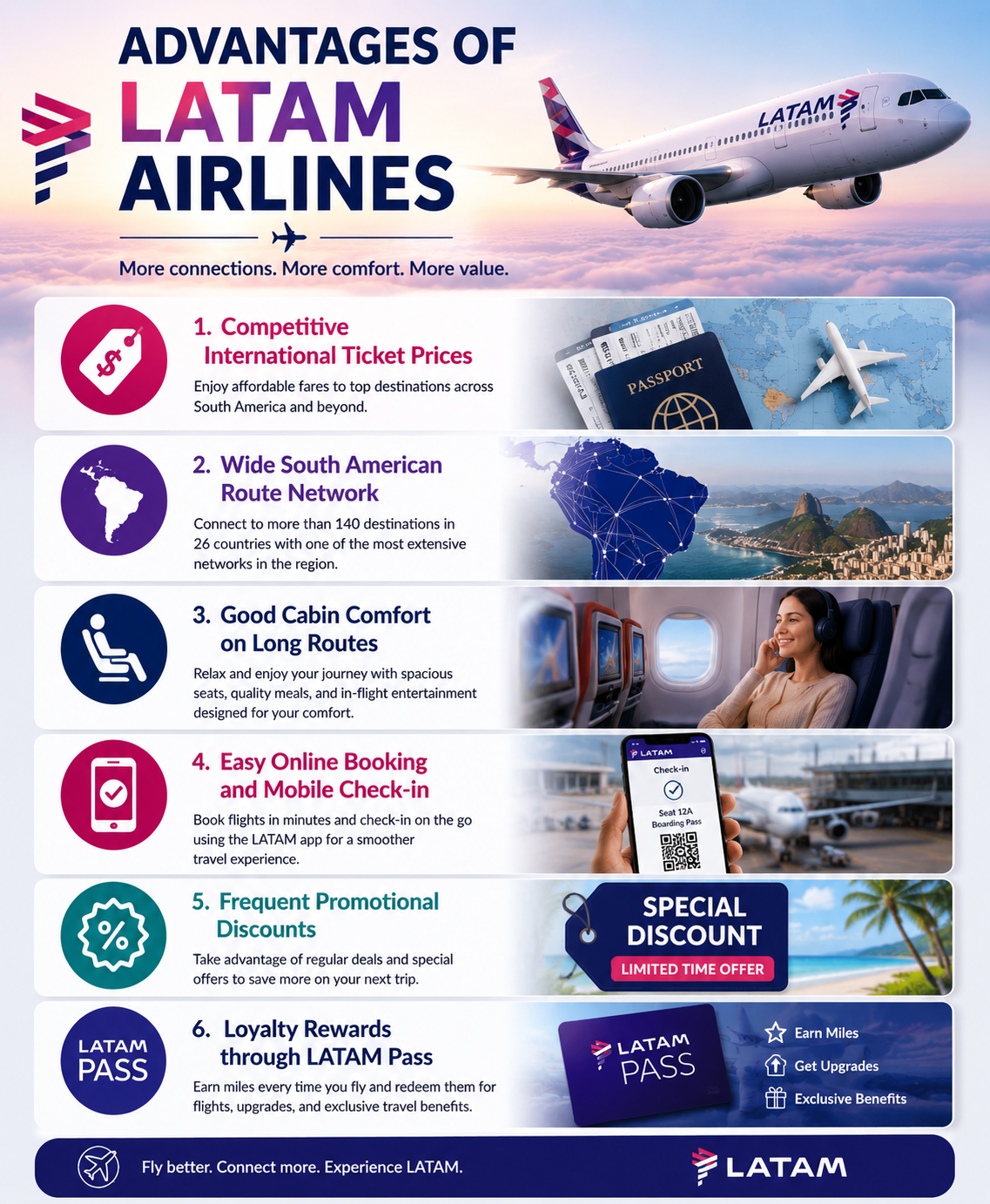
One major advantage of LATAM Airlines is affordability. Compared to many international airlines, LATAM often provides cheaper fares between the United States and South America. Budget-conscious travelers can save a significant amount, especially when booking early or during seasonal sales.
Main Advantages
- Competitive international ticket prices
- Wide South American route network
- Good cabin comfort on long routes
- Easy online booking and mobile check-in
- Frequent promotional discounts
- Loyalty rewards through LATAM Pass
Disadvantages of LATAM Airlines
Like every airline, LATAM also has some disadvantages. One common complaint from travelers is baggage fees. Budget ticket options may not include checked baggage, and extra luggage charges can become expensive if passengers do not read the rules carefully before booking.
Customer service can also vary depending on the airport or route. Some passengers report delayed responses during flight disruptions or refund requests. This is common among many large airlines, especially during busy travel seasons.
Main Disadvantages
- Extra baggage fees on lower fares
- Customer support may be slow during busy periods
- Some regional flight delays
- Economy meals are basic on certain routes
- Refund processes may take time
LATAM Loyalty Program
LATAM Pass Explained
LATAM Pass allows travelers to earn and redeem miles on LATAM-operated flights and partner airlines. For Americans flying frequently within South America, the program can provide real value through upgrades, baggage perks, and award tickets.
Miles accumulation depends on route distance, fare class, and promotional campaigns. Frequent travelers sometimes combine LATAM Pass with Delta’s SkyMiles ecosystem for broader earning opportunities.
Delta Partnership Benefits
LATAM’s partnership with Delta has become one of its biggest strengths in the U.S. market. Travelers can enjoy coordinated routes, reciprocal loyalty benefits, and smoother transfers.
This partnership also strengthens reliability for Americans who prefer familiar U.S.-based airline ecosystems. Instead of navigating entirely separate systems, travelers can often connect their travel experiences more smoothly.
Boost Your Travel Experience with Holiday Extras DE: Complete Guide
How Holiday Extras NL Enhances Your Travel Experience in 2026
Holiday Extras FR: Complete Guide to Travel Add-Ons in France
Vevor US Products: Quality, Pricing & Performance Guide
Parcel ABC ES Review: Is It the Best Shipping Platform in Spain?
In-Flight Entertainment and Wi-Fi
LATAM offers seatback entertainment systems on many long-haul aircraft. Movies, TV shows, music, and games are generally available in multiple languages. The selection may not rival Emirates or Singapore Airlines, but it remains solid for flights within the Americas.
Wi-Fi availability depends on aircraft type and route. Many newer planes now support onboard internet access, although speeds vary. Business travelers increasingly rely on connectivity during long flights, so LATAM’s gradual Wi-Fi expansion is important.
Food and Beverage Experience
Food quality on LATAM varies depending on flight duration and cabin class, but many travelers describe it as above average compared to standard U.S. airline meals. Long-haul flights often include South American-inspired cuisine, which adds personality to the onboard experience.
You might receive Chilean wine, Brazilian flavors, or Peruvian-inspired dishes depending on the route. That regional identity makes flights feel more connected to the destination itself. Instead of feeling like generic transportation, the journey begins onboard.
Customer Service and Travel Support
Customer service experiences with LATAM can vary. English-language support exists, but response quality sometimes depends on the region and communication channel used. Many travelers report faster support through social media channels or the mobile app compared to phone lines.
Airport staff at major international hubs generally handle English-speaking passengers well. Travelers connecting through smaller regional airports may experience more language barriers, although basic travel communication usually remains manageable.
Patience goes a long way. International travel systems operate differently around the world, and flexibility helps avoid unnecessary stress.
Safety, Reliability, and Reputation
LATAM maintains strong international safety standards and operates modern aircraft fleets on many major routes. The airline remains one of the most recognized aviation brands in Latin America.
Like most airlines, delays and operational challenges happen occasionally. Weather conditions in South America can affect schedules, particularly around mountainous regions or seasonal storms. Still, LATAM generally performs competitively within the region.
Traveler reviews remain mixed but largely positive overall. On platforms like TripAdvisor, many passengers praise route availability, onboard comfort, and regional connectivity.
Tips for American Travelers Flying LATAM
Here are several practical tips that can dramatically improve your LATAM experience:
- Check baggage rules carefully before departure.
- Download the LATAM mobile app before travel.
- Arrive early for international South American flights.
- Carry some Spanish or Portuguese basics if possible.
- Use flexible date searches to find cheaper fares.
- Verify visa and transit requirements early.
- Pack adaptively for varying South American climates.
South America is incredibly diverse. One trip might involve tropical beaches, freezing mountain regions, dense jungles, and cosmopolitan cities all within a week. Preparing thoughtfully makes travel far smoother.
Conclusion
LATAM Airlines has evolved into one of the most important airlines for Americans traveling to South America. Its enormous regional network, competitive pricing, modern aircraft, and growing partnership with Delta make it a strong option for leisure travelers, business passengers, and adventure seekers alike.
The airline is not perfect. Baggage rules can feel strict, customer service can occasionally frustrate passengers, and fare structures require careful attention. Still, LATAM delivers something many competitors cannot: deep and efficient access to Latin America.
Frequently Asked Questions
Q. Is LATAM Airlines safe for American travelers?
Yes. LATAM follows international aviation safety standards and operates modern aircraft on many long-haul routes.
Q. Does LATAM Airlines include free checked baggage?
It depends on the fare class and route. Basic fares often exclude checked baggage, while higher fare classes include one or more bags.
Q. Can Americans use Delta miles on LATAM flights?
In many cases, yes. LATAM and Delta maintain a partnership allowing mileage earning and redemption opportunities.
Q. Is Wi-Fi available on LATAM flights?
Wi-Fi is available on many newer aircraft, though availability depends on route and aircraft type.
Q. What is the best U.S. airport for LATAM flights?
Miami is generally considered the strongest U.S. gateway for LATAM because of its extensive South American connections.
Table of Contents
Related Posts